U.S. Census: In 50 Years, Americans Married Later, Families Got Smaller and More People Live Alone
New U.S. Census Bureau estimates released on November 17, 2026 compare the American family of 2026 with 1976. Ricardo Martins comments on what the numbers reveal about loneliness, delayed marriage and the place of the table at home.
 By Ricardo Martins
Published November 20, 2026 · 6 min read
The news
On Tuesday, November 17, the U.S. Census Bureau released new estimates on families and living arrangements, comparing 2026 with 1976. The headlines: today 71% of children live with two parents, down from 80% fifty years ago. The median age at first marriage has risen to 30.5 for men and 28.6 for women (it was 23.8 and 21.3). And one-person households now make up 30% of all households, about 40.5 million, up from 21% in 1976.
There’s more. The share of families with their own children under 18 at home fell from 54% to 38%. And among children living with one parent, the share living with their father rose from 7% to 19%.
Some honest caveats before I comment. The figures come from the government’s annual population survey (CPS ASEC), and “two parents” there doesn’t necessarily mean two married biological parents. Census numbers describe what changed, not why. Any cause someone points to is interpretation. Mine follows, and it’s clearly a pastor’s, not a demographer’s.
The number that hit me wasn’t about marriage
I expected the marriage age to bother me. But the figure that stayed with me was a different one: 3 in 10 homes have just one person in them.
I’m not saying living alone is a sin. There are widows and widowers, young people working far from home, people who are simply in a season of life. But when a third of the front doors in a country open onto an empty house, the church needs to say something.
The first time God called something in creation “not good,” it wasn’t about sin. It was about loneliness: “The LORD God said, ‘It is not good for the man to be alone. I will make a helper suitable for him’” (Genesis 2:18, NIV).
God made us for communion. And that applies to married people who live alone inside their own homes, too. I know what I’m talking about. There was a time when I lived with Vanessa Lima but lived alone. I was working around 16 hours a day, and work had become my golden calf. Physically at the address, absent from the table. I used to be the problem in my marriage. The census will never measure that kind of loneliness, but it exists in many homes that show up in the statistics as “family.”
Marrying later isn’t the villain. Marrying without covenant is
Plenty of people will read “30.5” and sigh. I’d rather look a little more carefully.
Getting married at 21 guarantees nothing. Getting married at 31 doesn’t either. What I see walking with couples in crisis is that age matters less than what a person thinks marriage is. If marriage is a contract I sign when I feel ready and cancel when I feel unhappy, any age is too early. If marriage is a covenant before God, where two imperfect people decide to keep lifting each other up, then the question stops being “am I ready?” and becomes “am I willing?”
Ecclesiastes says it better than anyone: “Two are better than one, because they have a good return for their labor: If either of them falls down, one can help the other up. But pity anyone who falls and has no one to help them up” (Ecclesiastes 4:9-10, NIV).
Notice that the text assumes falling will happen. Marriage isn’t for people who never fall. It’s for people who decide not to leave the other one on the ground.
A word for those raising kids alone
The single-parent figures deserve respect. Nearly 1 in 5 children who live with one parent today lives with their dad. Behind that number are men who stayed, who stepped up, who learned to braid a daughter’s hair and show up at parent-teacher night.
And there are mothers, most of that statistic, carrying the home alone. If that’s you, I want you to hear this: you are not an “incomplete” family statistic. The same God who calls himself “a father to the fatherless, a defender of widows” (Psalm 68:5, NIV) sees your home. The church fails when it treats single-parent families as failures. Our job is to surround, to help, to adopt in the widest sense of the word.
That doesn’t change what I believe about God’s design for marriage. It changes how I treat people living outside that design, often without having chosen it.
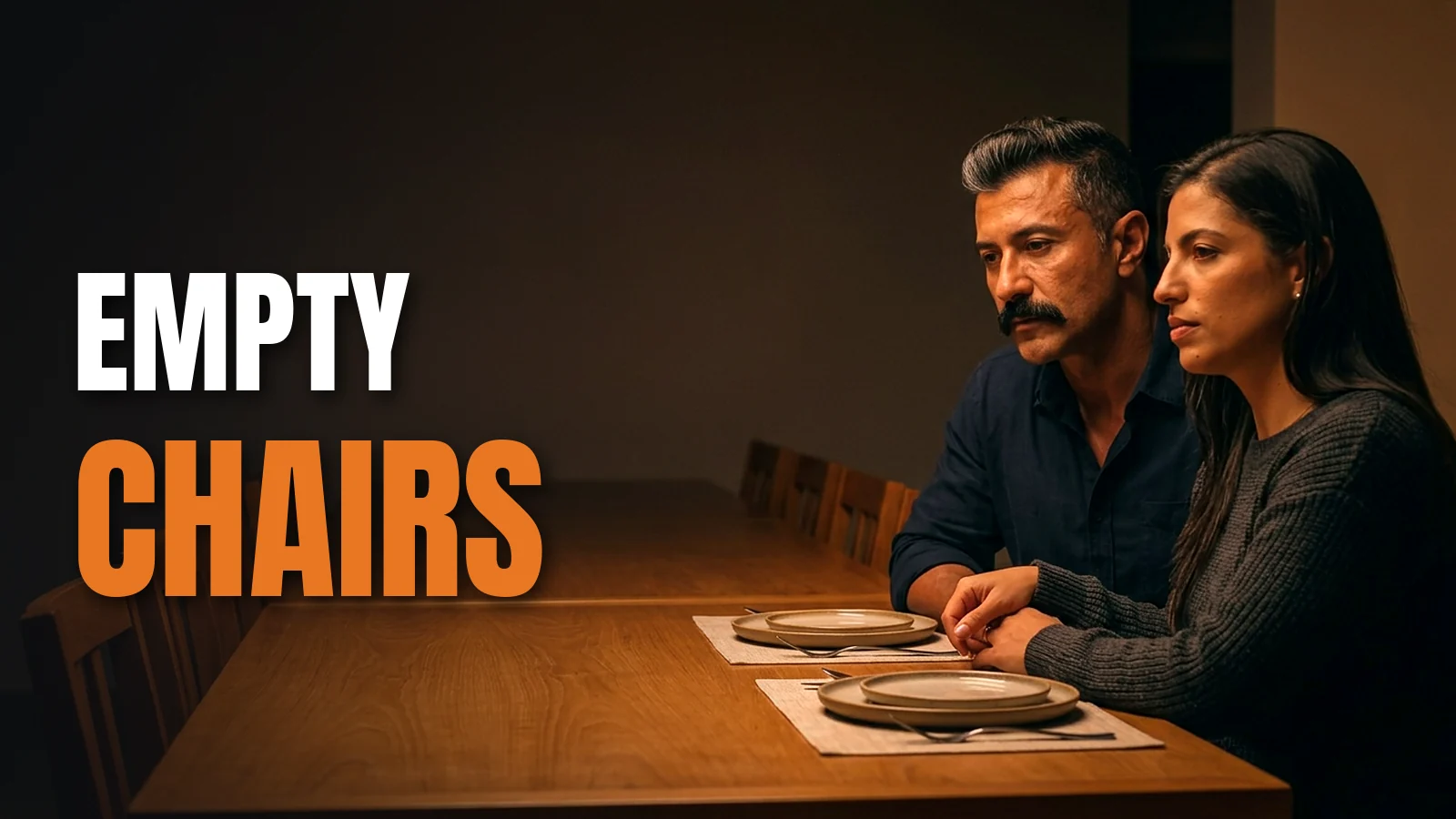
The table that emptied
One more number: fifty years ago, more than half of American families had children under 18 at home. Today it’s 38%. Part of that is an aging population, part is fewer children. I won’t turn this into a sermon on how many kids each couple “should” have; that’s a couple’s decision before God.
But I will talk about the table. Because a table empties in two ways. One is when no one sits down. The other, more common, is when everyone sits down and no one is there: each person on a phone, each on their own schedule, each eating standing up.
Joshua made a declaration that didn’t depend on any statistic: “But as for me and my household, we will serve the LORD” (Joshua 24:15, NIV). He didn’t wait for the nation to change before deciding what his home would be. And the psalmist reminds us who holds the work together: “Unless the LORD builds the house, the builders labor in vain” (Psalm 127:1, NIV).
Census numbers describe a nation. They don’t decide your home. The restoration of my marriage didn’t come from a demographic trend. It came from God, and from trust rebuilt brick by brick, after Vanessa gave God a chance to work. Every family that changes starts that way: one house at a time, one table at a time.
For the two of you to think about
This week, pick one meal with no screens and talk through three questions:
- “Is there any time you feel alone here, inside our own home?”
- “What would make our table a place of real connection again, not just food?”
- “Who near us is living alone or raising kids alone, and how could we open our home to them?”
If you want more honest conversations about marriage, faith and restoration, Vanessa Lima and I share them every week as The Legendary Couple on YouTube and on Instagram at @ocasallegendario.
The country may be changing. The question that matters is a different one: what will your home be?
Sources
- Census Bureau Releases New Estimates on America’s Families and Living Arrangements (Release CB26-TPS.69) — U.S. Census Bureau, Nov. 17, 2026
Ricardo Martins
Ricardo Martins is an author, pastor and spokesperson for the Legendários men's movement. With his wife, Vanessa Lima, he created The Legendary Couple (O Casal Legendário), reaching millions with content on Christian marriage and restoration. Author of "Quando o amor recomeça" (Citadel, 2026).
Want to talk with Ricardo & Vanessa?
Follow the daily videos on YouTube and Instagram — real testimony, practical steps, and hope for marriages that look finished.
Watch on YouTubeKeep reading
You Get in Your Spouse's Way More Than You Think, Study of U.S. Couples Finds
Research published in the Journal of Social and Personal Relationships and covered by PsyPost on November 14, 2026 shows people notice when they help their partner but underestimate when they hinder, and that blind spot is linked to less closeness. Ricardo Martins comments.
Read article →
U.S. Fertility Rate Hits Another Record Low: What Are Couples Waiting For?
A CDC report released in October 2026 puts the U.S. fertility rate at about 53 births per 1,000 women ages 15–44 in 2025, the lowest on record. Ricardo Martins reflects on fear, waiting for "perfect security," and what this has to do with marriage.
Read article →
“No Kids Allowed”: Brazil's Childfree Spaces and What They Say About Us
A Folha de S.Paulo report (Oct. 11, 2026) shows the rise of childfree spaces in Brazil — bars, hotels, inns and even adults-only weddings — a practice Brazil's consumer-rights institute Idec calls abusive. Ricardo Martins comments on what it reveals about how our culture sees children, and what couples and churches can do.
Read article →This content is educational and pastoral. It does not replace therapy, medical, legal or emergency help. If you are in danger, seek help now.