Does Porn Hurt a Marriage? What Long-Term Studies Show
Five peer-reviewed studies — the General Social Survey, the Portraits of American Life Study and a meta-analysis of 50,000+ participants — show what pornography use predicts about marital quality and divorce, and where the data runs out.
 By Ricardo Martins
Published November 19, 2026 · 8 min read
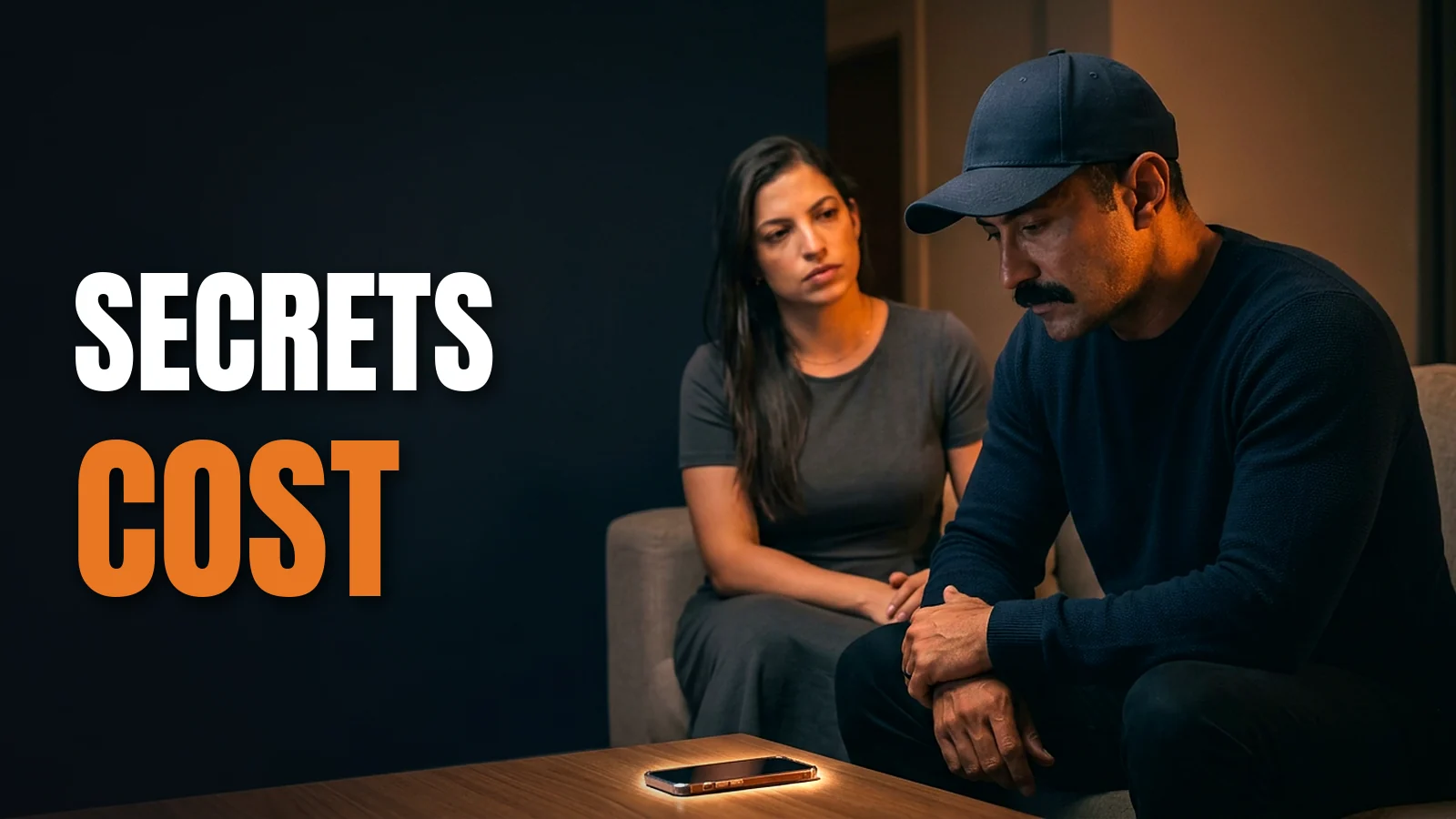
“It’s just a release.” “I’m not cheating on anyone, it’s a screen.” “Every guy does it.” You hear these lines in a lot of marriages, usually said quietly, by someone who already suspects it isn’t true. On the other side is the wife (sometimes the husband) who found the browser history and spent the night asking, “Am I not enough?”
I’m Ricardo Martins. In The Legendary Couple, which I lead with my wife Vanessa Lima, we’ve covered this from the pastoral side: what to do when you find out and how to start over after a relapse. Today’s question is colder: what did researchers find when they followed married people over the years? Does porn really weigh on a marriage, or is that just church moralizing?
Here are five studies from peer-reviewed journals, with the sample size and the limits of each one. None of them proves everything alone. Together, they take apart the myth that “it doesn’t affect anyone.”
What the research found
1. Doran & Price (2014): a snapshot of 20,000 married adults
Kirk Doran (University of Notre Dame) and Joseph Price (Brigham Young University) published an analysis in the Journal of Family and Economic Issues using data on 20,000 ever-married adults from the General Social Survey, the long-running national survey that has tracked American social life since the 1970s.
The finding: adults who had watched an X-rated movie in the past year were more likely to be divorced, more likely to have had an extramarital affair, and less likely to say they were happy in their marriage or happy overall. For men, porn use also weakened the positive link between how often they had sex and how happy they were. And the negative association, the authors wrote, had “if anything, grown stronger over time,” during the same years porn became more explicit and easier to reach.
The limit: it’s a snapshot, not a movie. It shows who watches and who is unhappy at the same moment, but not which came first. An unhappy marriage can push someone toward porn, not just the other way around.
2. Perry (2017): what 2006 viewing predicted for 2012
To get at the “which came first” question, sociologist Samuel Perry used the Portraits of American Life Study, a nationally representative U.S. sample interviewed in 2006 and again in 2012. Published in the Archives of Sexual Behavior, it was the first study to test direction with representative, longitudinal data.
The result: married people who watched porn more often in 2006 reported significantly lower marital quality in 2012, even after accounting for how their marriage was doing in 2006. The effect wasn’t just a stand-in for sexual frustration or conflict over decisions; the study controlled for both. In substantive terms, porn frequency in 2006 was the second strongest predictor of marital quality six years later.
One honest detail: the negative effect showed up for husbands but not wives. Wives who watched more often actually reported higher marital quality. The author suggests some of them may have been watching with their husbands, something the data couldn’t separate.
The limit: the abstract doesn’t give the exact number of married respondents; only people who stayed married through 2012 were included (those who divorced dropped out, which the author argues makes the estimate conservative); and porn use was measured only in 2006.
3. Perry & Schleifer (2018): starting nearly doubled the odds of divorce
Here the outcome isn’t satisfaction. It’s divorce. Samuel Perry and Cyrus Schleifer analyzed General Social Survey panels from 2006 to 2014, three waves of interviews, with 2,120 married Americans, in The Journal of Sex Research.
The headline finding: among people who began using porn between waves, the probability of divorce roughly doubled (odds ratio 2.19), for both women and men. On the flip side, quitting was linked to a lower probability of divorce, though only among women. The link was strongest among younger Americans, the less religious, and, surprisingly, those who started out happiest in their marriage.
The limit: the authors themselves discuss reverse causation (a marriage already in trouble leading to porn) and data limitations. An odds ratio of 2.19 doesn’t mean half of those marriages end; it means the relative risk rose compared to people who didn’t start.
4. Perry (2018): it’s not just “religious guilt”
A common pushback is that porn only hurts religious people because they feel guilty. Researchers call this the moral incongruence hypothesis. Perry tested it in Personal Relationships, again with the 2006–2012 panel, this time with 612 participants.
The result was mixed, and worth reading carefully: any porn use in 2006 predicted lower marital quality in 2012 regardless of whether the person thought porn was always immoral. Among viewers, the decline tied to frequency was steeper for those who morally opposed it. So guilt makes it worse, but guilt isn’t what creates the problem.
The limit: a smaller, U.S.-only sample, measuring reported quality rather than observed behavior.
5. Wright and colleagues (2017): 50 studies, 10 countries
Paul Wright and colleagues published the first meta-analysis on pornography and satisfaction in Human Communication Research: 50 studies, more than 50,000 participants, from 10 countries, across cross-sectional surveys, longitudinal surveys and experiments.
The finding: porn use wasn’t related to self-esteem or body satisfaction, but it was associated with lower sexual and relationship satisfaction in all three study types. The effect didn’t change with publication year. And when split by sex, the significant results showed up for men only.
The limit: a meta-analysis pools studies of uneven quality, including dating couples, not just married ones. It’s a consistent pattern, not proof that every individual follows the average.
What this changes in real life
- Stop calling it harmless. The strongest data we have, following people for years, points one way: lower marital quality and higher divorce risk. You don’t need a Bible verse to take that seriously; the numbers already ask you to.
- Quitting matters. In Perry & Schleifer, people who stopped had lower odds of divorce (among women). There’s no “I’ve already ruined it, so why bother.” The road back counts.
- Don’t fight it with shame; fight it with honesty. Guilt weighs on you, but the 2018 study showed it doesn’t explain the problem alone. Honest confession, real accountability with a mature friend, and support help more than hiding and hating yourself.
- Be careful with “watching together.” Some data shows different results for couples who watch together, but it’s thin and hasn’t followed those couples over time. Don’t trade a conviction for a statistical loophole.
- Get help if it’s compulsive. If you’ve tried to quit again and again and can’t, that deserves care from a licensed mental health professional, alongside your pastor or church community.
Where the Bible already said this
Long before the General Social Survey, Job understood the battle starts with the eyes: “I made a covenant with my eyes not to look lustfully at a young woman” (Job 31:1, NIV). A covenant with your eyes isn’t rigidity. It protects the bigger covenant, your marriage.
Proverbs doesn’t treat desire as the enemy; it points it home: “May your fountain be blessed, and may you rejoice in the wife of your youth” (Proverbs 5:18, NIV). The data shows that for men, porn weakened the link between married sex and happiness. Scripture calls that drinking from another well.
And for anyone already in this fight, the word isn’t condemnation: “If we confess our sins, he is faithful and just and will forgive us our sins and purify us from all unrighteousness” (1 John 1:9, NIV). Forgiveness doesn’t erase consequences overnight, but it opens the way back.
Closing
Science doesn’t replace faith, but here it confirms what faith already said: what happens in secret on the phone doesn’t stay on the phone. It reaches the bed, the conversations and the trust. The good news is that these same studies show the story isn’t already written. Stopping, telling the truth and rebuilding make a difference.
If you want more honest conversations like this one for your marriage, Vanessa and I share them every week on our YouTube channel.
Sources
- Doran & Price (2014). Pornography and Marriage — Journal of Family and Economic Issues 35(4)
- Perry (2017). Does Viewing Pornography Reduce Marital Quality Over Time? Evidence from Longitudinal Data — Archives of Sexual Behavior 46(2) / PubMed 27388511
- Perry & Schleifer (2018). Till Porn Do Us Part? A Longitudinal Examination of Pornography Use and Divorce — The Journal of Sex Research 55(3) / PubMed 28497988
- Perry (2018). Pornography use and marital quality: Testing the moral incongruence hypothesis — Personal Relationships 25(2)
- Wright, Tokunaga, Kraus & Klann (2017). Pornography Consumption and Satisfaction: A Meta-Analysis — Human Communication Research 43(3)
Ricardo Martins
Ricardo Martins is an author, pastor and spokesperson for the Legendários men's movement. With his wife, Vanessa Lima, he created The Legendary Couple (O Casal Legendário), reaching millions with content on Christian marriage and restoration. Author of "Quando o amor recomeça" (Citadel, 2026).
Want to talk with Ricardo & Vanessa?
Follow the daily videos on YouTube and Instagram — real testimony, practical steps, and hope for marriages that look finished.
Watch on YouTubeKeep reading

Children of Divorce: What the Research Actually Found (Without Guilt or Fatalism)
Paul Amato's meta-analyses, 12-year longitudinal data and major reviews show how divorce affects kids — and why parental conflict matters as much as the split itself.
Read article →
Does living together before marriage affect divorce risk? What studies find
Age, engagement timing, and marriage duration change how researchers interpret cohabitation and divorce. Three studies, their limits, and practical steps.
Read article →
How Often Is Enough? What the Research Says About Sex and Marital Satisfaction
What five peer-reviewed studies — more than 30,000 people, 26,000 survey respondents, and couples followed for up to 14 years — actually found about sexual frequency, affection, and marital satisfaction, with the numbers, the limits, and what it means for Christian couples.
Read article →This content is educational and pastoral. It does not replace therapy, medical, legal or emergency help. If you are in danger, seek help now.