Children of Divorce: What the Research Actually Found (Without Guilt or Fatalism)
Paul Amato's meta-analyses, 12-year longitudinal data and major reviews show how divorce affects kids — and why parental conflict matters as much as the split itself.
 By Ricardo Martins
Published October 29, 2026 · 7 min read
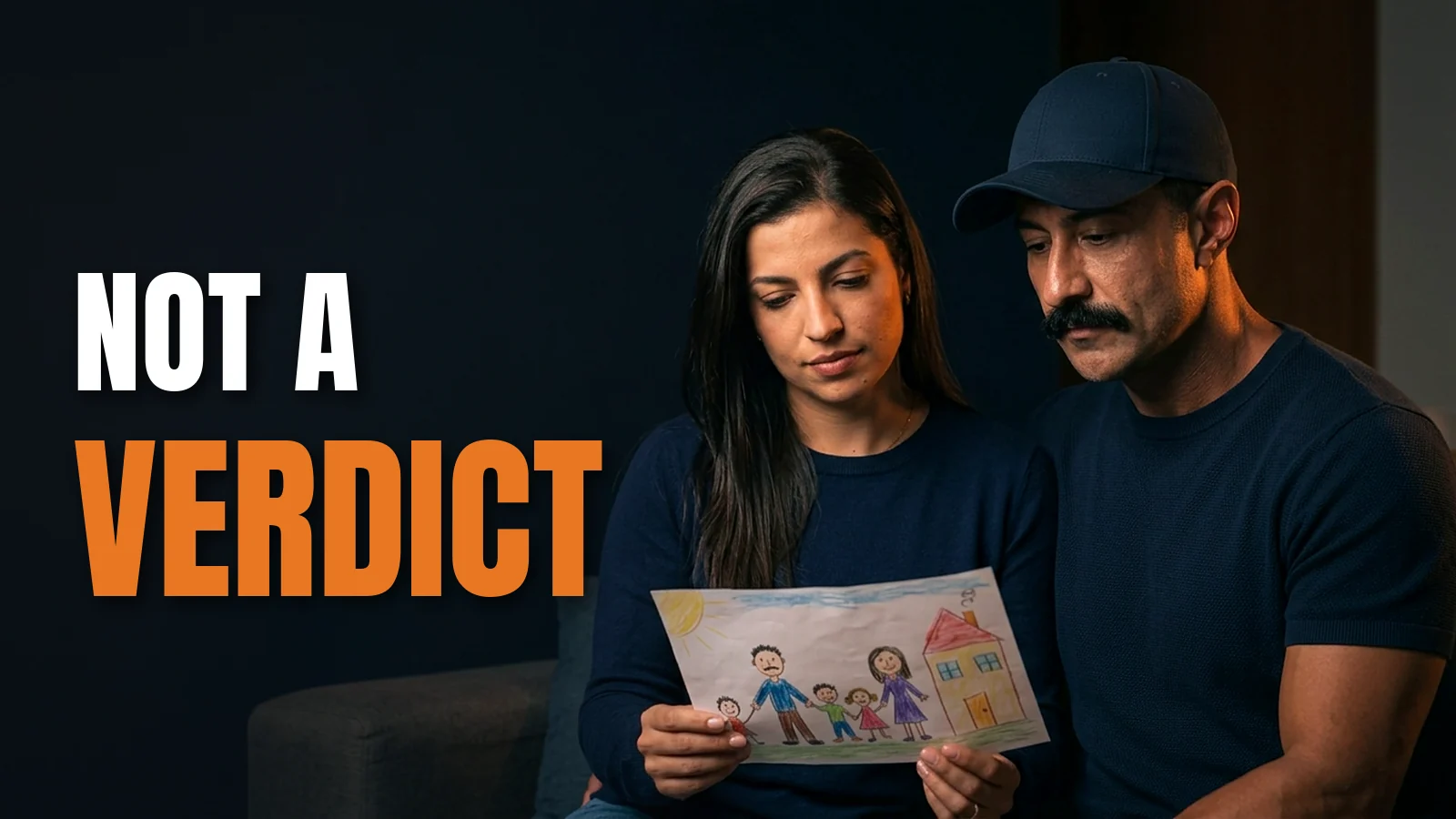
Three kinds of people ask me the same question in different words. The first is married, worn out, and asks, “Should we stay together just for the kids?” The second is already divorced and carries a quiet guilt: “Did I ruin their lives?” The third is a grown adult who spent childhood packing a bag every other weekend and admits, “I’m scared I’ll repeat my parents’ story.”
I’m Ricardo Martins, and I won’t give any of them a slogan. Not the cheerful “kids bounce back from anything,” and not the grim “children of divorce are damaged goods.” With Vanessa Lima, I lead The Legendary Couple, and our conviction is Christian: we believe in marriage and we fight for it. But conviction never gives anyone permission to bend the research.
So here is what the studies actually measured — names, years, journals, and limits included.
What the research found
1. Amato & Keith (1991): there is a gap, and on average it’s small
The first major meta-analysis on the subject came from sociologists Paul Amato and Bruce Keith in Psychological Bulletin. They pooled 92 studies comparing children in divorced single-parent families with children in continuously intact families.
Children of divorce scored lower across a range of well-being outcomes, but the median effect size was 0.14 of a standard deviation. Plainly: the difference is real, but modest on average. For some outcomes, the more methodologically rigorous studies found even weaker effects. And here’s the part I underline every time: among the explanations they tested — a missing parent, economic loss, family conflict — the family conflict perspective received the most consistent support.
The limit: an average is not a destiny. A small average gap can hide many kids who do fine and some who struggle a lot.
2. Amato (2001): the gap didn’t vanish in the 1990s
A decade later, Amato updated the work in the Journal of Family Psychology using 67 studies published in the 1990s. Compared with children whose parents stayed married, children of divorce still scored significantly lower on academic achievement, conduct, psychological adjustment, self-concept and social relations.
One detail stands out: for several of those outcomes, the gap between the two groups shrank during the 1980s and then widened again in the 1990s. The popular idea that “divorce is so common now it doesn’t affect anyone” did not hold up in this review.
The limit: these are mostly American, correlational studies. They show association; they don’t prove divorce alone caused every difference. Families that divorce may already differ before the split.
3. Amato, Loomis & Booth (1995): conflict changes the math
This is the study that helps me most when I answer that first person. Published in Social Forces, it followed families for 12 years (the abstract doesn’t report the full sample size) and found that the effects of divorce depend on how much conflict the parents had beforehand.
In high-conflict families, children showed higher well-being as young adults if their parents divorced than if they stayed together. In low-conflict families, it was the reverse: children were better off when their parents stayed married. And among marriages that lasted, more parental conflict meant lower well-being for the kids.
4. Booth & Amato (2001): most divorces don’t come from war zones
In the Journal of Marriage and Family, Alan Booth and Paul Amato returned to the question with national longitudinal interviews of parents and their adult children (again, no total N in the abstract). Ending a low-conflict marriage was associated with negative effects on the children’s lives: the quality of their own intimate relationships, social support from friends and relatives, and overall psychological well-being. Ending a high-conflict marriage appeared to be beneficial.
They also profiled the low-conflict parents who divorced: less integrated into their communities, facing fewer barriers to divorce, and holding more favorable attitudes toward it.
The limit: “high” and “low” conflict are reported by the parents themselves. And none of this puts the child on trial for the parents’ decision.
5. Kelly & Emery (2003): most kids are resilient — and lingering pain isn’t pathology
In Family Relations, Joan Kelly and Robert Emery reviewed long-term adjustment. Two findings sit side by side: divorce brings real stressors and elevated risks, and the majority of children show resilience. They add a third dimension — painful memories that linger — and argue these must be distinguished from pathology.
That’s a word for the third person: feeling the weight of your story doesn’t mean you’re bound to repeat it.
Finally, Jane Anderson’s 2014 review in The Linacre Quarterly sums up nearly three decades of research: children living with their married biological parents tend to have better physical, emotional and academic well-being — with the exception of unresolvable marital violence. The review openly argues for marriage, so I cite it as a synthesis, not as new data.
What this changes in real life
1. If you’re thinking of leaving because “the spark is gone,” look hard at the low-conflict findings. Cold-but-calm marriages are exactly where divorce was most associated with harm to children. Before you file, get help: counseling, a therapist, a church community that walks with you.
2. If there’s abuse, safety comes first. None of these studies asks anyone to stay in danger. Even the pro-marriage review makes an exception for violence. Reach out for help and protection.
3. Staying isn’t enough — conflict wounds too. In marriages that lasted, more conflict meant worse outcomes for the kids. “Staying for the children” while the house is a battlefield isn’t protection. Learning to fight fair is part of loving them.
4. If the divorce already happened, trade guilt for cooperation. Conflict is the risk factor that keeps showing up. Don’t make the kids messengers, don’t trash the other parent in front of them, and keep both parents present whenever it’s safe.
5. If you’re an adult child of divorce, name the pain and write a different story. Painful memories aren’t a diagnosis. Talk with your spouse, build conflict skills, and see a counselor if you need to. Where you came from informs you; it doesn’t define you.
Where the Bible already said this
Paul wrote, “Fathers, do not exasperate your children; instead, bring them up in the training and instruction of the Lord” (Ephesians 6:4). Long before any meta-analysis, Scripture treated the atmosphere of a home as a spiritual matter. Chronic conflict between parents isn’t a side issue; it shapes a child’s heart.
For anyone afraid of repeating their parents’ story, God spoke through Ezekiel: “The child will not share the guilt of the parent” (Ezekiel 18:20). The context is personal responsibility before God — each generation answers for its own choices. Your parents’ story is not your verdict.
And “God sets the lonely in families” (Psalm 68:6). He keeps building homes where something was broken.
The bottom line
The research doesn’t hand us a simple answer, and maybe that’s what makes it useful. To the cold marriage it says: fight before you quit. To the home at war: the conflict has to stop. To divorced parents: cooperation protects more than guilt. And to the grown child of divorce: you are not a statistic.
If this hit home, Vanessa and I talk about marriage, conflict and family every week on our YouTube channel and Instagram — come walk with us there.
Sources
- Amato & Keith (1991). Parental divorce and the well-being of children: a meta-analysis — Psychological Bulletin / PubMed 1832495
- Amato (2001). Children of divorce in the 1990s: an update of the Amato and Keith (1991) meta-analysis — Journal of Family Psychology / PubMed 11584788
- Amato, Loomis & Booth (1995). Parental Divorce, Marital Conflict, and Offspring Well-being during Early Adulthood — Social Forces 73(3)
- Booth & Amato (2001). Parental Predivorce Relations and Offspring Postdivorce Well-Being — Journal of Marriage and Family 63(1)
- Kelly & Emery (2003). Children's Adjustment Following Divorce: Risk and Resilience Perspectives — Family Relations 52(4)
- Anderson (2014). The impact of family structure on the health of children: Effects of divorce — The Linacre Quarterly / PubMed 25473135
Ricardo Martins
Ricardo Martins is an author, pastor and spokesperson for the Legendários men's movement. With his wife, Vanessa Lima, he created The Legendary Couple (O Casal Legendário), reaching millions with content on Christian marriage and restoration. Author of "Quando o amor recomeça" (Citadel, 2026).
Want to talk with Ricardo & Vanessa?
Follow the daily videos on YouTube and Instagram — real testimony, practical steps, and hope for marriages that look finished.
Watch on YouTubeKeep reading
U.S. Fertility Rate Hits Another Record Low: What Are Couples Waiting For?
A CDC report released in October 2026 puts the U.S. fertility rate at about 53 births per 1,000 women ages 15–44 in 2025, the lowest on record. Ricardo Martins reflects on fear, waiting for "perfect security," and what this has to do with marriage.
Read article →
Does living together before marriage affect divorce risk? What studies find
Age, engagement timing, and marriage duration change how researchers interpret cohabitation and divorce. Three studies, their limits, and practical steps.
Read article →
“No Kids Allowed”: Brazil's Childfree Spaces and What They Say About Us
A Folha de S.Paulo report (Oct. 11, 2026) shows the rise of childfree spaces in Brazil — bars, hotels, inns and even adults-only weddings — a practice Brazil's consumer-rights institute Idec calls abusive. Ricardo Martins comments on what it reveals about how our culture sees children, and what couples and churches can do.
Read article →This content is educational and pastoral. It does not replace therapy, medical, legal or emergency help. If you are in danger, seek help now.