You Get in Your Spouse's Way More Than You Think, Study of U.S. Couples Finds
Research published in the Journal of Social and Personal Relationships and covered by PsyPost on November 14, 2026 shows people notice when they help their partner but underestimate when they hinder, and that blind spot is linked to less closeness. Ricardo Martins comments.
 By Ricardo Martins
Published November 16, 2026 · 7 min read
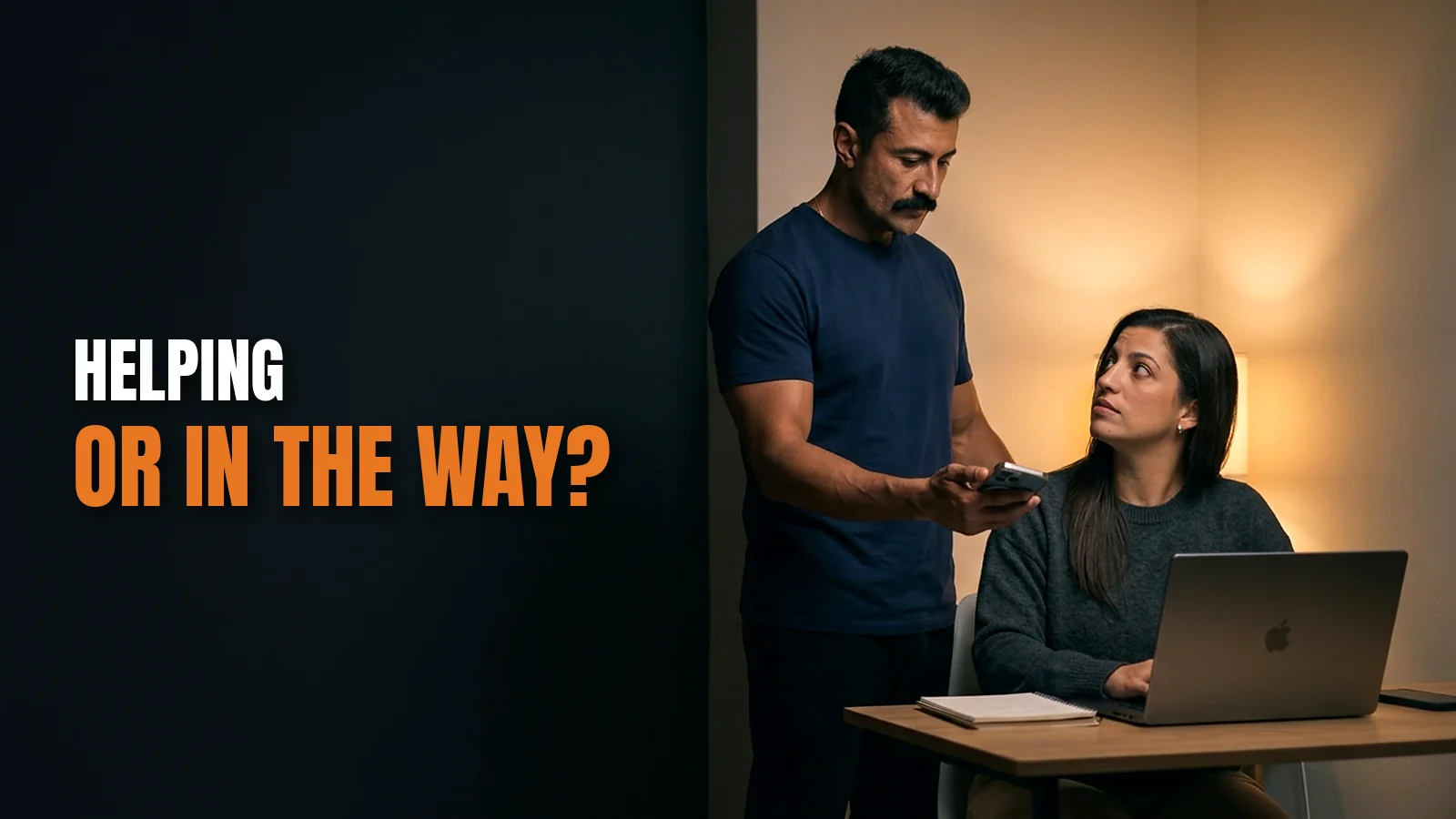
The news
This past Saturday, November 14, PsyPost covered a study by researchers at Kent State University in Ohio, published in the Journal of Social and Personal Relationships (DOI 10.1177/02654075261435648). They followed 106 cohabiting couples in the United States for 14 days. Every night before bed, each partner answered separately: “Did my partner help or hinder my goals today?” and “Did I help or hinder my partner’s goals today?” That added up to 2,377 daily reports.
The finding: on average, people were accurate about how much they helped their partner. But they underestimated how much they got in the way. And it mattered. When people underestimated their own obstruction, both partners felt less close, and the partner was less satisfied. When people overestimated how helpful they were, that was linked to lower satisfaction too.
Before I comment, the honest caveats. It’s a small sample of couples living together (not necessarily married), recruited through online ads, mostly white. The study shows association, not causation: it can’t tell us that this blind spot, by itself, breaks a marriage. But as a snapshot, it’s uncomfortably familiar.
The blind spot lives at home
When I read this study, the first thing that came to mind was a sentence I say often: I was once the problem in my own marriage. And the scariest part is that, for a long time, I didn’t know it.
I was working around 16 hours a day. I started on minimum wage, I prospered, and work became my golden calf. If you had asked me back then whether I helped Vanessa Lima, I would have had a list ready: I provided, I paid the bills, I “did everything for the family.” I saw myself as the guy who helped. What I couldn’t see was how much I was in the way. In the way of her peace, her dreams, her time, her trust.
The researchers gave this a technical name. Jesus gave it a much simpler one: “Why do you look at the speck of sawdust in your brother’s eye and pay no attention to the plank in your own eye?” (Matthew 7:3, NIV).
Notice the study doesn’t say people are blind. They did partly notice when they hindered. The problem is the ruler. We measure our help with a magnifying glass and our hindrance with binoculars turned backward.
Why it’s so easy to see only the good we do
There’s a spiritual reason for this. The human heart is an expert at defending itself. Nobody likes to see himself as a burden on the person he loves. So we edit our memory: we keep the day we drove the kids to school and delete the day we came home and turned dinner into a minefield.
The apostle John is blunt: “If we claim to be without sin, we deceive ourselves and the truth is not in us” (1 John 1:8, NIV). Self-deception. That’s exactly what this study measured, in different language.
Paul adds the remedy: “Do not think of yourself more highly than you ought, but rather think of yourself with sober judgment” (Romans 12:3, NIV). Sober judgment isn’t self-hatred. It’s seeing yourself at the right size. Not the hero, not the villain. A man or a woman who gets some things right and some things wrong, and who needs grace every single day.
Getting in the way isn’t always yelling. Sometimes it’s a phone in your hand
When we hear “hindering your spouse,” many of us think of fights, affairs, addictions. Those are real and they destroy. But this study is about something more ordinary: the goals of the day. The exam she needed to study for. The workout he wanted to get in. The project running late. The prayer that got pushed to later.
In real life, getting in the way can look like:
- interrupting every time the other person is focused, because “it’ll just take a second”;
- booking plans without asking and leaving your spouse to rearrange everything;
- promising to watch the kids at a certain time and “forgetting”;
- mocking your spouse’s dream with a little joke in front of friends;
- being there in body and gone in your head, right when he or she needed you.
None of these looks serious on its own. But the study suggests that, added up and unacknowledged, this kind of thing goes along with couples who feel less close. Marriages rarely die from one gunshot. Often they die from a thousand scratches nobody admitted to making.
Real help starts with a question
The creation account says God made for the man “a helper suitable for him” (Genesis 2:18, NIV). And Paul widens that spirit of help to all of us: “not looking to your own interests but each of you to the interests of the others” (Philippians 2:4, NIV).
Helping isn’t doing what I think helps. It’s finding out what actually helps the other person. And the only way to find out is to ask and listen without getting defensive. That’s how trust came back in my home: not with speeches, but brick by brick. Many of those bricks were conversations where I had to hear things I didn’t want to hear.
One prayer I’ve learned to pray, and that I recommend to every husband and wife, is in Psalm 139: “Search me, God, and know my heart; test me and know my anxious thoughts. See if there is any offensive way in me, and lead me in the way everlasting” (Psalm 139:23-24, NIV). It’s a dangerous prayer. God answers it. And very often He answers through your spouse.
A word of balance
This isn’t meant to leave you carrying guilt, or to hand you a weapon to use against your spouse (“See? Science says you get in my way”). The point is the opposite: look at my own plank first.
And if what’s happening in your home isn’t everyday “getting in the way” but control, constant humiliation, threats or any kind of abuse, self-awareness won’t fix that. Get help and get safe: call 911 in an emergency or the National Domestic Violence Hotline at 1-800-799-7233. Restoration comes after safety.
For the two of you to think about
Set aside 20 minutes this week, phones away, and ask three questions, one person at a time, listening without pushing back:
- “What’s one goal you have this month that I could support better?”
- “When did I get in your way last week without realizing it?”
- “What do I do that actually feels like help to you, and what do I think helps but doesn’t?”
Whoever asks first, listen to the end. Say thank you. Don’t explain. Then switch.
If you want more honest conversations like this about marriage, faith and restoration, Vanessa Lima and I share them every week as The Legendary Couple on YouTube and on Instagram at @ocasallegendario.
The question that stays with me: in your home, are you helping or are you in the way? There’s only one honest way to know. Ask the person who sleeps next to you.
Sources
- Do people know how they impact their partner’s goal pursuit? Accuracy, bias, and associations with relationship outcomes (DOI 10.1177/02654075261435648) — Journal of Social and Personal Relationships (Connard, Kilian, Gere and LaBuda, Kent State University)
- People tend to underestimate how much they get in the way of their partner’s goals — PsyPost, Nov. 14, 2026
Ricardo Martins
Ricardo Martins is an author, pastor and spokesperson for the Legendários men's movement. With his wife, Vanessa Lima, he created The Legendary Couple (O Casal Legendário), reaching millions with content on Christian marriage and restoration. Author of "Quando o amor recomeça" (Citadel, 2026).
Want to talk with Ricardo & Vanessa?
Follow the daily videos on YouTube and Instagram — real testimony, practical steps, and hope for marriages that look finished.
Watch on YouTubeKeep reading
Faithful Christian Couples Have the Happiest Marriages in America: What the New Report Proves (and What It Doesn't)
A new Institute for Family Studies report, "The Devout Difference," finds churchgoing couples are happier, divorce less and have more active intimate lives. Ricardo Martins comments on what the data means for anyone fighting for their marriage.
Read article →
Two in Three Churchgoers Failed a Bible Quiz. What Does That Have to Do With Your Marriage?
A Lifeway Research quiz of 2,012 U.S. Christian churchgoers, released November 3, 2026, found an average score of 51 out of 100, with 65% scoring below 60. Ricardo Martins on why Christian marriages end up run by slogans instead of Scripture.
Read article →
Your Teenager Still Wants to Hear From You. New Barna Research Shows It
A Barna Group survey of 1,500 U.S. teens ages 13 to 18, released October 26, 2026, finds that when teens have questions about who they are, mom (84%) and dad (78%) still rank ahead of friends, teachers, social media and AI (35%). Ricardo Martins on what this asks of parents and married couples.
Read article →This content is educational and pastoral. It does not replace therapy, medical, legal or emergency help. If you are in danger, seek help now.