Your Teenager Still Wants to Hear From You. New Barna Research Shows It
A Barna Group survey of 1,500 U.S. teens ages 13 to 18, released October 26, 2026, finds that when teens have questions about who they are, mom (84%) and dad (78%) still rank ahead of friends, teachers, social media and AI (35%). Ricardo Martins on what this asks of parents and married couples.
 By Ricardo Martins
Published November 2, 2026 · 7 min read
The news
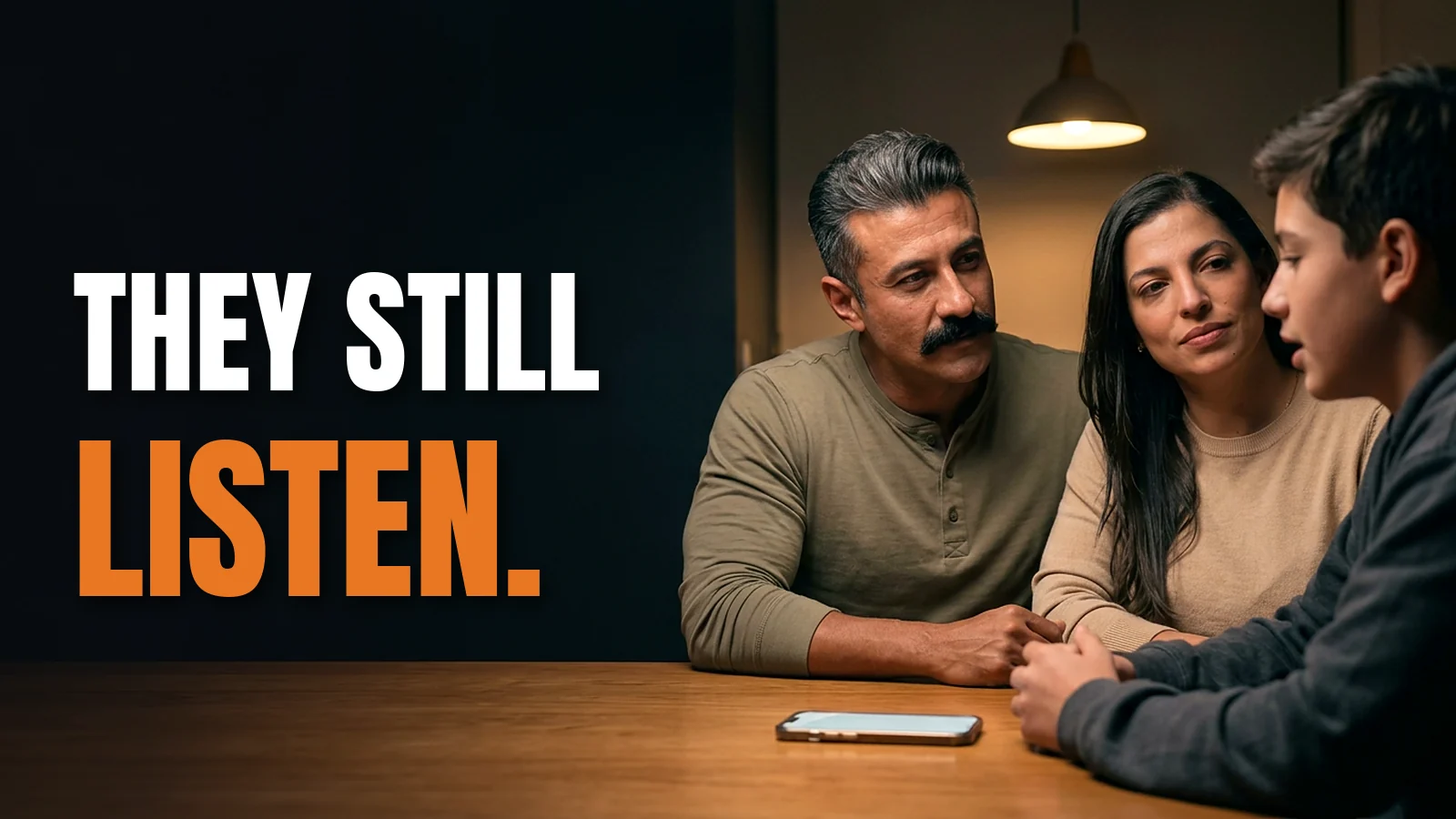
On October 26, Barna Group, which has studied faith and culture in America since 1984, released a survey of 1,500 U.S. teenagers ages 13 to 18. Seven in ten (70%) say they feel pressure to answer the question “Who am I, really?” And when they need advice on it, the people they’d feel most comfortable asking are still at home: mom (84%) and dad (78%), ahead of close friends (75%), teachers (67%), YouTube (39%), social media (35%) and AI (35%). Jesus (68%) and the Bible (66%) also rank above every screen. SRN News picked up the story on Monday, November 2.
Before I comment, the caveats, because I’d rather have an honest number than a pretty one. The survey used an online panel with quotas, weighted to Census benchmarks, and was fielded in February 2026 (margin of error ±2.2 points). It measures who teens say they’d be comfortable asking, not who they actually talk to. And it’s part of a Barna report produced with the youth ministry Christ In Youth, written for youth leaders. None of that cancels the finding, but it’s worth knowing what the number is and what it isn’t.
They’re still knocking
I talk with a lot of tired parents. The sentence I hear most is some version of “My kid doesn’t want anything to do with me anymore.” The closed bedroom door, the earbuds, the one-word answers at dinner. It feels like rejection. Often it’s just adolescence.
What this research suggests is that behind the closed door, most teens still look home first when the question is serious. Not to the influencer. Not to the chatbot. To mom and dad.
That should give us hope, and it should also unsettle us. Because if our kids are still willing to ask, the remaining question is ours: are we available to listen? Often it isn’t the teenager who gives up on the parent. It’s the parent who, worn out by short answers, gives up first and leaves the space empty. And empty space doesn’t stay empty for long.
One youth pastor quoted by Barna, Richard Hamilton, put it well: when students are questioning who they are, they’re going to go somewhere. “Our job is to make sure a trusted adult, not an algorithm, is in that space.” I couldn’t agree more.
Hard conversations start in easy ones
One detail stood out to me. Feeling “comfortable to ask” isn’t born on the night of a crisis. No teenager walks up to his father at 11 p.m. to talk about his confusion, his fear or his temptation if, on the thousand nights before, Dad only talked about grades, curfew and phone time.
Scripture places the shaping of children right in the ordinary rhythm of the day:
“These commandments that I give you today are to be on your hearts. Impress them on your children. Talk about them when you sit at home and when you walk along the road, when you lie down and when you get up.” (Deuteronomy 6:6-7, NIV)
Notice the order: first on your heart, then on your children. And notice the places: the table, the road, bedtime, morning. Discipleship at home isn’t a perfect family devotional. It’s repeated presence. It’s the car ride with the radio off, the silly question that turns into a real conversation, the unhurried “How are you, really?”
For us men, there’s a specific word here. In the survey, dad trails mom by six points. It’s not a huge gap, but it’s real. Paul wrote:
“Fathers, do not exasperate your children; instead, bring them up in the training and instruction of the Lord.” (Ephesians 6:4, NIV)
Raising isn’t only correcting. A father who only shows up to scold teaches his kids to look for advice somewhere else.
Your marriage is the first answer
This is what I most want to say as someone who walks with couples in crisis. When a teenager asks “Who am I?”, he doesn’t only ask with words. He watches. He sees how Dad treats Mom when he’s frustrated. He sees whether Mom speaks of Dad with respect when he’s not in the room. He sees whether the family’s faith shows up only on Sunday or also in Tuesday’s argument.
A parents’ marriage is the first identity lesson a child receives: what it means to be a man, to be a woman, what love is, what forgiveness looks like. I know this personally, because I was once the problem in my own marriage. And I know the restoration God worked in Vanessa and me was never just about the two of us. It changed the air in our home.
So I tell couples: if you want to be the voice your kids trust, start by caring for the voice you use with each other. Parents who are divided, who undercut each other in front of the kids, or who live in a cold war under the same roof push their teenager outward, toward friends, screens, AI, whoever is available.
And if your story includes wounds, divorce, remarriage or shared custody, that doesn’t erase your place. This research isn’t about perfect families; it’s about present parents. It isn’t too late to be that dad, that mom.
What about AI?
Barna found something else worth noticing: the most spiritually engaged teens actually trust AI more than average (49% strongly agree they trust technology and AI to give them helpful information, versus 29% of all teens). Nearly half of them say AI feels like a safe place to ask questions they wouldn’t ask out loud.
I’m not going to demonize the tool. But that line should get every Christian parent’s attention. If my child has questions he’s afraid to ask out loud, the problem isn’t AI. The problem is that at home those questions feel too dangerous. Technology can answer a question; it can’t hug, pray with you, or say “I’ve been there too.”
Three steps for this week
- Have one conversation with no agenda. Coffee, a drive, a walk. No sermon, no checklist. Just genuine interest. “Everyone should be quick to listen, slow to speak” (James 1:19, NIV) applies to parents too.
- Get on the same page as a couple first. Parents who are aligned on rules and values give a teenager security. Disagree behind closed doors, decide together, show up united.
- Make it clear no question is off-limits. Say it plainly: “You can ask me anything. I may not know the answer, but I’ll look for it with you.”
The last book of the Old Testament ends with a promise: God “will turn the hearts of the parents to their children, and the hearts of the children to their parents” (Malachi 4:6, NIV). This research suggests that in most homes, children’s hearts are still turned toward their parents. The question is whether ours are turned toward them.
If your marriage is so worn down that the two of you can barely talk to each other, let alone to your kids, start there. Vanessa Lima and I share practical, Christ-centered help for marriages and families every week on the O Casal Legendário YouTube channel and on Instagram.
Sources
- New Research: Mom, Dad, Jesus or AI? Who Teens Turn to for Advice — Barna Group, Oct. 26, 2026
- Who are teenagers turning to for advice these days? — SRN News, Nov. 2, 2026
Ricardo Martins
Ricardo Martins is an author, pastor and spokesperson for the Legendários men's movement. With his wife, Vanessa Lima, he created The Legendary Couple (O Casal Legendário), reaching millions with content on Christian marriage and restoration. Author of "Quando o amor recomeça" (Citadel, 2026).
Want to talk with Ricardo & Vanessa?
Follow the daily videos on YouTube and Instagram — real testimony, practical steps, and hope for marriages that look finished.
Watch on YouTubeKeep reading
Young Men Are Showing Up at Church Again. Who Will Walk With Them?
A Pew Research Center report released October 28, 2026, finds that 41% of U.S. adults ages 18 to 22 attend religious services at least monthly — and, for the first time in Pew's surveys, young men in that group attend more than young women. Ricardo Martins on what this asks of fathers, husbands and churches.
Read article →
82% of Brazilians Say Toddlers Shouldn't Have Phones — So Who Keeps Handing Them Over?
A survey by Brazil's Instituto Locomotiva, released October 9, 2026, ahead of Brazil's Children's Day, found that 82% of adults oppose children up to age 3 using smartphones and 83% believe kids "don't want to play outside anymore." Ricardo Martins comments on what that says about parents — and about marriage.
Read article →
1 in 3 Brazilian Parents Caught Their Kids Making Secret App Purchases — The Real Question Is Who Is Raising Our Children
A Serasa survey conducted by Instituto Opinion Box, released October 6, 2026, found that 32% of Brazilian parents have caught their children making purchases in apps and games without permission, and 53% believe social media increases children's desire to consume. Ricardo Martins comments on presence, unity between spouses, and discipleship at home.
Read article →This content is educational and pastoral. It does not replace therapy, medical, legal or emergency help. If you are in danger, seek help now.