Online sports betting and marriage: the quiet addiction that drains your account and your trust
Ricardo Martins talks about online sports betting inside a Christian marriage — what the data from Brazil's Central Bank and Datafolha reveal, why betting breaks trust before it breaks the bank, what 1 Timothy 6 says about the rush to get rich, and practical steps for couples to climb out.
 By Ricardo Martins
Published November 9, 2026 · 7 min read
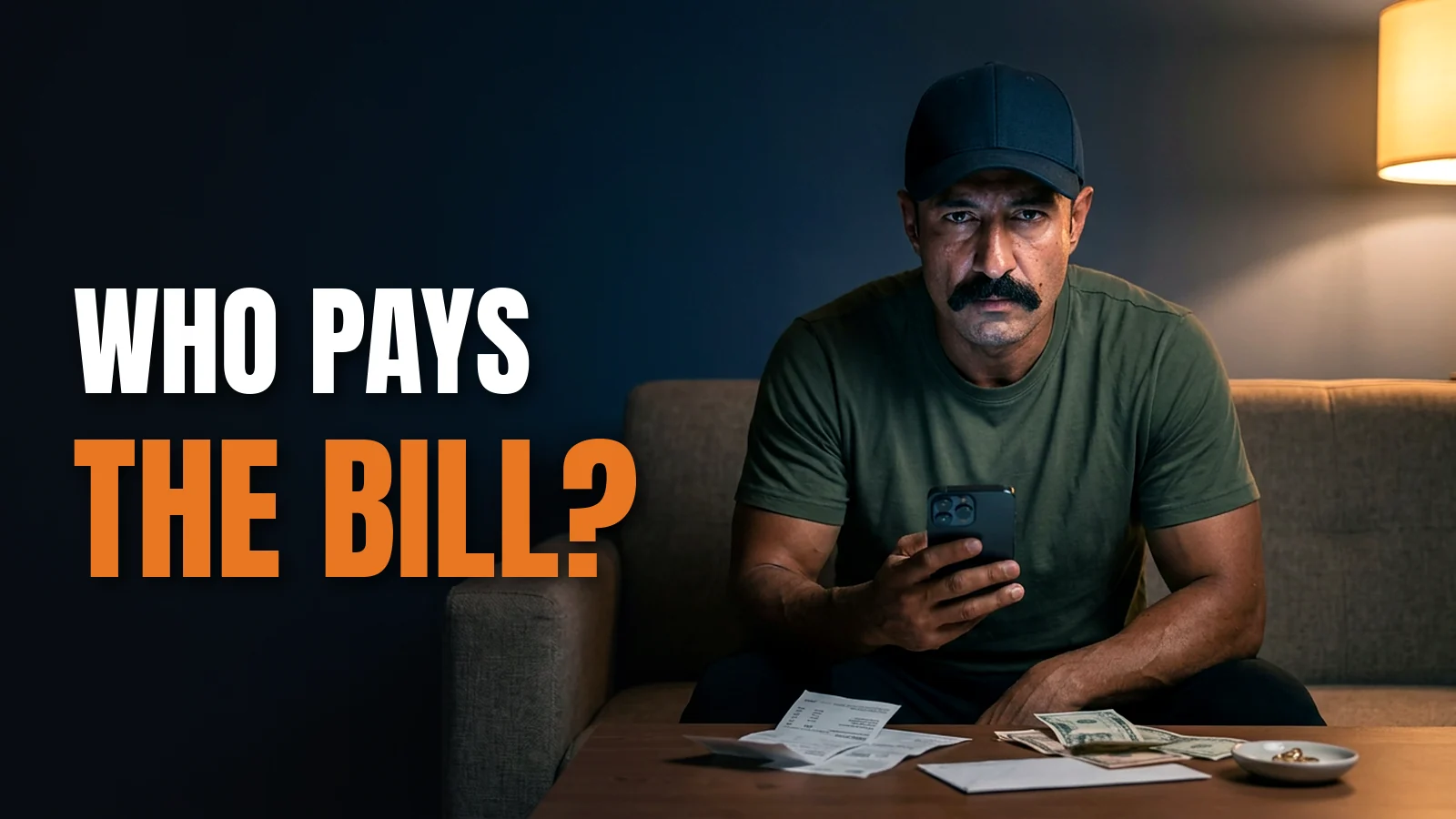
It starts with twenty bucks. A Thursday night game, an app a buddy recommended, a “risk-free” sign-up bonus. “It just makes the game more fun.” Then you hit a parlay and it feels amazing. Then you lose one and you want it back. A few months later, the phone lives face-down on the table, the credit card statement looks off, and your wife asks, “Where did this money go?”
I want to talk about this plainly, because online betting is one of the quietest addictions to walk into Christian homes in recent years. No smell of alcohol. No marks on the body. You don’t even have to leave the couch. It fits in your pocket — and that’s exactly what makes it so dangerous for a marriage.
This is not a small problem
Vanessa and I are from Brazil, where the betting boom hit hard and fast — and where the numbers are sobering. A technical study by Brazil’s Central Bank estimated that throughout 2024, Brazilians sent between R$18 and R$21 billion every month to betting companies through instant bank transfers, and that roughly 24 million people made at least one transfer to these sites during the period studied. The same study estimates that about 15% of everything wagered stays with the companies. In other words: the house doesn’t lose.
And the damage doesn’t stay on a spreadsheet. In a Datafolha survey from May 2026, 7% of Brazilian adults said they currently bet on sports or play online casinos. Among those who bet now or ever have, 35% had already put their finances at risk to keep betting: 19% dipped into savings, 8% borrowed money and 6% skipped paying a bill. And among current bettors, 21% said they bet every single day.
Notice who shows up most: for sports betting, the rate among men was 9%, compared to 2% among women.
If you’re reading this in the U.S., none of that should feel foreign. Since the Supreme Court cleared the way for states to legalize sports betting in 2018, the apps, the ads and the “boosted odds” have become part of watching the game. So, brother, this conversation is especially for you.
Trust goes first. The money goes second.
When a couple hits rock bottom over gambling, the money is rarely what hurts most. It’s the discovery. It’s realizing that for months your husband (or wife) looked you in the eye and said “we’re fine” while hiding statements, deleting notifications and changing passwords.
Betting almost always walks hand in hand with lying. First the small lie: “It was only fifty.” Then the strategic lie: a separate account, a loan nobody mentioned, the kids’ school money used “just until it turns around.” And every lie digs the trust hole a little deeper.
Scripture paints a hard, accurate picture of this:
“Those who want to get rich fall into temptation and a trap and into many foolish and harmful desires that plunge people into ruin and destruction. For the love of money is a root of all kinds of evil. Some people, eager for money, have wandered from the faith and pierced themselves with many griefs.” (1 Timothy 6:9-10, NIV)
Paul doesn’t say money is the problem. He says the rush to get rich is a trap. And the one who falls into it doesn’t suffer alone: he pierces himself “with many griefs” — and in a marriage, the person beside him feels every one of them.
The lie every bet tells
Every sportsbook sells the same promise: you can win fast, with little effort and a bit of “inside knowledge.” It’s the oldest lie in the world wearing a new jersey. Proverbs dismantled it long ago:
“Dishonest money dwindles away, but whoever gathers money little by little makes it grow.” (Proverbs 13:11, NIV)
“A faithful person will be richly blessed, but one eager to get rich will not go unpunished.” (Proverbs 28:20, NIV)
Underneath the betting there is often something else: a man who feels small, who thinks he isn’t providing enough, who wants to “fix everything” with one big hit. Or someone who found in the rush of the game an escape from boredom, anxiety or pain. Gambling promises control and delivers bondage.
Paul draws a clear line for anything, even what looks harmless:
“‘I have the right to do anything,’ you say—but not everything is beneficial. ‘I have the right to do anything’—but I will not be mastered by anything.” (1 Corinthians 6:12, NIV)
The question isn’t “Is a twenty-dollar bet a sin?” The question is: Is this mastering me? If you think about the next bet all day, hide how much you’ve lost, feel the need to chase your losses or get irritable when you can’t play — you already know the answer.
If you’re the one betting
A godly man isn’t the one who never falls. He’s the one who stops hiding. Some concrete steps:
- Tell your wife the whole truth. Not the edited version. Amounts, debts, accounts. Trust doesn’t come back through a half confession; it comes back through full daylight.
- Cut off access. Delete the apps, use the self-exclusion and deposit-limit tools the platforms offer, block the sites on your phone. Don’t trust your willpower at 11 p.m.
- Hand over the keys for a season. Let your wife or a trusted friend see the account and the card. That’s not humiliation; it’s protection.
- Get help. Talk to your pastor, find a support group like Gamblers Anonymous and, if needed, a licensed professional. Addiction isn’t beaten in isolation.
Remember the prodigal son. He only started home when “he came to his senses” (Luke 15:17). And when he did, he found a father running toward him. That’s the God waiting for you — not with a pointed finger, but with open arms.
If you’re the one who found out
Maybe you’re reading this with the bank statement in your hand and a knot in your stomach. Your pain is real. You were deceived, and that hurts as much as the loss itself.
A few things that can help:
- Protect the basics. It’s okay to set aside what covers the house, the groceries and the kids. A boundary isn’t a lack of love.
- Don’t carry this alone. Find someone mature in the faith — a friend, a mentor couple, your pastor — to pray with you and help you think clearly.
- Forgiveness isn’t naïveté. You can forgive and still require transparency. Trust is rebuilt through repeated actions, not promises.
For both of you: money in the light
Marriage makes two people one flesh, and that includes the wallet. If money is already one of the biggest sources of conflict for couples (I wrote about that in Money fights predict divorce — here’s the fix), hidden money is a ticking time bomb.
Set up a short weekly money check-in: what came in, what went out, what’s coming up. No courtroom, no perfect budget — just the lights on. And put your hearts in the right place:
“Keep your lives free from the love of money and be content with what you have, because God has said, ‘Never will I leave you; never will I forsake you.’” (Hebrews 13:5, NIV)
Contentment is the antidote to gambling. A man who knows God will never leave him doesn’t need to bet his family’s future on a lucky break.
If betting has made its way into your home, it doesn’t get the final word. Start today with one honest conversation and one concrete step — and let God rebuild what the rush to get rich tore down.
Ricardo Martins
Ricardo Martins is an author, pastor and spokesperson for the Legendários men's movement. With his wife, Vanessa Lima, he created The Legendary Couple (O Casal Legendário), reaching millions with content on Christian marriage and restoration. Author of "Quando o amor recomeça" (Citadel, 2026).
Want to talk with Ricardo & Vanessa?
Follow the daily videos on YouTube and Instagram — real testimony, practical steps, and hope for marriages that look finished.
Watch on YouTubeKeep reading
Financial Infidelity: 43% Who Share Money Have Hidden Something From Their Partner
A NEFE/Harris Poll survey found that 43% of U.S. adults who have ever combined finances admit to some form of financial deception — hiding purchases, accounts, debt or income. Ricardo Martins explains why it's a covenant issue, not a spreadsheet issue, and how couples step back into the light.
Read article →
Money Is Couples' Top Stressor — and 41% Made a Big Financial Decision Without Telling Their Partner
A new CFP Board survey with Morning Consult, released October 5, 2026, found that 65% of married or cohabiting Americans name money as a top relationship stressor and 41% made a major financial decision in the past year without telling their partner. Ricardo Martins comments on what this reveals about trust and covenant.
Read article →
Can “Thank You” Hold a Marriage Together? What Research Says About Gratitude
Five studies from JPSP, PSPB, Psychological Science and Personal Relationships — Dutch newlyweds, married Americans and dating couples — show what gratitude does, and doesn't do, for relationship stability.
Read article →This content is educational and pastoral. It does not replace therapy, medical, legal or emergency help. If you are in danger, seek help now.