28% of Brazilians would reject their child's marriage over politics. The election is over — what about your dinner table?
A Quaest poll released on November 9 shows family breakups over politics in Brazil fell from 36% to 10% in three years — but 28% would still disapprove of a son or daughter marrying someone from the opposing political camp. Ricardo Martins comments, without taking sides, on what that reveals about our homes.
 By Ricardo Martins
Published November 9, 2026 · 7 min read
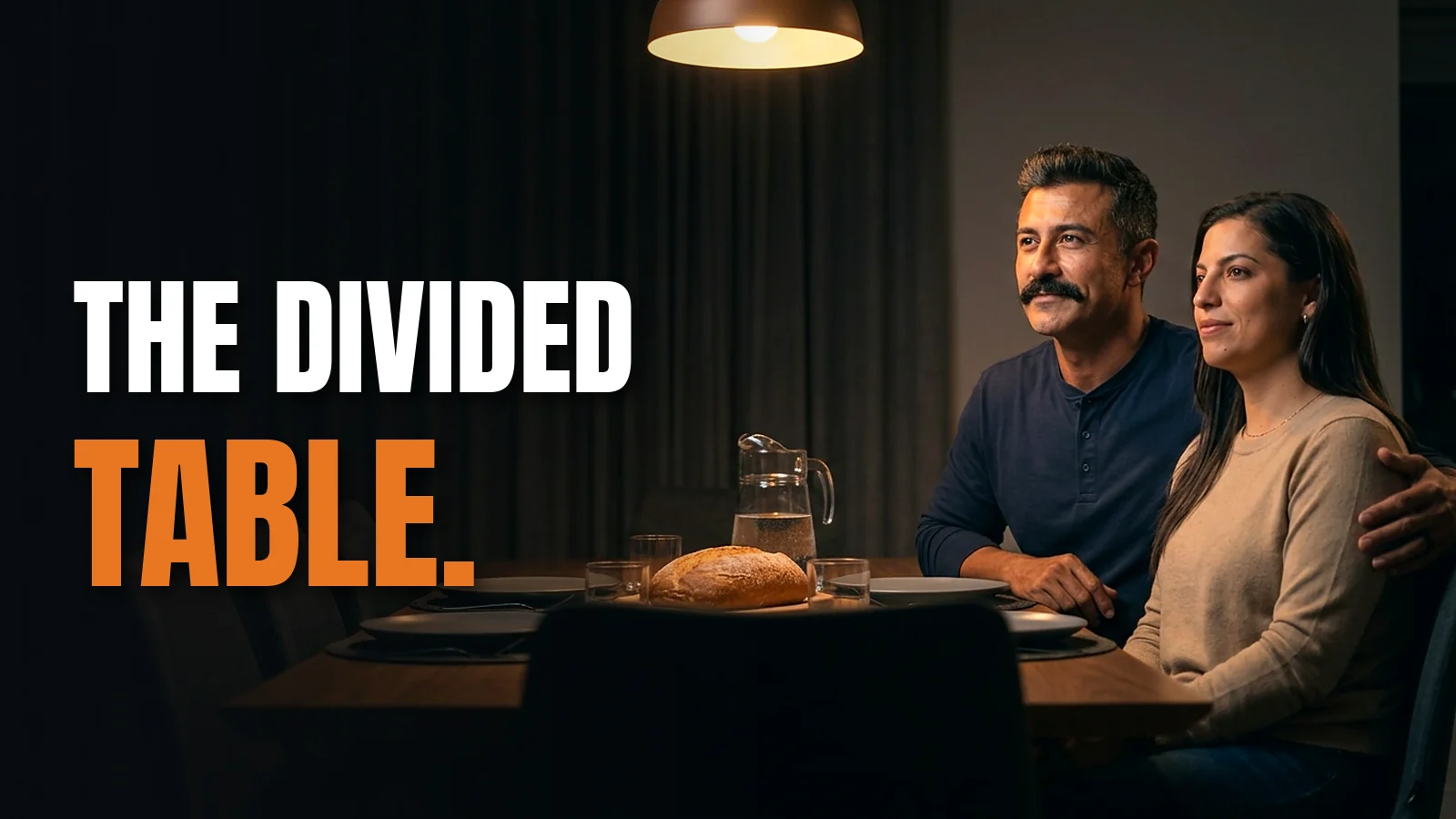
The news
On Monday, November 9, the Brazilian polling firm Quaest released the third volume of its post-election survey Brazil After the Ballot Box, commissioned by the newspaper O Globo and covered by Folha de S.Paulo and Estadão. Quaest interviewed 2,004 voters in person between October 30 and November 2, with a margin of error of two percentage points.
Two lines stopped me. The first is good news: 10% of Brazilians say they have cut ties with family members because of politics — down from 36% in December 2023. The second is a warning: 28% would disapprove of a son or daughter marrying someone from the opposing political camp, up from 18% in December 2025. The survey also found that 8% would leave their church if their pastor or religious leader backed the rival candidate.
I’m not going to comment on candidates, parties, or results. This blog is not a campaign stage. What interests me is something else: what these numbers say about the dinner tables of Brazilian families — Christian families included. And if you’re reading this from the United States, I suspect the picture looks familiar.
Good news we can’t afford to waste
First, let’s celebrate what deserves celebrating. Going from more than a third to one in ten means a lot of people found their way back to the same table. People who started answering a brother’s call again, showing up for Sunday lunch, texting Dad on his birthday.
But 10% is still a lot. In any group of ten people, one has a relative they no longer speak to — and the reason wasn’t betrayal, an inheritance fight, or abuse. It was politics.
If you’re part of that statistic, let me ask you an honest question: the election is over. Does the fight need to last four more years?
The wrong filter for choosing a spouse
The number that bothered me most was the 28%. Because it isn’t about the past. It’s about our children’s future.
I have two kids. I pray for their future spouses. And I’m the first to say that values matter when choosing someone to marry. Scripture is clear about not being unequally yoked in faith. Character matters. Faithfulness matters. The fear of God matters. How a person treats their mother, the waiter, and their money matters.
But notice: the poll question wasn’t about character or faith. It was about voting for the other side. When a vote becomes the first filter — ahead of character, ahead of faith in Christ, ahead of how that person loves your child — something inside us has gotten out of order.
I’ve seen marriages destroyed by many things. Pride, lies, addiction, coldness. In my own story, the problem in my marriage had a first and last name: it was me. I have never seen a home collapse because a husband and wife voted differently. I’ve seen plenty collapse because one of them didn’t know how to disagree without humiliating the other.
Jesus chose a Zealot and a tax collector
There’s a detail in the Gospels I love. In the list of the twelve apostles, side by side, we find “Matthew the tax collector” and “Simon the Zealot” (Matthew 10:3-4, NIV). One had worked collecting taxes for the empire’s system. The other carried a title that most likely tied him to the Zealots, people who wanted that empire out of Israel.
In the politics of their day, those two men stood on opposite sides. Jesus called both of them to the same table — and to the same mission. Not because politics didn’t matter, but because His Kingdom is bigger than any side.
Paul wrote: “But our citizenship is in heaven. And we eagerly await a Savior from there, the Lord Jesus Christ” (Philippians 3:20, NIV). That doesn’t remove my responsibility to vote with a clear conscience. But it reminds me that my vote is a citizen’s decision — and my identity is that of a son.
And Jesus Himself left a warning that fits every era: “Every kingdom divided against itself will be ruined, and every city or household divided against itself will not stand” (Matthew 12:25, NIV).
When the divide is inside the marriage
The poll asked about children’s marriages, but I know that for many couples the tension is inside their own bedroom. She sees things one way, he sees them another. During the campaign, the family group chat became a battlefield, and the couple reached the end of October tired of each other.
If that’s you, here are four practical steps:
1. Separate conviction from team spirit. Conviction grows out of your values, and you can explain it calmly. Team spirit is what makes you want to win the argument at any cost. In marriage, team spirit always loses.
2. Listen to understand, not to reply. “Everyone should be quick to listen, slow to speak and slow to become angry” (James 1:19, NIV). Ask your spouse why this matters so much to them. Almost always, behind a vote there’s a fear, a story, or a desire to protect the family.
3. Don’t take the fight to bed. “In your anger do not sin: Do not let the sun go down while you are still angry” (Ephesians 4:26, NIV). You can go to sleep disagreeing. Don’t go to sleep with anger piling up.
4. Shield your kids from the war. Children don’t need to watch Mom and Dad treat each other like enemies over a candidate. What they learn from that isn’t politics — it’s contempt.
A word to anyone who has cut someone off
If you’re among the 10% who cut ties with a relative, I won’t tell you it’s simple. Sometimes, along with the politics, came harsh words, public humiliation, things that genuinely hurt. Reconciliation doesn’t mean pretending nothing happened, and no one is required to stay under abuse.
But there is a small step that depends on you. Paul put it this way: “If it is possible, as far as it depends on you, live at peace with everyone” (Romans 12:18, NIV). As far as it depends on you. A message. An “I’ve missed you.” An invitation for coffee — no agenda, no trying to convince anyone.
Vanessa taught me, in practice, that forgiveness begins as a decision before it becomes a feeling. She gave God a chance when I didn’t deserve it. Trust came back brick by brick. If God can rebuild a marriage that I myself tore down, He can bring a brother back to a brother after an election.
The table is bigger than the campaign stage
Four years from now there will be another election. Other campaigns, other group chats on fire. The question is: what kind of family will make it there?
I want mine to arrive whole. Disagreeing at times. But sitting at the same table.
If your marriage is limping toward the end of this year — because of politics or anything else — Vanessa Lima and I share honest, Christ-centered conversations about marriage every week on our YouTube channel and on Instagram. Come walk with us.
Sources
- Quaest: quase três em cada dez eleitores reprovariam casamento de filho com rival político — Folha de S.Paulo, Nov 9, 2026 (Portuguese)
- Conflitos familiares por política recuam, aponta pesquisa da Quaest sobre impacto da polarização — Estadão, Nov 9, 2026 (Portuguese)
- Pesquisa pós-eleitoral: o Brasil depois das urnas. Volume 03 — Polarização afetiva — Quaest (primary report, Portuguese)
Ricardo Martins
Ricardo Martins is an author, pastor and spokesperson for the Legendários men's movement. With his wife, Vanessa Lima, he created The Legendary Couple (O Casal Legendário), reaching millions with content on Christian marriage and restoration. Author of "Quando o amor recomeça" (Citadel, 2026).
Want to talk with Ricardo & Vanessa?
Follow the daily videos on YouTube and Instagram — real testimony, practical steps, and hope for marriages that look finished.
Watch on YouTubeKeep reading

Brazil's Adoption Line: 94% Want a Child Under 8, but 7 in 10 Waiting Kids Are Older
Data from Brazil's National Adoption and Foster Care System (SNA), run by the National Council of Justice (CNJ) and reported by O Globo on November 15, 2026, show more approved families than children available for adoption, yet the profiles don't match. Ricardo Martins comments on what this reveals about family, grace and the Christian couple's heart.
Read article →
Girls Do Almost 4 More Hours of Chores a Week Than Boys: Your Son's Marriage Starts at Your Kitchen Sink
A Federal University of Uberlândia (UFU) study using Brazil's 2023 national household survey, reported by g1 on November 13, 2026, finds 17-year-old girls spend nearly four more hours a week on housework than boys, with the gap starting at age 8. Ricardo Martins comments on what this means for tomorrow's marriages.
Read article →
Brazilian Weddings Ran 22% Over Budget in 2026 — and the Honeymoon Got Cut First
A Casar.com and Serasa survey reported by Valor Investe shows Brazilian couples planned to spend R$45,800 on their wedding and ended up spending R$56,200; 62.5% cut back on or gave up the honeymoon to avoid debt. Ricardo Martins comments on what that says about a couple's priorities.
Read article →This content is educational and pastoral. It does not replace therapy, medical, legal or emergency help. If you are in danger, seek help now.