Financial Infidelity: 43% Who Share Money Have Hidden Something From Their Partner
A NEFE/Harris Poll survey found that 43% of U.S. adults who have ever combined finances admit to some form of financial deception — hiding purchases, accounts, debt or income. Ricardo Martins explains why it's a covenant issue, not a spreadsheet issue, and how couples step back into the light.
 By Ricardo Martins
Published October 15, 2026 · 7 min read
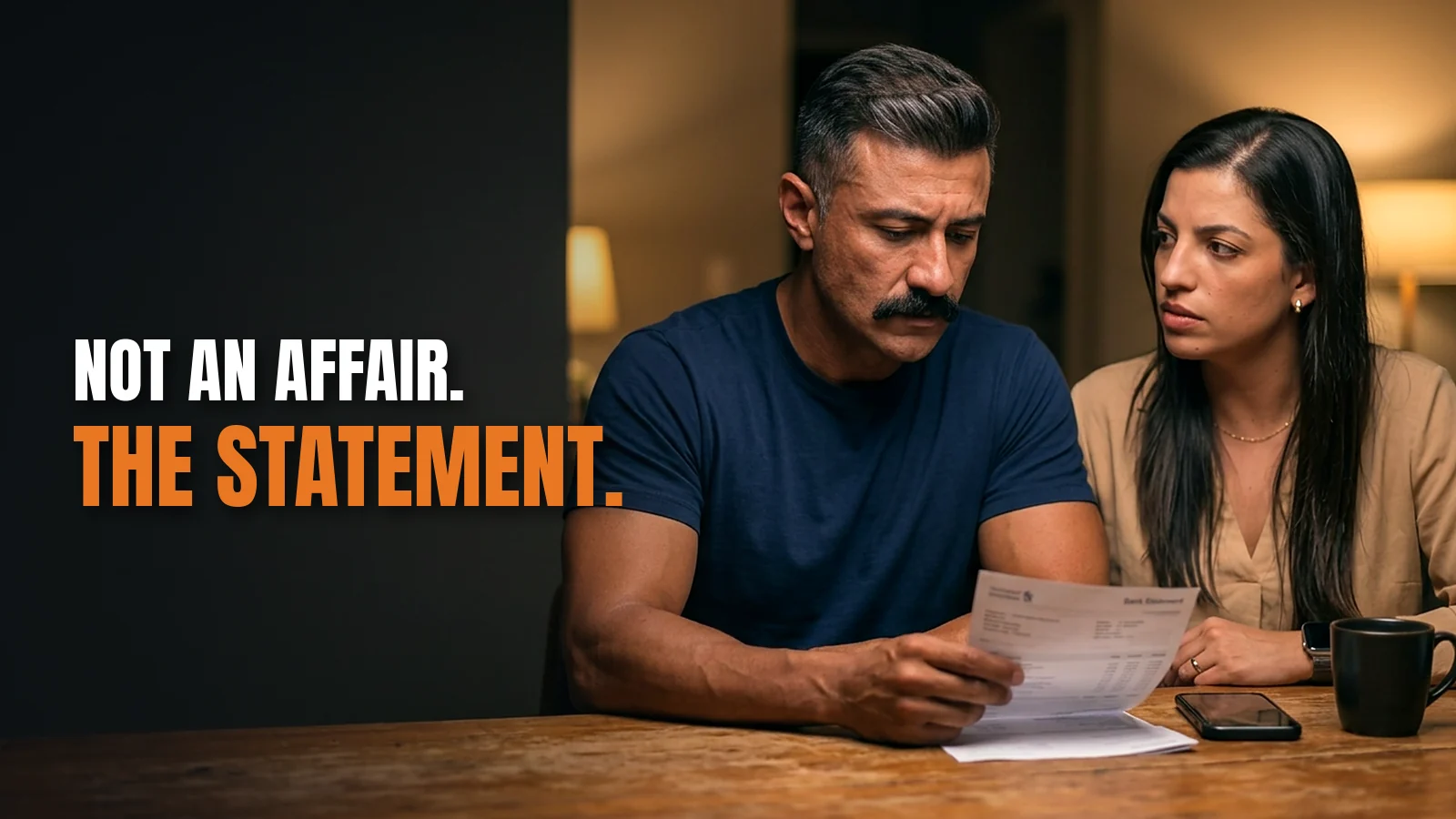
When we hear the word infidelity, we picture another person. A text that shouldn’t be there. A late night that doesn’t add up.
But there’s a betrayal that has no face and no name — and often doesn’t even feel like betrayal to the one committing it. It’s the credit card statement that goes to a work email. The account nobody at home knows about. The debt “I was going to pay off before I said anything.” The “oh, it was on sale” while the price tag is still in the bag.
It’s called financial infidelity. And it’s a lot more common than most of us want to admit.
What the survey found
In June 2021, The Harris Poll surveyed 2,073 U.S. adults for NEFE, the National Endowment for Financial Education. According to NEFE’s official release:
- Among adults who have ever combined finances with a partner, 43% admit to at least one act of financial deception.
- 39% have hidden a purchase, bank account, statement, bill or cash.
- About 1 in 5 (21%) have lied about finances, how much they owed or how much they earned.
- 42% said a partner had done it to them.
- Men reported it more than women (47% vs. 39%), and households with kids under 18 far more than those without (59% vs. 32%).
And it didn’t stay “just about money.” Among people who had been on either side of it, 85% said it affected the relationship — arguments (42%), less trust (32%), less privacy (20%), separating finances (16%) and divorce (16%).
To be fair to the data: this is a poll of people in current or past relationships, not only married couples, and it relies on what people were willing to admit. It measures how common the behavior is, not what causes what. But if four in ten admit it, you can guess how many didn’t.
Why we hide
Hiding has been part of sin’s playbook since Eden. After the fall, Adam told God: “I heard you in the garden, and I was afraid because I was naked; so I hid” (Genesis 3:10, NIV).
Notice the sequence: shame, fear, hiding. That’s the exact script behind most secret debt. Nobody opens a hidden card because they woke up wanting to betray their spouse. People hide because:
- They’re ashamed — of the mistake, the spending, of not having it together.
- They’re afraid of the reaction — the fight, the lecture, the “I told you so.”
- They want control — some money that’s “just mine,” an exit fund they won’t even name out loud.
- They think they’ll fix it quietly before anyone notices.
But hidden debt doesn’t sit still. It grows with interest. So does the lie.
It’s not a budgeting problem. It’s a covenant problem.
When two people marry, Scripture says they become one flesh. That doesn’t stop at the bank’s front door. One flesh with two secret accounts is a contradiction.
That’s why I don’t treat financial infidelity as an “organization issue.” No budgeting app fixes what is, at its root, broken trust. Paul put it plainly: “Therefore each of you must put off falsehood and speak truthfully to your neighbor, for we are all members of one body” (Ephesians 4:25, NIV). If that’s true of the guy in the next pew, it’s a thousand times truer of the person sleeping next to you.
Proverbs paints a healthy marriage this way: “Her husband has full confidence in her and lacks nothing of value” (Proverbs 31:11, NIV). Trust comes first; the “nothing of value” lacking comes after. Couples who trust each other build together. Couples who hide go broke together — sometimes in the wallet, always in the heart.
If you’re the one who hid it
Don’t wait to get caught. Being found out and coming clean feel completely different to the person you deceived.
“Whoever conceals their sins does not prosper, but the one who confesses and renounces them finds mercy” (Proverbs 28:13, NIV). Look closely: confesses and renounces. It’s not just telling. It’s ending it.
Practically:
- Tell all of it at once. Confessing in installments — the card this week, the other loan next month — re-breaks trust every single time.
- Bring the paperwork. Statements, balances, the total number. Transparency means showing, not just saying.
- Don’t shrink it. “It wasn’t that much,” “everybody does it,” “I was going to tell you” all sound like a defense. Say it straight: “I was wrong, and I hid it from you.”
- Bring a plan. A concrete payoff plan, plus a new rule: no account, card or big purchase without the other knowing.
- Respect their timeline. The hurt spouse gets to be angry, ask hard questions and take time to trust again.
If you’re the one who found out
Your pain is real, and you don’t have to pretend it isn’t. But let me ask two things gently.
First, separate the sin from the person. You’re likely looking at someone who was scared and ashamed. Humiliating them now only teaches that hiding was the safer move.
Second, ask for transparency, not revenge. Trust gets rebuilt brick by brick. I know that firsthand: I was once the problem in my own marriage, and Vanessa chose to give God a chance. Nobody is obligated to give that chance. But if you choose to, build it together — open accounts, a weekly money check-in, shared goals.
One important caveat: if what’s happening in your home is financial abuse — your spouse cuts off your access to money, forbids you to work, or threatens you — that’s not a communication problem. Reach out to someone you trust, a trained pastor or a professional. If you’re in danger, call 911 or the National Domestic Violence Hotline at 1-800-799-7233.
Men, go first
The numbers show men admitted to it more often. I’m not saying that to point fingers — I’m saying it to call us up. A man who leads like Christ doesn’t lead by hiding; he leads by bringing things into the open. Be the first to put the statements on the kitchen table and say, “Starting today, nothing in this house is hidden.”
If money is already a battlefield at your house, read why money fights predict divorce more than other disagreements and what a recent survey found about financial secrecy.
Stepping out of hiding
The same God who found Adam hiding didn’t go looking for him to shame him. He went to bring him back. That’s what light does for a marriage: “But if we walk in the light, as he is in the light, we have fellowship with one another, and the blood of Jesus, his Son, purifies us from all sin” (1 John 1:7, NIV).
Real closeness with your spouse runs on light. There’s no intimacy with a secret account.
So this week, do one simple thing: sit down together and open everything — no audience, no lecture. Then finish the way James tells us to: “Therefore confess your sins to each other and pray for each other so that you may be healed” (James 5:16, NIV).
And if you want more honest conversations like this one, Vanessa and I share them every week on our channels.
Sources
- 2 in 5 Americans Admit to Financial Infidelity Against Their Partner (NEFE / The Harris Poll, 2,073 U.S. adults, June 2021) — National Endowment for Financial Education (press release, Nov 18, 2021)
- Financial Infidelity in 2021: How Common Was Financial Deception? — NEFE (poll page)
Ricardo Martins
Ricardo Martins is an author, pastor and spokesperson for the Legendários men's movement. With his wife, Vanessa Lima, he created The Legendary Couple (O Casal Legendário), reaching millions with content on Christian marriage and restoration. Author of "Quando o amor recomeça" (Citadel, 2026).
Want to talk with Ricardo & Vanessa?
Follow the daily videos on YouTube and Instagram — real testimony, practical steps, and hope for marriages that look finished.
Watch on YouTubeKeep reading
Money Is Couples' Top Stressor — and 41% Made a Big Financial Decision Without Telling Their Partner
A new CFP Board survey with Morning Consult, released October 5, 2026, found that 65% of married or cohabiting Americans name money as a top relationship stressor and 41% made a major financial decision in the past year without telling their partner. Ricardo Martins comments on what this reveals about trust and covenant.
Read article →
November Blue: 77,000 Prostate Cancer Cases a Year in Brazil — and the Man Who Cares for Everyone but Himself
As Brazil's "November Blue" men's health campaign began, CNN Brasil reported that the National Cancer Institute (INCA) projects 77,920 new prostate cancer cases a year through 2028, and that shame and fear keep many men from addressing it. Ricardo Martins reflects on the male pride that postpones health — and the couple's role in it.
Read article →
Little white lies in marriage: how small dishonesty erodes trust
“It was on sale.” “I'm almost there.” “I'm fine.” Ricardo Martins writes about the small everyday lies couples tell, what Bella DePaulo's research found about lying to a spouse, and what Ephesians 4 teaches about speaking the truth in love.
Read article →This content is educational and pastoral. It does not replace therapy, medical, legal or emergency help. If you are in danger, seek help now.