In sickness and in health: marriage and chronic illness
The diagnosis came and it isn't leaving. Ricardo Martins writes about marriage under chronic illness, what a study of 515 patients revealed about who stays and who leaves, what Ecclesiastes 4, Galatians 6 and 2 Corinthians 12 teach, and six ways to keep the illness from taking the couple's place.
 By Ricardo Martins
Published November 5, 2026 · 6 min read
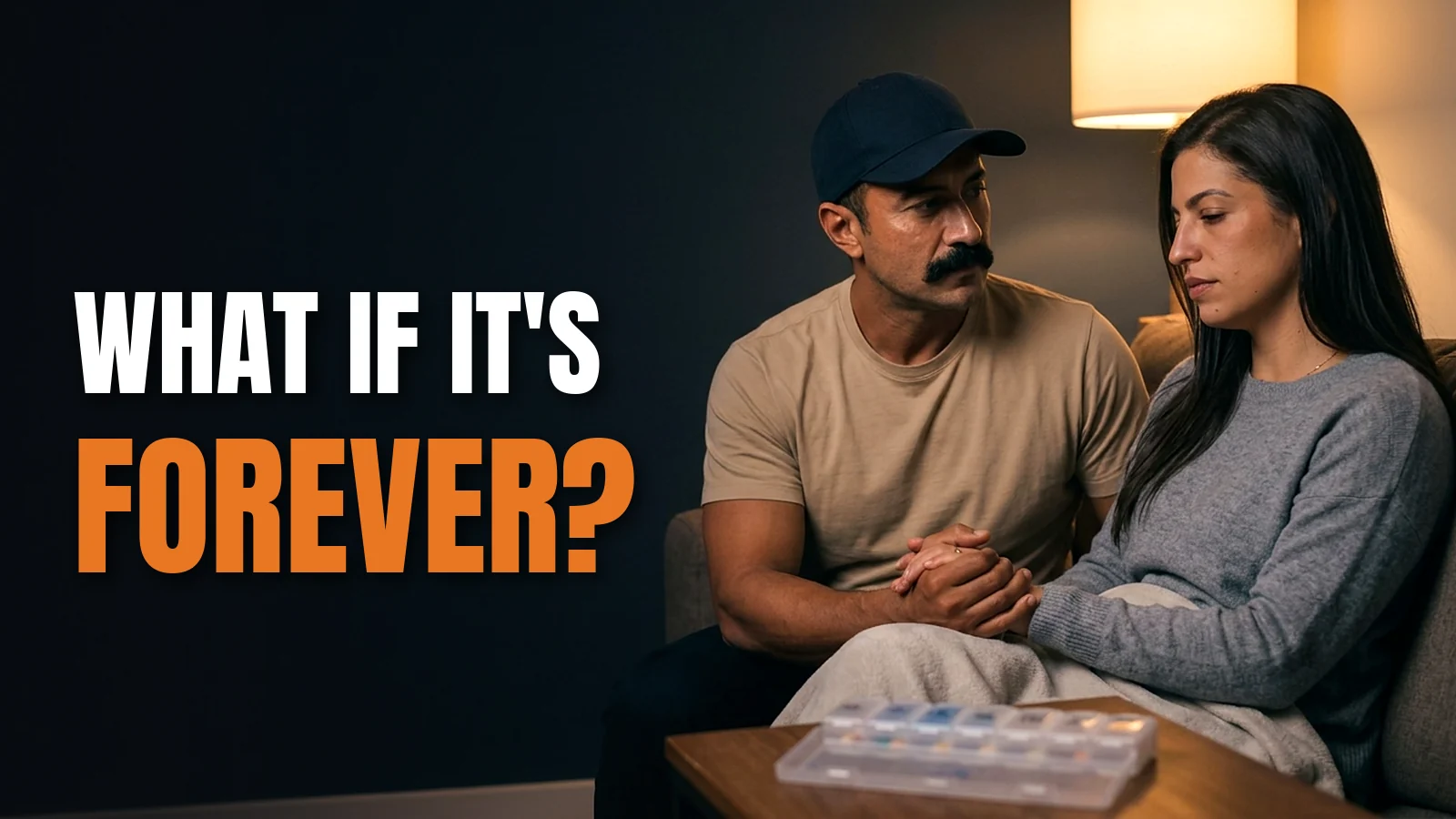
At the altar, the words roll right off your tongue. “In sickness and in health.” You say them looking into each other’s eyes, hearts full, and you barely register the first half. On your wedding day, sickness is just a word.
Then one day it gets a name. Diabetes. MS. Lupus. Fibromyalgia. Back pain that never lets up. A cancer that turned into ongoing treatment. And the doctor says the sentence that rearranges the whole house: “This is something you’ll manage for life.”
If that’s where you are, I want to talk to both of you. To the one who is sick and to the one sitting beside them. Because chronic illness doesn’t just move into one person’s body. It moves into the marriage.
The grief nobody gives you permission to feel
Here’s what few people say out loud: when a diagnosis is chronic, a couple grieves. Not for someone who died, but for the life you had planned. The trip you keep postponing. The job that had to change. The energy that isn’t coming back. The intimacy that looks different now.
That grief is usually quiet. The one who is sick feels guilty for “ruining everything.” The caregiver feels guilty for being exhausted, because, after all, “I’m not the one who’s sick.” Both of you swallow it. And what gets swallowed doesn’t disappear. It turns into distance.
Naming it is already a step. You can say to each other, “I miss how it used to be.” That isn’t a lack of faith. It’s honesty before God, like so many psalms that start in tears before they ever reach praise.
What one study found about who stays
In 2009, researchers from three U.S. medical centers published a study in the journal Cancer that followed 515 married patients with a brain tumor, other cancers or multiple sclerosis. The overall rate of separation or divorce was 11.6 percent, about the same as the general population. In other words, illness by itself does not doom a marriage.
But the gender breakdown is hard to read. When the wife was the patient, the separation rate was 20.8 percent. When the husband was the patient, it was 2.9 percent. A sick wife was roughly six times more likely to be left. The same study noted that longer marriages tended to hold together.
It’s one study, with a specific group of serious illnesses. It’s not a verdict on every man. But it is a warning. Husband, if your wife is sick, the pull to bail, whether you walk out the door or just check out emotionally, is real. Choosing to stay all in is one of the most manly things you will ever do.
What Scripture says to those in this valley
“Two are better than one, because they have a good return for their labor: If either of them falls down, one can help the other up. But pity anyone who falls and has no one to help them up” (Ecclesiastes 4:9-10). Marriage was never designed for two strong people who never fall. It was designed so that when one goes down, the other is there.
Paul says a husband cares for his wife the way he cares for his own body: “After all, no one ever hated their own body, but they feed and care for their body, just as Christ does the church” (Ephesians 5:29). Caring for your spouse’s weak body isn’t a detour from marriage. It’s marriage doing what it was made to do.
And to the one who is sick and feels like dead weight, there’s the word God gave Paul himself after he begged three times to be rid of his thorn: “My grace is sufficient for you, for my power is made perfect in weakness” (2 Corinthians 12:9). Your worth in this marriage was never about how much you produce. You’re not a problem your spouse is managing. You’re the person they chose.
Six ways to keep the illness from taking the couple’s place
1. Don’t let the diagnosis become the only topic. Set aside time, even a short one, to talk about anything other than labs, meds or appointments. You’re still husband and wife, not just patient and caregiver.
2. Share the nursing role. No spouse can be a 24/7 caregiver and still be a partner. Ask family, your church and professionals to help. I wrote about this in the post on when your spouse is depressed, and the same principle applies: loving someone up close doesn’t mean carrying them alone.
3. Let the sick spouse decide what they can. Illness has already taken a lot of control. Don’t take the rest. Ask before you decide for them. Dignity is medicine for the soul too.
4. Care for the caregiver. A caregiver who doesn’t sleep, doesn’t eat well and has no one to talk to will hit a wall. That’s not selfishness. It’s maintenance. “Carry each other’s burdens, and in this way you will fulfill the law of Christ” (Galatians 6:2). That’s part of what the church is for. Let someone else carry a piece.
5. Rediscover intimacy. It may change shape, but it doesn’t have to end. Touch, affection, praying together, a movie on the couch. Talk honestly, with no pressure, about what’s possible right now.
6. Get support. A doctor for the body, and emotional and pastoral support for the two of you. I’m not a physician, and nothing here replaces your healthcare team. Taking treatment seriously is one more way to honor your vows.
Hope the body can’t reach
I’m not going to promise you healing. God heals, and I believe that, but I also know many faithful people walked their whole lives with illness at their side. What I can promise is what Scripture promises: “Therefore we do not lose heart. Though outwardly we are wasting away, yet inwardly we are being renewed day by day” (2 Corinthians 4:16).
Your marriage can actually grow deeper right here. Because sickness is where “I choose you” stops being a line from the ceremony and becomes a daily decision. The word for this road is old and steady: “Be joyful in hope, patient in affliction, faithful in prayer” (Romans 12:12).
In health, it was beautiful. In sickness, it can be holy.
If you want more honest conversations about marriage and faith, Vanessa Lima and I share them every week on our channels.
Ricardo Martins
Ricardo Martins is an author, pastor and spokesperson for the Legendários men's movement. With his wife, Vanessa Lima, he created The Legendary Couple (O Casal Legendário), reaching millions with content on Christian marriage and restoration. Author of "Quando o amor recomeça" (Citadel, 2026).
Want to talk with Ricardo & Vanessa?
Follow the daily videos on YouTube and Instagram — real testimony, practical steps, and hope for marriages that look finished.
Watch on YouTubeKeep reading
November Blue: 77,000 Prostate Cancer Cases a Year in Brazil — and the Man Who Cares for Everyone but Himself
As Brazil's "November Blue" men's health campaign began, CNN Brasil reported that the National Cancer Institute (INCA) projects 77,920 new prostate cancer cases a year through 2028, and that shame and fear keep many men from addressing it. Ricardo Martins reflects on the male pride that postpones health — and the couple's role in it.
Read article →
Daily gratitude in marriage: the small habit that shifts the atmosphere at home
The coffee that shows up on the table, the laundry folded, the bills paid — when nobody says thank you anymore, a marriage cools down. Ricardo Martins writes, with 1 Thessalonians 5, Luke 17 and a diary study of couples, about gratitude as a daily habit.
Read article →
Lonely in Marriage: 1 in 4 Married Brazilians Felt Alone, Survey Finds
Brazil's 2026 Mental Health Panorama (Instituto Cactus and AtlasIntel), reported by Folha de S.Paulo, found loneliness to be the factor most linked to poor mental health. Married people felt lonely far less often than singles, yet 26.6% of them still did. Ricardo Martins reflects on loneliness inside marriage.
Read article →This content is educational and pastoral. It does not replace therapy, medical, legal or emergency help. If you are in danger, seek help now.