When your spouse is depressed: how to care without becoming the nurse
When a husband or wife is depressed, the other spouse tends to fix, nag, or disappear. Ricardo Martins on how to love from beside them, without taking the doctor's place or losing yourself.
 By Ricardo Martins
Published October 11, 2026 · 7 min read
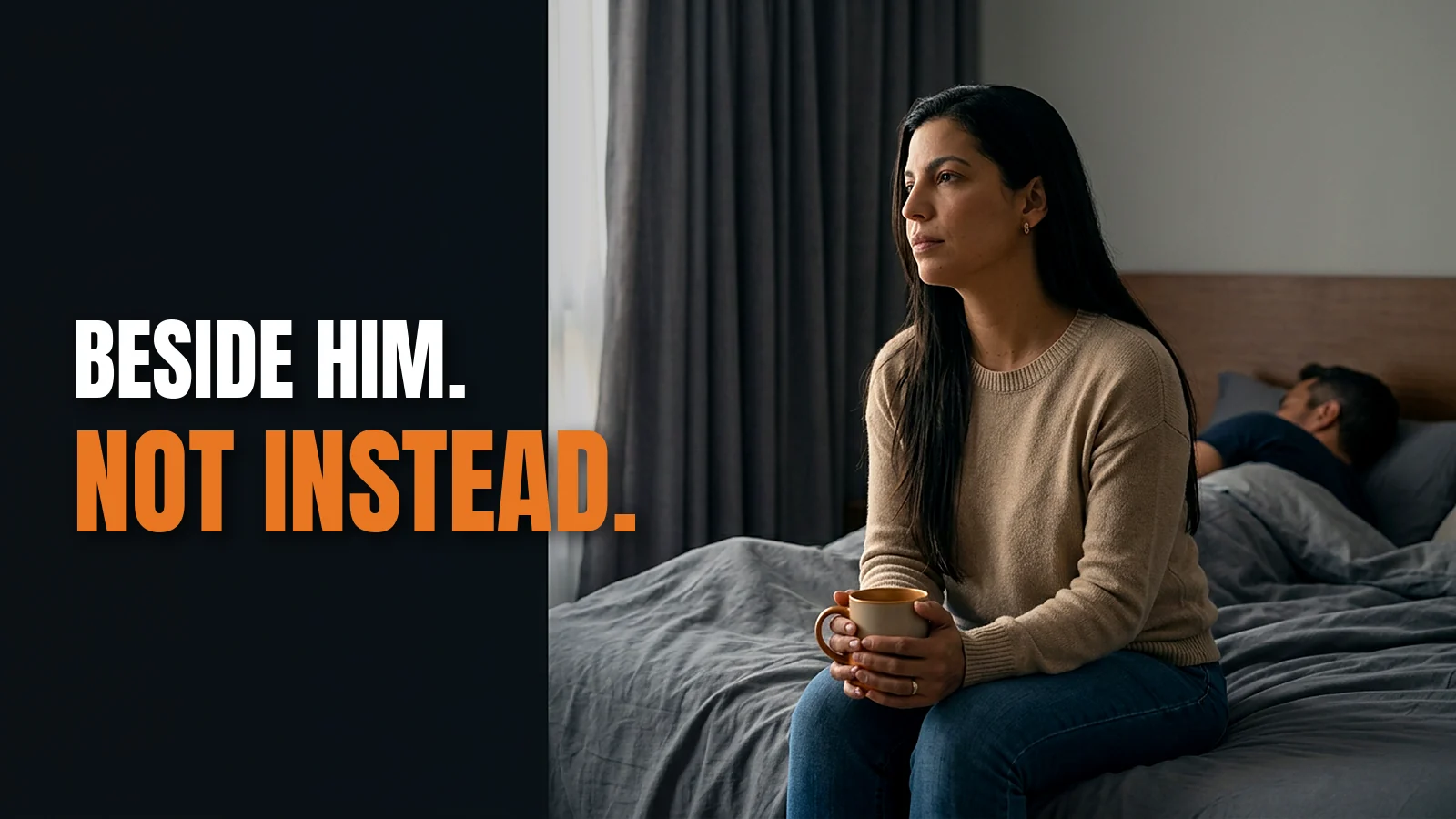
She’s up before him again. She opens the blinds, makes the coffee, gets the kids out the door, texts his mom a vague excuse, and tells the small group he’s “fighting a bug.” Then she walks back into the bedroom, and he’s still there, facing the wall. It isn’t laziness. She knows that. But it’s been weeks, and she’s starting to lose track of who’s taking care of whom.
If you’re living next to someone who’s depressed, this is for you. Not to hand you one more job, but to remind you of something simple: you’re the spouse. Not the doctor. Not the nurse. Not the savior.
Let me be upfront: I’m not a doctor, and nothing here replaces professional care. Depression is a real health condition. It needs diagnosis and treatment from people trained to give it.
Depression is not a faith problem
Too many churches still treat depression like hidden sin, prayerlessness, or “spiritual weakness.” That message has done real damage.
The Bible itself isn’t embarrassed by a heavy soul. The psalmist writes, “Why, my soul, are you downcast? Why so disturbed within me? Put your hope in God, for I will yet praise him, my Savior and my God.” (Psalm 42:5). And Jesus, in Gethsemane, told his friends, “My soul is overwhelmed with sorrow to the point of death. Stay here and keep watch with me.” (Matthew 26:38).
Notice what Jesus asked for. He didn’t ask the disciples to fix his anguish. He asked them to stay. To keep watch with him. That’s the heart of everything I want to say here.
What the numbers say
You’re not the only one walking through this. According to the World Health Organization, about 5.7% of adults worldwide live with depression — roughly 332 million people. A lot of them are married. That means millions of husbands and wives wake up every morning next to someone who’s fighting a battle on the inside.
And the link between marriage and depression runs both ways. A study in the Journal of Abnormal Psychology followed 904 married adults in New Haven, Connecticut, who weren’t depressed at the start. Those who were unhappy in their marriage were about 2.7 times more likely to develop a major depressive episode within a year (Whisman & Bruce, 1999). That’s a correlation, not proof that the marriage caused the depression — but it tells us the climate of a home matters.
That’s not there to load you up with guilt. It’s there to show you that how the two of you treat each other counts. Your home can be a place that makes things heavier, or a place that holds steady while treatment does its work.
Four mistakes caregivers make
When you love someone, you want to help. But it’s easy to slide into one of these traps without noticing:
1. The fixer. “You just need to get out more.” “Think positive.” “Have you prayed about it?” Said with love, heard as an accusation by someone who can barely get out of bed. Proverbs puts it bluntly: “Like one who takes away a garment on a cold day, or like vinegar poured on a wound, is one who sings songs to a heavy heart.” (Proverbs 25:20).
2. The scorekeeper. Exhaustion turns into resentment, and resentment turns into lectures. “How long am I supposed to carry everything?” It’s a fair question. But dropped on someone who’s already sinking, it only pulls them further down.
3. The nurse. You become the parent, the pill monitor, the family PR department, the only grown-up in the house. You disappear so the other person can stay upright. It looks like love. But nobody can live in that role for long — and the marriage stops being a marriage and starts feeling like a hospital ward.
4. The secret-keeper. You hide it from everyone. Church, family, friends. Out of shame, out of loyalty, out of fear of what people will think. And you end up carrying alone a weight that was never meant for one person.
Five ways to love from beside them
1. Show up without a sermon. When Job’s friends arrived, the best thing they did was the beginning: “Then they sat on the ground with him for seven days and seven nights. No one said a word to him, because they saw how great his suffering was.” (Job 2:13). The trouble started when they opened their mouths to explain his pain. Sometimes the most loving thing you can do is sit on the floor with them and not have an answer.
2. Point toward professional help — and walk with them. You’re not your spouse’s therapist. Your role is to encourage them to see a doctor and a counselor, to help book the appointment if they can’t, to go along if they want you there. Getting treatment isn’t a lack of faith. It’s wisdom. God often cares for us through trained, skilled people.
3. Separate the person from the illness. The irritability, the flatness, the distance in the bedroom, the “whatever” — a lot of that is the depression talking, not their heart. That doesn’t make everything okay, but it changes the question. Instead of “Why doesn’t he love me anymore?” you ask, “How do I stay beside him while he fights this?”
4. Build your own support team. Moses couldn’t keep his arms up through the battle by himself: “Aaron and Hur held his hands up — one on one side, one on the other — so that his hands remained steady till sunset.” (Exodus 17:12). You need your own Aaron and Hur. A couple you trust, a pastor, a small group, a counselor just for you. Caregivers need care too. That isn’t selfish. It’s what lets you keep going.
5. Hold boundaries with love. You can say “I’m here” and “I can’t do everything” in the same breath. Share the load with others, get help with the kids, protect some time to rest, pray, and breathe. A boundary isn’t abandonment. It’s what keeps one struggling person from turning into two.
If there’s any risk
If your spouse talks about dying, “disappearing,” or not being able to go on, don’t keep it to yourself and don’t wait for it to pass. Get help right away. In the U.S., call or text 988 (Suicide & Crisis Lifeline), and in an emergency call 911. That’s not overreacting. That’s love in action.
Hope that doesn’t depend on you
I was once the problem in my own marriage. Vanessa gave God a chance, and trust was rebuilt brick by brick. No couple gets back on its feet because one spouse played savior for the other. A home that stands is a home with Christ at the center.
So here’s what I want you to hear: you don’t have to be your spouse’s savior. That job is already taken. “Mourn with those who mourn” (Romans 12:15). Mourn with, not for. Beside them, not instead of them.
If you’d like more on faith, marriage, and walking through hard seasons together, Vanessa and I share it every week on our channels.
Sources
- World Health Organization (2025). Depressive disorder (depression) — Fact sheet — World Health Organization
- Whisman, M. A. & Bruce, M. L. (1999). Marital dissatisfaction and incidence of major depressive episode in a community sample. Journal of Abnormal Psychology, 108(4), 674–678 — Journal of Abnormal Psychology (APA)
Ricardo Martins
Ricardo Martins is an author, pastor and spokesperson for the Legendários men's movement. With his wife, Vanessa Lima, he created The Legendary Couple (O Casal Legendário), reaching millions with content on Christian marriage and restoration. Author of "Quando o amor recomeça" (Citadel, 2026).
Want to talk with Ricardo & Vanessa?
Follow the daily videos on YouTube and Instagram — real testimony, practical steps, and hope for marriages that look finished.
Watch on YouTubeKeep reading
Remarriage and blended families under grace
Kids from before, an ex in the school group chat, a stepdad with no authority yet, and a load of church guilt. Ricardo Martins on building a blended family with patience, boundaries and grace.
Read article →
Christian dating: what to settle before the altar
Faith, money, family, kids, sex and conflict. Ricardo Martins walks dating and engaged couples through the conversations to have before saying “I do” — and why chemistry is not the same as agreement.
Read article →
When Only One Spouse Wants Marriage Counseling
You want help for your marriage, but your spouse says “we don’t need that.” Ricardo Martins explains, from Scripture and research, why spouses resist counseling, how to invite without pressure, and what to do if the answer stays no.
Read article →This content is educational and pastoral. It does not replace therapy, medical, legal or emergency help. If you are in danger, seek help now.