Christian dating: what to settle before the altar
Faith, money, family, kids, sex and conflict. Ricardo Martins walks dating and engaged couples through the conversations to have before saying “I do” — and why chemistry is not the same as agreement.
 By Ricardo Martins
Published October 9, 2026 · 7 min read

I sit with a lot of couples in crisis. And one sentence comes up so often it scares me: “We never talked about that before we got married.”
They never talked about money. Never talked about how many kids. Never talked about how much say his mom would have in their home. Never talked about what each of them does when they’re angry. They were in love, the date was set, the venue deposit was paid — and hard conversations felt like something only suspicious people do.
Here’s the problem: marriage doesn’t cancel the questions you skipped. It collects on every one of them, with interest.
If you’re dating or engaged, this is for you. It’s not a list meant to scare you off. It’s a list to help you walk down the aisle knowing exactly what you’re promising.
Chemistry is not agreement
Scripture asks a question that should be framed on the wall of every dating couple:
“Do two walk together unless they have agreed to do so?” (Amos 3:3, NIV)
Chemistry is a feeling. Agreement is a decision. Chemistry makes you want to walk together; agreement decides where you’re walking. And chemistry, as beautiful as it is, has one flaw: it’s terrible at seeing clearly. The things that seem “cute” while dating — the jealousy, the clinginess, the “he’s got a temper, but he has a good heart” — become your everyday life once you’re married.
That’s why Christian dating isn’t just a season to enjoy each other. It’s a season to get to know, to ask, and to decide with your eyes open.
What the research says about getting ready
There’s a study I love showing engaged couples. Researchers from the University of Denver, Penn State and Oklahoma State (Stanley, Amato, Johnson and Markman, 2006) surveyed a random sample of more than 3,000 adults across four U.S. states. People who had gone through some kind of premarital education reported higher satisfaction and commitment in marriage, less destructive conflict, and about 31% lower odds of divorce. The pattern held across income, education and race.
The authors are upfront: this is a survey, not an experiment, so it shows association, not proof of cause. Maybe couples who seek out preparation are already more committed. But the takeaway still stands: couples who talk before the wedding fight less after it. Not because talking fixes everything, but because nobody gets blindsided.
Six conversations before “I do”
1. Faith: who is at the center?
“We’re both Christians” isn’t enough. The real question is: is Christ the center of each person’s life, or just a Sunday-morning appointment?
“Do not be yoked together with unbelievers. For what do righteousness and wickedness have in common? Or what fellowship can light have with darkness?” (2 Corinthians 6:14, NIV)
A yoke is the wooden beam that joins two oxen so they can pull the same plow. If one pulls left and the other pulls right, the plow goes nowhere and both get hurt. Talk about it: Where will you go to church? How will you pray together? What happens if one of you drifts? If you can’t talk about faith while dating, you’ll have a hard time praying together once you’re married.
2. Money: open books or secrets?
Joint account or separate? Who pays for what? How much debt does each of you carry right now — the actual number, not “a little on my card.” Student loans, giving, saving, lifestyle, helping parents. I’ve written before that money fights are never really about money: they’re about trust, fear and control. Start building that trust now, with everything on the table.
3. Family of origin: who comes first?
“That is why a man leaves his father and mother and is united to his wife, and they become one flesh.” (Genesis 2:24, NIV)
Leaving isn’t abandoning. It’s reordering priorities. Ask each other honestly: When my mom disagrees with you, whose side am I on? Whose house for Thanksgiving and Christmas? How much of our life does the family get to know? If he still needs his mother’s sign-off on decisions that belong to the two of you, deal with it before the wedding, not after.
4. Kids: how many, when and how?
Sounds obvious. It isn’t. Some couples find out after the wedding that one wants three kids and the other wants none. Talk about how many, when, how you’ll raise them, what role faith will play, and who stays home if someone needs to. And remember: a baby doesn’t fix a marriage; it amplifies whatever is already there.
5. Sex and purity: what each of you brings
This is the topic the church avoids most — and the one that sinks the most marriages. Christian dating isn’t just “waiting”; it’s preparing. Talk wisely (with a pastor or counselor in the room if you need one) about expectations, about your past, and about any addictions. If pornography is part of either person’s life, that’s not a detail to sort out “after we’re married.” Marriage doesn’t cure an addiction; it just gives it one more person to hurt.
“Daughters of Jerusalem, I charge you by the gazelles and by the does of the field: Do not arouse or awaken love until it so desires.” (Song of Songs 2:7, NIV)
There’s a right time. Guarding your body while dating isn’t repression; it’s protecting what you’re about to build.
6. Conflict: how does each of you fight?
Every couple fights. The question is how. Does one yell while the other shuts down? Does one need to fix it right now while the other needs three days? Has anyone ever raised their voice in a way that scared you? Watch how this person treats you when they don’t get their way — and how they treat the server, their mom and their siblings. How someone fights while dating is the best preview you’ll get of your marriage.
Yellow flags, red flags
Some things call for more conversation and more time. Others call for you to stop.
Yellow flags: hidden debt that just surfaced, very different expectations about kids, jealousy that controls, lukewarm faith on one side, heavy dependence on parents. These can be worked on — really worked on, with help — not waved off with “it’ll get better after the wedding.”
Red flags: any kind of abuse, physical or verbal; repeated lying; a hidden addiction the person refuses to address; pressure to set your faith aside. In those cases, postponing the date isn’t failure. Sometimes breaking it off is obedience.
Better a broken engagement than a broken marriage. The embarrassment of canceling the venue fades in a month. A marriage built on the wrong person for the wrong reasons weighs on you for decades.
Let your “yes” mean yes
“All you need to say is simply ‘Yes’ or ‘No’; anything beyond this comes from the evil one.” (Matthew 5:37, NIV)
At the altar you’ll promise “for better, for worse, in sickness and in health.” That’s a sacred vow, and a sacred vow should be made knowing what you’re vowing. I was once the problem in my own marriage, and I can tell you this: most wounds don’t come from one big wrong decision. They come from small conversations nobody had.
So if you’re headed for the altar, do one thing this week: set aside an evening, phones off, and work through these six conversations. You don’t have to settle everything in one night. You just have to start. And find an older couple or a pastor to walk with you through premarital counseling — that’s not weakness; it shows you take seriously what God is building.
Marriage doesn’t start at the altar. It starts with the decisions you make before it.
Sources
Ricardo Martins
Ricardo Martins is an author, pastor and spokesperson for the Legendários men's movement. With his wife, Vanessa Lima, he created The Legendary Couple (O Casal Legendário), reaching millions with content on Christian marriage and restoration. Author of "Quando o amor recomeça" (Citadel, 2026).
Want to talk with Ricardo & Vanessa?
Follow the daily videos on YouTube and Instagram — real testimony, practical steps, and hope for marriages that look finished.
Watch on YouTubeKeep reading
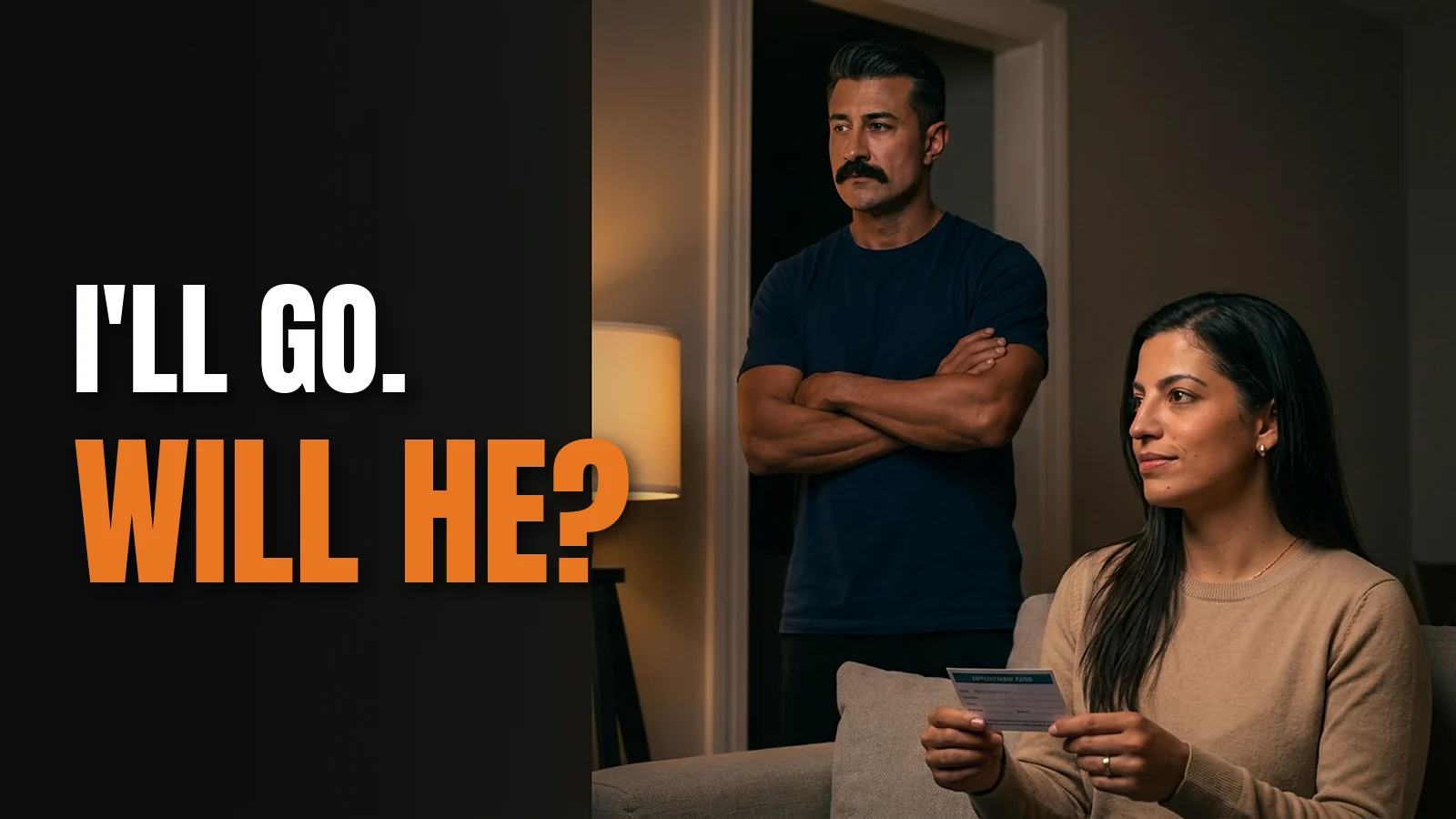
When Only One Spouse Wants Marriage Counseling
You want help for your marriage, but your spouse says “we don’t need that.” Ricardo Martins explains, from Scripture and research, why spouses resist counseling, how to invite without pressure, and what to do if the answer stays no.
Read article →
Reconciliation After Separation: Practical and Spiritual Steps
Getting back together after a separation isn't hitting a reset button. Ricardo Martins shows, from Scripture and research, the practical and spiritual steps of a reconciliation that doesn't rebuild the same marriage that broke.
Read article →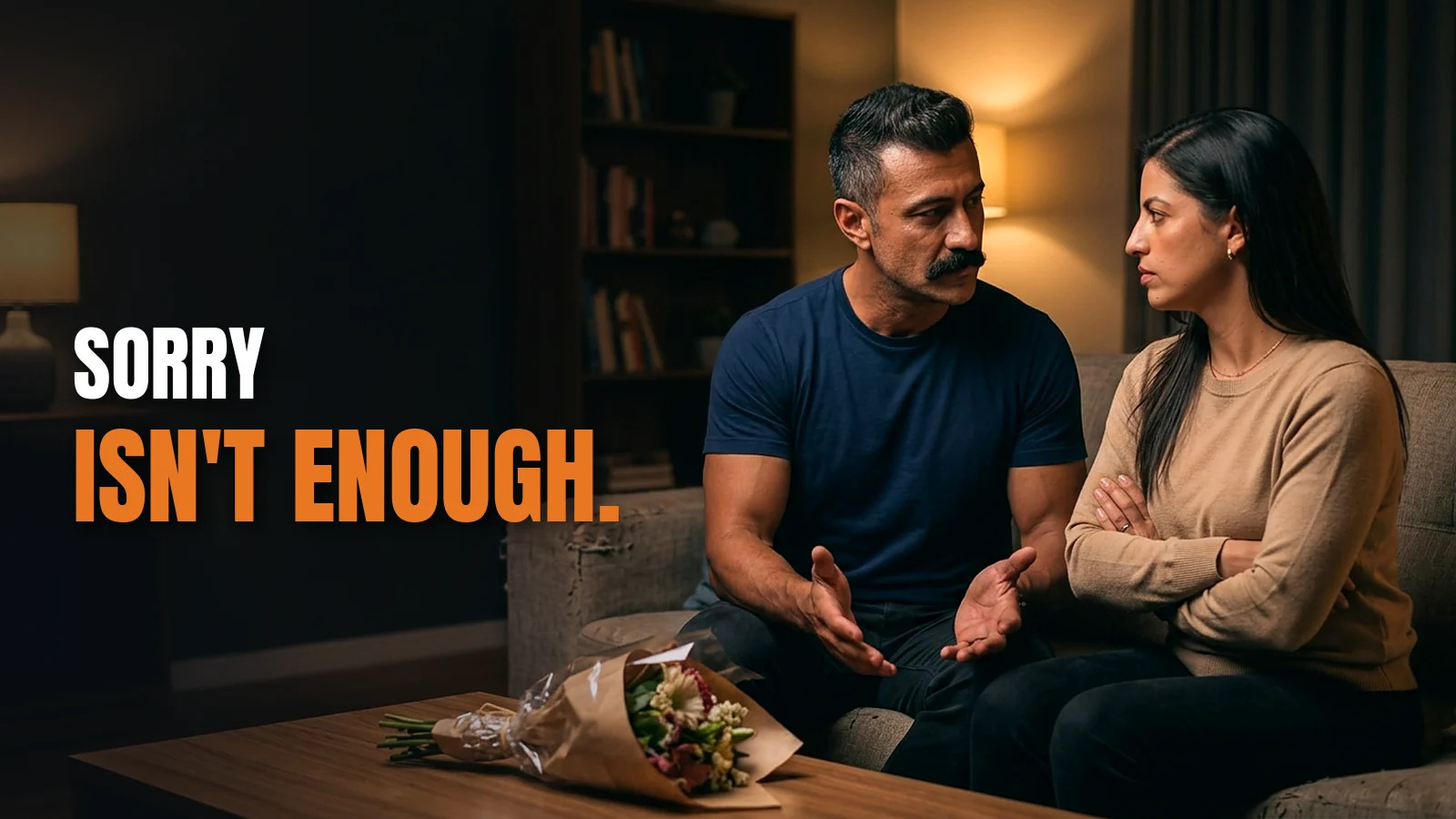
How to apologize for real (it’s not “sorry if I hurt you”)
“I’m sorry if I hurt you” isn’t an apology — it’s a way to end the conversation. Ricardo Martins shows, from Scripture and research, what separates a real apology from an empty one in marriage.
Read article →This content is educational and pastoral. It does not replace therapy, medical, legal or emergency help. If you are in danger, seek help now.