Study: What Weighs Most on a Wife's Happiness Isn't the Dishes — It's the Mental Load
A study in Personality and Social Psychology Bulletin (University of Southampton and colleagues), covered on October 9, 2026, finds women report higher relationship and sexual satisfaction when their husbands share the household's mental load — more so than when they share physical chores. Ricardo Martins comments on what it means for Christian husbands.
 By Ricardo Martins
Published October 9, 2026 · 6 min read

The news
A study published in the peer-reviewed journal Personality and Social Psychology Bulletin, led by researcher Verena Klein of the University of Southampton (UK) with colleagues from Turkey, Germany and Israel, drew attention this Friday, October 9, in a report by PsyPost. The subject: the household’s mental load — remembering, anticipating, running the family calendar, and emotionally caring for spouse and children.
According to the paper’s official abstract, in the first study of 452 women living with a male partner, women reported greater relationship and sexual satisfaction when their partner shared more of that load — especially the emotional part. And mental load predicted satisfaction more strongly than the split of physical chores like cleaning or cooking. In a second study of 156 couples from the UK and the US, women’s satisfaction rose when the load was shared; men’s, tellingly, was higher when their partner carried more of it.
An honest caveat: this research measures association, not cause. Samples were recruited online, satisfaction was measured with single questions, and the mental-load scale was built for the study itself. It’s a snapshot, not a verdict. But it’s a snapshot many wives will look at and say, “That’s me.”
The list nobody sees
Every home runs on two lists. The first is visible: wash the dishes, take out the trash, pick up the kids. The second is invisible: remembering the youngest’s vaccine is due next week, noticing the oldest has been off since school, knowing your mother-in-law’s birthday is Saturday, sensing that her husband has been too quiet and starting the conversation.
Most men I know — and I include myself — assumed we were doing fine because we “helped” with the first list. We washed the dishes when asked. We took out the trash when reminded. And then comes the line so many wives have heard: “You just had to ask.”
That’s exactly the problem. Having to ask is already work. Remembering what needs asking, when to ask, how to ask without starting a fight — all of that still lives in her head. He executes; she manages. And managing an entire household alone, every single day, wears a person down in a way sleep doesn’t fix.
The most uncomfortable finding for us men isn’t about the women. It’s about us: husbands tended to be more satisfied when their wives carried more. Of course we were. It’s comfortable to live in a house where someone else does your thinking. The question is whether that comfort looks anything like Christ.
“I help around the house” is not the language of the cross
Scripture never tells a husband to “help” his wife. It tells him to love her — and sets the standard:
“Husbands, love your wives, just as Christ loved the church and gave himself up for her.” (Ephesians 5:25, NIV)
Christ didn’t help the church when she asked. He saw the need before any request, took the initiative, and carried the weight. The verb is “gave himself up” — he took it on himself. A man who loves like that doesn’t wait for the list to be handed to him; he goes looking for it.
Peter says the same thing another way:
“Husbands, in the same way be considerate as you live with your wives, and treat them with respect as the weaker partner and as heirs with you of the gracious gift of life, so that nothing will hinder your prayers.” (1 Peter 3:7, NIV)
“Be considerate as you live with your wives.” Consideration means seeing what hasn’t been said. It means noticing she’s at her limit before she breaks. It means knowing, without checking with anyone, what’s happening in your home this week. And notice the end of the verse: how a husband treats his wife at home affects even his prayer life. God takes this seriously.
Paul sums it up for all of us:
“Carry each other’s burdens, and in this way you will fulfill the law of Christ.” (Galatians 6:2, NIV)
Mental load is a burden too. Sometimes it’s the heaviest one precisely because no one sees it.
It’s not about spreadsheets — it’s about presence
Let me be careful here. I’m not proposing that couples turn marriage into a 50/50 spreadsheet, or adopt the language of competition that sometimes surrounds this topic. Every home has its own gifts, seasons and arrangements. There are seasons when one spouse carries more, and that’s fine — as long as it’s agreed on, not assumed.
The point is different. I was once the problem in my own marriage. And one thing I learned on the road to restoration is that trust is rebuilt brick by brick — and many of those bricks are small. Not grand declarations. Things like being present, paying attention, taking responsibility without being chased. When a wife realizes she’s no longer the only one thinking about everything, something in her rests. And a woman who can rest beside her husband is a woman who starts drawing close to him again — including in intimacy, as the study itself suggests.
Three practical steps for this week
- Ask for the invisible list. Sit down with your wife and ask, without getting defensive: “What’s on your mind that I don’t even know exists?” Listen to the end. Don’t justify.
- Own an entire area, not a task. Not “I’ll take the kids today,” but “the kids’ medical schedule is mine now” — remembering, booking, driving, following up. Start to finish, without her needing to supervise.
- Tend the emotional climate of your home. Be the one who notices when a child is sad, who starts family prayer, who asks your wife how she’s really doing — and waits for the real answer.
None of this earns applause. It’s the baseline for a man who understands that leading, in God’s Kingdom, means serving first.
For the wife who is tired
If you’re a wife reading this with a lump in your throat: your exhaustion is real, and God sees the list nobody else sees. Jesus made an invitation for people exactly like you:
“Come to me, all you who are weary and burdened, and I will give you rest.” (Matthew 11:28, NIV)
Bring it to Him first. Then talk with your husband calmly, without accusation, and show him the list. Many men aren’t bad — they’re distracted. And God specializes in waking up distracted men. If the conversation stalls, or there are deeper signs of burnout, seek pastoral and professional help as well.
Vanessa Lima and I talk about marriage, faith and restoration every week. Follow us on YouTube and on Instagram at @ocasallegendario.
Ricardo Martins — The Legendary Couple
Sources
- Klein, V., Aşçıgil, E., Oschatz, T. & Kahalon, R. (2026). Unequal Burdens, Unequal Benefits: Housework, Mental Load, and Gendered Satisfaction in Heterosexual Relationships. Personality and Social Psychology Bulletin (published online Aug 21, 2026) — Personality and Social Psychology Bulletin (SAGE)
- The invisible chore that may matter more for women's relationship happiness than housework — PsyPost, Oct 9, 2026
Ricardo Martins
Ricardo Martins is an author, pastor and spokesperson for the Legendários men's movement. With his wife, Vanessa Lima, he created The Legendary Couple (O Casal Legendário), reaching millions with content on Christian marriage and restoration. Author of "Quando o amor recomeça" (Citadel, 2026).
Want to talk with Ricardo & Vanessa?
Follow the daily videos on YouTube and Instagram — real testimony, practical steps, and hope for marriages that look finished.
Watch on YouTubeKeep reading

Faithful Christian Couples Have the Happiest Marriages in America: What the New Report Proves (and What It Doesn't)
A new Institute for Family Studies report, "The Devout Difference," finds churchgoing couples are happier, divorce less and have more active intimate lives. Ricardo Martins comments on what the data means for anyone fighting for their marriage.
Read article →
1 in 3 Brazilian Parents Caught Their Kids Making Secret App Purchases — The Real Question Is Who Is Raising Our Children
A Serasa survey conducted by Instituto Opinion Box, released October 6, 2026, found that 32% of Brazilian parents have caught their children making purchases in apps and games without permission, and 53% believe social media increases children's desire to consume. Ricardo Martins comments on presence, unity between spouses, and discipleship at home.
Read article →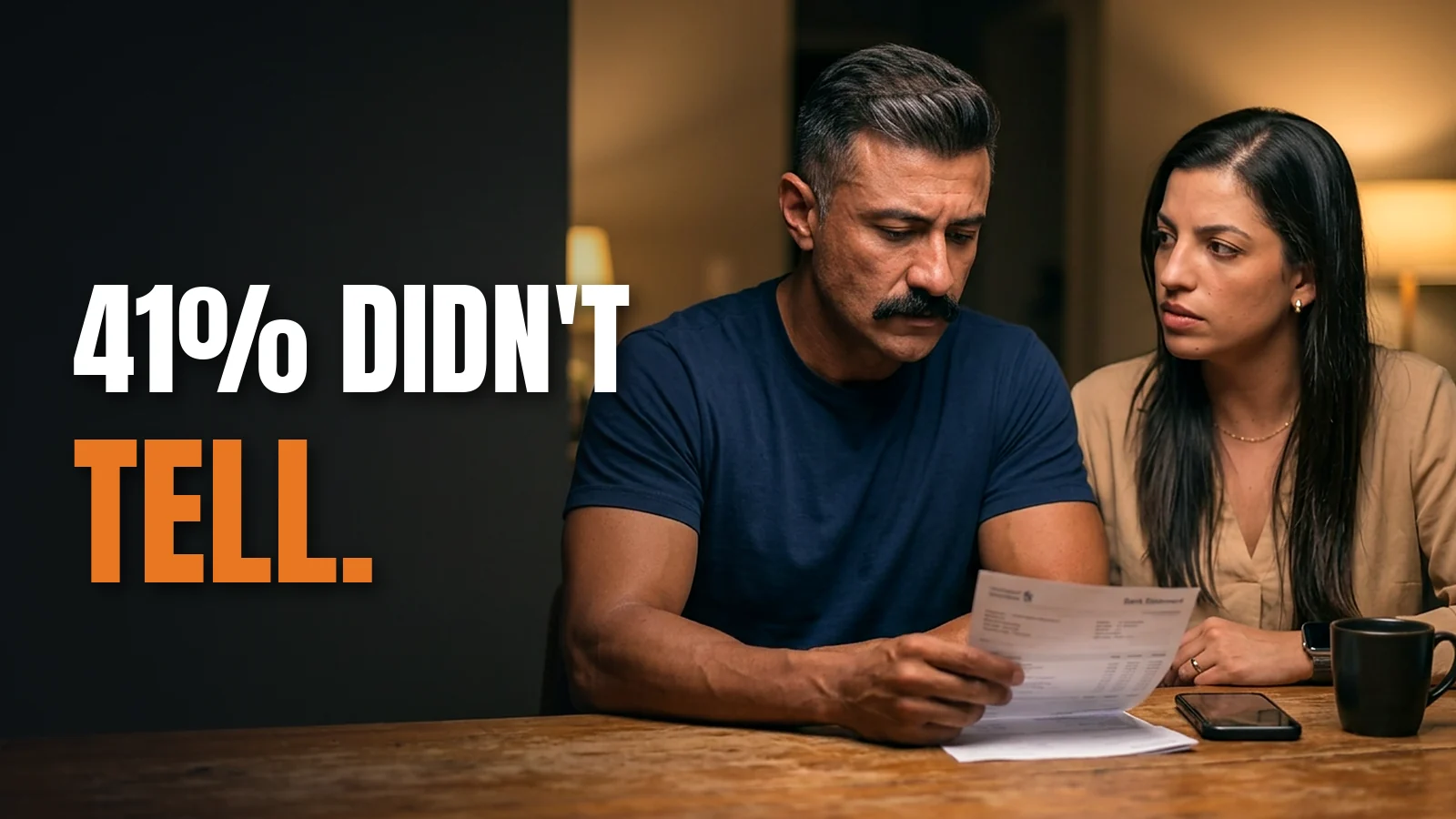
Money Is Couples' Top Stressor — and 41% Made a Big Financial Decision Without Telling Their Partner
A new CFP Board survey with Morning Consult, released October 5, 2026, found that 65% of married or cohabiting Americans name money as a top relationship stressor and 41% made a major financial decision in the past year without telling their partner. Ricardo Martins comments on what this reveals about trust and covenant.
Read article →This content is educational and pastoral. It does not replace therapy, medical, legal or emergency help. If you are in danger, seek help now.