Remarriage and blended families under grace
Kids from before, an ex in the school group chat, a stepdad with no authority yet, and a load of church guilt. Ricardo Martins on building a blended family with patience, boundaries and grace.
 By Ricardo Martins
Published October 10, 2026 · 7 min read
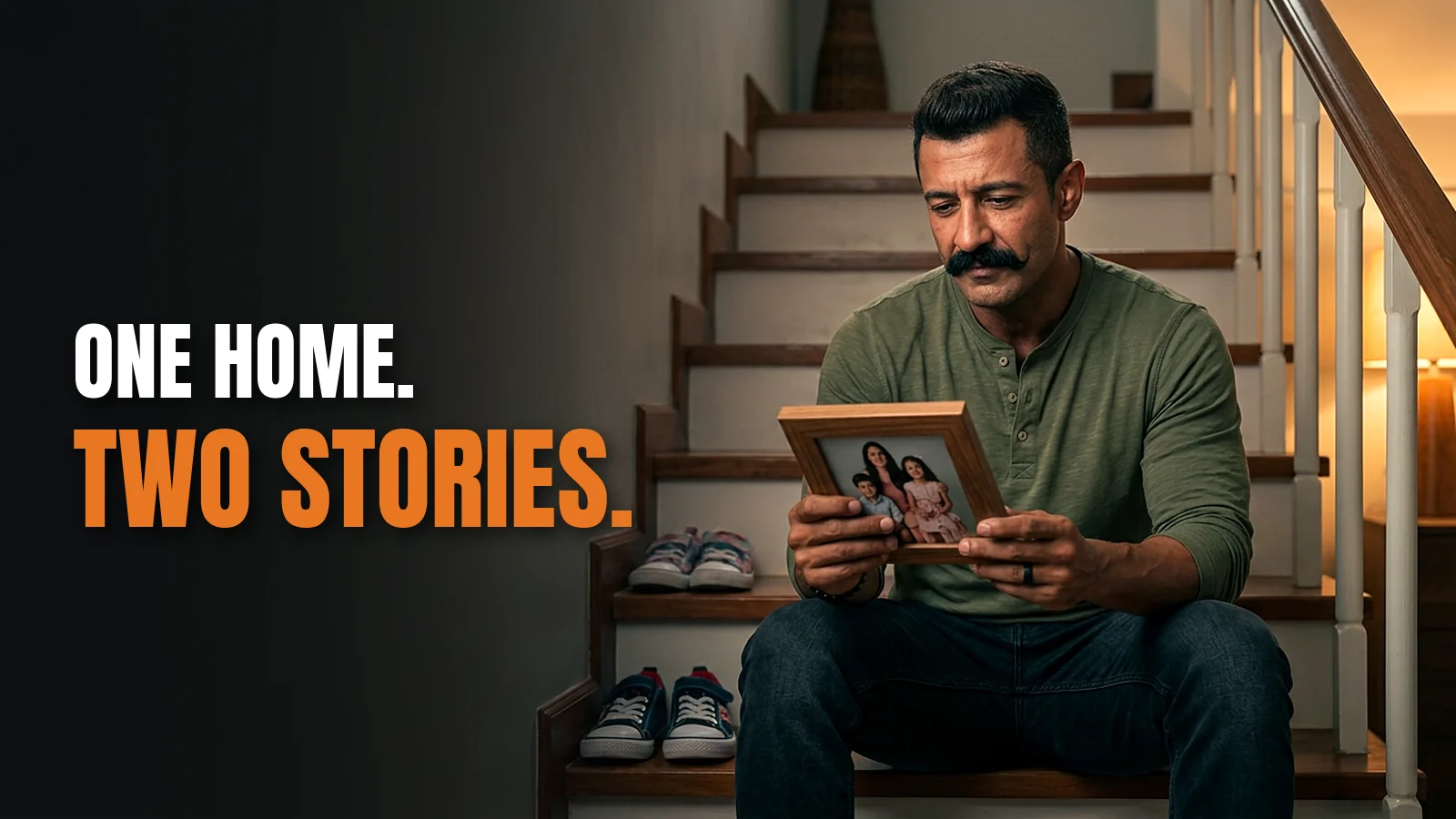
He walks in the door and there are three backpacks in the living room. One belongs to his son, who’s with them every other weekend. Two belong to her kids, who live there full-time. His phone buzzes with a text from her ex about pickup on Sunday. The child support statement is sitting on the counter. And somewhere underneath it all is a question nobody says out loud: “Can God really bless a family like ours?”
If you’re in a second marriage or raising a blended family, I wrote this for you. I’m not going to pretend it’s easy. I’m also not going to treat you like a second-string Christian.
This is not a “second-class” marriage
Christians hold different convictions about divorce and remarriage, and that conversation deserves to be had seriously — with an open Bible and with your pastor. That’s not what this article is about. This is about the people who are already here: remarried, with kids from different stories under one roof, trying to get it right.
And for the people who are here, the word is grace. Not the kind of grace that pretends the past never happened, but the kind that refuses to let the past have the last word.
“Because of the LORD’s great love we are not consumed, for his compassions never fail. They are new every morning; great is your faithfulness.” (Lamentations 3:22-23)
Every morning. Including the mornings of a second marriage. The covenant you made before God is real, and it deserves the same reverence and the same effort as any other.
I was the problem in my own marriage once. I know what it’s like to look back and see what you broke. And here’s what I’d say to anyone carrying that: guilt never built a house. Repentance does — and after repentance comes obedience, today.
You’re not the exception
Families like yours are not rare. According to the Pew Research Center, about 16% of American kids — roughly one in six — live in what the Census Bureau calls a blended family: a household with a stepparent, a stepsibling or a half-sibling. Another Pew analysis found that almost one in four married Americans had been married before.
I mention those numbers for one reason. A lot of churches still talk about family as if every home looked like a Christmas card. Plenty of people in the pews on Sunday morning live a different reality and feel invisible. Your family is not a glitch in the system. It’s a place where God wants to work.
Blended families don’t blend in six months
The biggest mistake I see is expecting instant love. The couple is in love, they’re happy, and they assume the kids on both sides will love each other too, that the children will call the stepdad “Dad,” and that everyone will sit down to dinner like a family in a movie.
It doesn’t work that way. The two of you chose each other. The kids didn’t choose anything. For many of them, your new marriage is final proof that Mom and Dad are never getting back together. That hurts, and the hurt comes out as silence, attitude or picking fights.
Connection is built with time, consistency and patience. Think about Ruth. She wasn’t born into Naomi’s family; she chose to stay: “Where you go I will go, and where you stay I will stay. Your people will be my people and your God my God” (Ruth 1:16). Real belonging is a decision made over and over again, not a rule announced on day one.
Stepparents: relationship first, authority later
A stepdad who walks in laying down the law before he’s won a child’s heart is going to start a war. Early on, discipline mostly stays with the biological parent. The stepparent backs up their spouse, shows a united front and invests in the relationship: driving to practice, asking real questions, showing up without keeping score.
The most beautiful example of this is right at the start of the New Testament. Joseph raised a boy who was not biologically his. “When Joseph woke up, he did what the angel of the Lord had commanded him and took Mary home as his wife” (Matthew 1:24). He took her home — and he took home the story that came with her. He protected that child, fled to Egypt with him, brought him to the temple. There’s nothing small about being someone’s Joseph.
Guys, if that’s your place: you’re not the “replacement.” You’re the man God put there to model faithfulness for a kid who has already watched one marriage fall apart.
The ex: the right place for someone who isn’t leaving your life
When there are kids, the ex doesn’t disappear. They show up at birthday parties, parent-teacher conferences and in the group text. Pretending they don’t exist is impossible; letting them run your home is a disaster.
A few practical principles:
- Never trash the other parent in front of the kids. A child is half of that person. Every shot you take at their mom or dad lands on them too.
- Keep it businesslike. Conversations with the ex are about the kids: schedules, school, health, agreed-upon money. Emotional venting goes to your spouse and to God, not to your ex.
- Your spouse comes first. Decisions about your home are made by the two of you, not negotiated with the previous marriage.
Boundaries aren’t a lack of love. They’re what protects love. I wrote more about this in the article on in-laws and healthy boundaries, and a lot of what applies to in-laws applies here too.
Keep the marriage at the center
In a blended family, the newest bond in the house is the marriage — and it’s the one holding everything else up. If the kids figure out they can play you against each other, they will. Not because they’re bad kids, but because they’re testing whether this house is going to hold.
So settle the rules privately and present them together. Disagree? Talk it out behind closed doors, not in front of the kids. And protect time that’s just the two of you, even if it’s a 30-minute walk around the block. “By wisdom a house is built, and through understanding it is established” (Proverbs 24:3).
At the same time, don’t use your marriage as an excuse to neglect the child who feels like they lost their place. They need one-on-one time with their biological parent. A united couple and individual care for each kid don’t compete. You need both.
When you’re tired, remember what you’re planting
There will be days you’re sure nothing has changed. Your stepson still shuts the door in your face. The ex still pushes buttons. The family still doesn’t feel like a family.
“Let us not become weary in doing good, for at the proper time we will reap a harvest if we do not give up” (Galatians 6:9).
A blended family is built brick by brick. There’s no shortcut. But there is a God who “sets the lonely in families” (Psalm 68:6) and who specializes in building something new on ground that looked lost.
If this is your story, Vanessa and I share more about rebuilding marriage with Christ at the center on our channels.
With Christ at the center, your home can hold two stories and still move in one direction.
Sources
- Pew Research Center (2015). Parenting in America — 1. The American family today — Pew Research Center
- Livingston, G. (2014). Four-in-Ten Couples are Saying “I Do,” Again — Pew Research Center
Ricardo Martins
Ricardo Martins is an author, pastor and spokesperson for the Legendários men's movement. With his wife, Vanessa Lima, he created The Legendary Couple (O Casal Legendário), reaching millions with content on Christian marriage and restoration. Author of "Quando o amor recomeça" (Citadel, 2026).
Want to talk with Ricardo & Vanessa?
Follow the daily videos on YouTube and Instagram — real testimony, practical steps, and hope for marriages that look finished.
Watch on YouTubeKeep reading
Christian dating: what to settle before the altar
Faith, money, family, kids, sex and conflict. Ricardo Martins walks dating and engaged couples through the conversations to have before saying “I do” — and why chemistry is not the same as agreement.
Read article →
When Only One Spouse Wants Marriage Counseling
You want help for your marriage, but your spouse says “we don’t need that.” Ricardo Martins explains, from Scripture and research, why spouses resist counseling, how to invite without pressure, and what to do if the answer stays no.
Read article →
Reconciliation After Separation: Practical and Spiritual Steps
Getting back together after a separation isn't hitting a reset button. Ricardo Martins shows, from Scripture and research, the practical and spiritual steps of a reconciliation that doesn't rebuild the same marriage that broke.
Read article →This content is educational and pastoral. It does not replace therapy, medical, legal or emergency help. If you are in danger, seek help now.