Words That Wound: The Tongue in Marriage (James 3)
A sentence that takes ten seconds to say can live inside your spouse for years. Ricardo Martins looks at James 3, Proverbs, and the landmark review “Bad Is Stronger Than Good” (Baumeister et al., 2001) to show why words hit so hard in marriage — and how to trade the spark for healing.
 By Ricardo Martins
Published October 28, 2026 · 7 min read
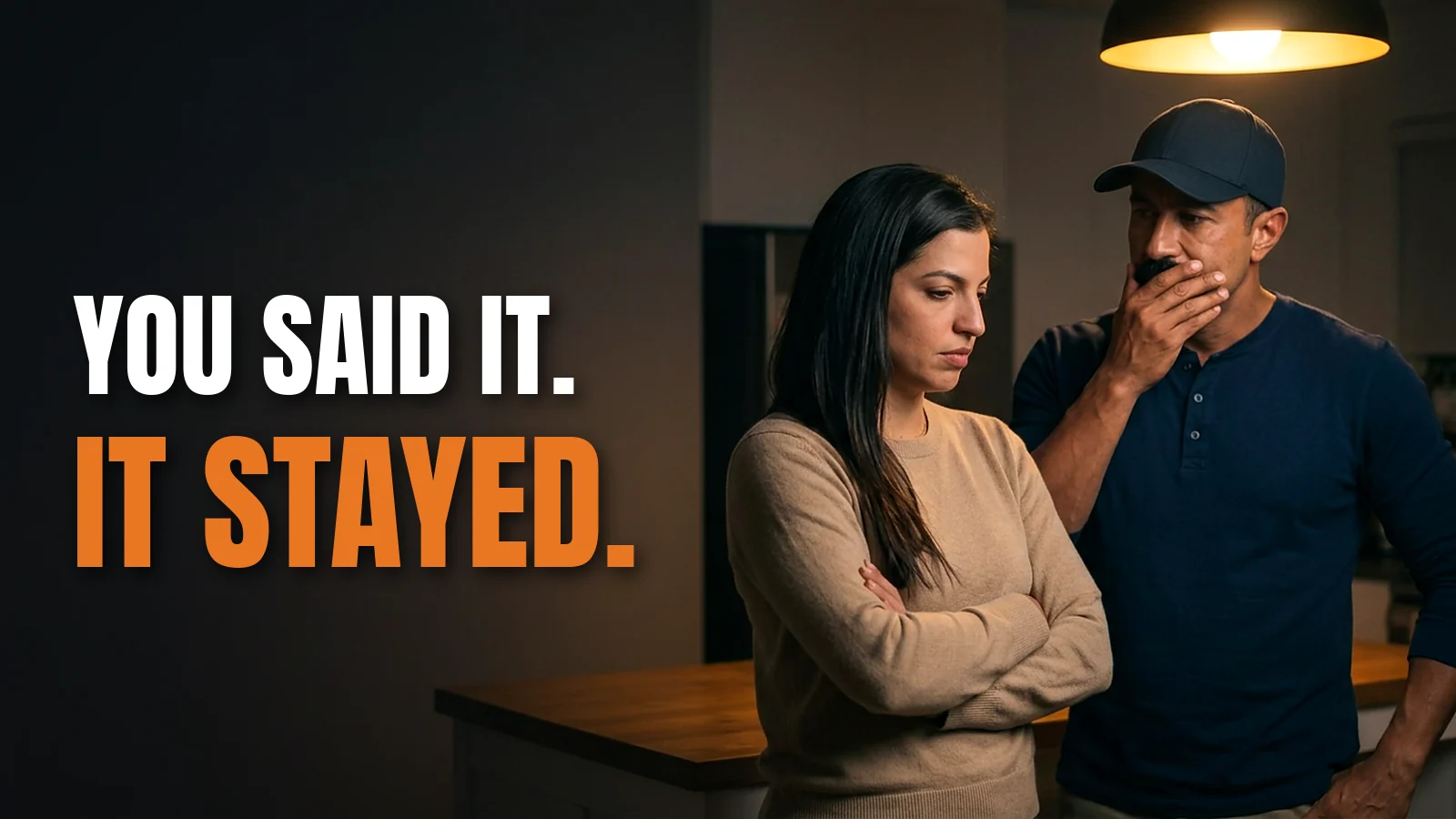
He walked in tired. She asked if he’d remembered to stop by the grocery store. He hadn’t. She sighed. And without thinking, he fired back: “All you ever do is nag. You’re just like your mother.”
Ten seconds. Then came the apology, dinner, a show on Netflix, bed. By the next morning everything seemed fine.
It wasn’t. That sentence moved in and unpacked. Now every time she’s about to ask him for something, it plays again: Am I nagging? Am I turning into my mom? He forgot it. She didn’t.
If you’ve been on either side of that moment, this one’s for you.
A small spark, a whole forest
James wasn’t writing about marriage, but he described a lot of marriages I know:
“Likewise, the tongue is a small part of the body, but it makes great boasts. Consider what a great forest is set on fire by a small spark.” (James 3:5, NIV)
The tongue is small. The damage isn’t. And in marriage we talk all day long — tired, hungry, rushed, unfiltered. Your spouse is the person you guard your words with the least. That’s exactly why they’re the person you’re most likely to wound.
James keeps going:
“With the tongue we praise our Lord and Father, and with it we curse human beings, who have been made in God’s likeness. Out of the same mouth come praise and cursing. My brothers and sisters, this should not be.” (James 3:9-10, NIV)
Some men raise their hands in worship on Sunday and tear their wives down in the minivan on the drive home because the family ran late. Some women pray for their husbands in the morning and roll their eyes about him to friends by lunch. Same mouth. James puts it plainly: this should not be.
Why one harsh sentence outweighs ten kind ones
Maybe you’re thinking, “Come on. I say plenty of nice things to her. One bad line doesn’t cancel all that.”
It cancels more than you’d think.
In 2001, psychologists Roy Baumeister, Ellen Bratslavsky, Catrin Finkenauer, and Kathleen Vohs published a sweeping review with a title that says it all: “Bad Is Stronger Than Good.” They pulled together research from very different areas — everyday events, trauma, close relationships, social interactions, learning — and found the same pattern over and over: negative experiences, emotions, and feedback carry more weight than positive ones, and bad information gets processed more thoroughly than good. Close relationships are no exception.
Translated to your kitchen: yesterday’s compliment fades; yesterday’s put-down sticks. Your spouse isn’t “too sensitive.” That’s simply how human beings are wired.
Scripture said it long before any lab did:
“The words of the reckless pierce like swords, but the tongue of the wise brings healing.” (Proverbs 12:18, NIV)
A sword thrust doesn’t always kill. Sometimes it just cuts. But cut after cut becomes a wound that won’t close.
Five of the most common ways we wound with words
When I sit with couples, the same weapons keep showing up:
- “You always” / “You never.” It turns one mistake into a verdict on someone’s character. Your spouse stops hearing the problem and starts defending themselves.
- Comparison. To their mom, their dad, an ex, your buddy’s wife. Comparison says, “You’re not enough.”
- Sarcasm dressed up as a joke. “Relax, I’m kidding!” If only one of you is laughing, it wasn’t a joke.
- Calling them out in public. Correcting, mocking, or airing a flaw in front of the kids, the in-laws, or friends. You hurt the person and their dignity in one shot.
- The threat. “Fine, let’s just get divorced.” “If you don’t like it, there’s the door.” Used as a weapon mid-fight, it drains the safety out of a marriage — even when nobody actually plans to leave.
You might have seen yourself in one or two of those. I’m not writing to pile on. I’m writing because healing starts when you name what’s doing the damage.
Your mouth is just the faucet
Jesus went straight to the root:
”…For the mouth speaks what the heart is full of.” (Luke 6:45, NIV)
If all we work on is technique — count to ten, take a breath — we’ll improve a little and slide right back on the first hard night. Harsh words usually pour out of a heart that’s full of something else: unresolved hurt, built-up exhaustion, pride, a fear of not being respected, contempt that’s been growing quietly for years.
So the question isn’t only “How do I stop talking like this?” It’s also “What is my heart full of?” Take that question to God honestly. He won’t leave you alone with it.
How to start using your words to heal
Paul gives the standard:
“Do not let any unwholesome talk come out of your mouths, but only what is helpful for building others up according to their needs, that it may benefit those who listen.” (Ephesians 4:29, NIV)
Here’s what that looks like on a Tuesday night:
1. Go back and name it. “Sorry about last night” isn’t enough. Say, “I compared you to your mom. That was cruel, and it isn’t true. Will you forgive me?” A specific wound needs a specific repair.
2. Swap the label for a request. Instead of “You never help,” try “I’m wiped out tonight — can you handle bath time?” A clear request opens a door. A label slams it.
3. Agree on a pause word. Pick a word together that either of you can say when things start heating up. It means, “Let’s stop before I say something I’ll regret — and come back to this in an hour.” (I wrote more about this in Fighting fair: biblical rules for conflict.)
4. Praise in public, address things in private. Your spouse’s flaws are a conversation for two. In front of others, it’s honor only.
5. Speak well on purpose. If negative words weigh more, positive ones have to be intentional. Say thank you for small things. Praise their character, not just their looks. Tell your kids what you admire about their mom or dad — while they’re in the room.
What if you’re the one who got hurt?
Maybe you’re reading this with an old sentence still stinging. Two things.
First, what was said about you doesn’t define you. God does, and He doesn’t call you worthless, a failure, or “just like your mother.” Let His Word speak louder than the line that stuck.
Second, forgiving doesn’t mean pretending it didn’t hurt. You can tell your spouse, calmly, “What you said still hurts. I need you to know that.” That isn’t revenge — it’s opening the door to repair. And if the words have become constant threats, fear, or daily humiliation, reach out for help, both pastoral and professional. That’s not overreacting. That’s wisdom.
A spark can also light a fireplace
I was once the problem in my own marriage. And I know the same mouth that wounds can be used by God to heal. It just doesn’t happen on autopilot. It happens when you decide, today, that the next thing you say to your spouse is going to build them up.
“The tongue has the power of life and death, and those who love it will eat its fruit.” (Proverbs 18:21, NIV)
If you want more honest, practical conversations like this one, Vanessa Lima and I share them every week on our channels.
Sources
- Baumeister, R. F., Bratslavsky, E., Finkenauer, C. & Vohs, K. D. (2001). Bad Is Stronger Than Good. Review of General Psychology, 5(4), 323–370 — Review of General Psychology (American Psychological Association)
Ricardo Martins
Ricardo Martins is an author, pastor and spokesperson for the Legendários men's movement. With his wife, Vanessa Lima, he created The Legendary Couple (O Casal Legendário), reaching millions with content on Christian marriage and restoration. Author of "Quando o amor recomeça" (Citadel, 2026).
Want to talk with Ricardo & Vanessa?
Follow the daily videos on YouTube and Instagram — real testimony, practical steps, and hope for marriages that look finished.
Watch on YouTubeKeep reading

The 36 Questions: What Arthur Aron’s Intimacy Research Says to Long-Married Couples
The viral “36 questions that lead to love” came from a 1997 study of strangers. Ricardo Martins explains what Arthur Aron’s research actually found, what a later study with couples showed, and how to use the idea to rediscover the person sleeping next to you.
Read article →
Husbands Who Accept Influence: What Gottman’s Newlywed Study Found About Sharing Power
In a study of 130 newlywed couples followed for six years, John Gottman’s team linked one pattern to divorce — a husband who rejects his wife’s influence. Ricardo Martins walks through what the research found, what it can’t prove, and why listening to your wife is leadership, not weakness.
Read article →
November Blue: 77,000 Prostate Cancer Cases a Year in Brazil — and the Man Who Cares for Everyone but Himself
As Brazil's "November Blue" men's health campaign began, CNN Brasil reported that the National Cancer Institute (INCA) projects 77,920 new prostate cancer cases a year through 2028, and that shame and fear keep many men from addressing it. Ricardo Martins reflects on the male pride that postpones health — and the couple's role in it.
Read article →This content is educational and pastoral. It does not replace therapy, medical, legal or emergency help. If you are in danger, seek help now.