Jealousy in marriage: care or control?
Not all jealousy is sin — Scripture speaks of a godly jealousy that guards the covenant and a fleshly one that wants to own. Ricardo Martins explains the difference, what research found about how husbands and wives feel it, and what to do on each side.
 By Ricardo Martins
Published October 23, 2026 · 7 min read
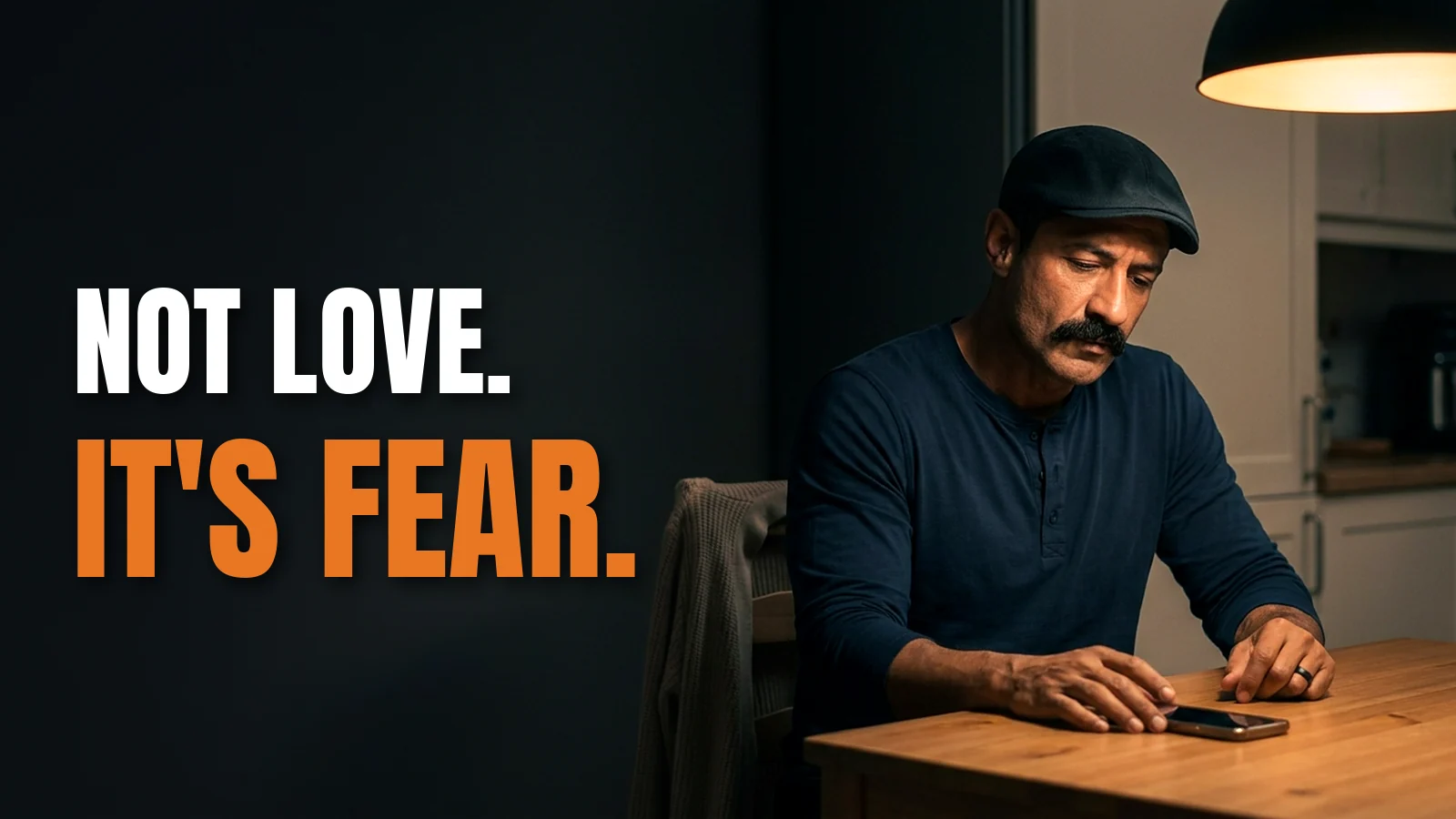
He picks up her phone from the kitchen counter. He doesn’t say anything. He just scrolls. She asks what’s wrong. “Nothing. I just want to know who you’re always texting.” And when she pushes back, out comes the line so many couples have heard — or said: “If I weren’t jealous, it would mean I didn’t love you.”
It sounds romantic. Often it isn’t. Sometimes it’s love that’s worried. Sometimes it’s fear dressed up as love. And sometimes it’s the first brick of a prison.
So here’s the uncomfortable question: does your jealousy protect the covenant, or does it try to own the person?
The Bible talks about two kinds of jealousy
Not every jealous feeling is sin. Scripture uses the same word family for something holy and for something fleshly.
There is a godly jealousy that guards the covenant. Paul wrote to the church in Corinth:
“I am jealous for you with a godly jealousy. I promised you to one husband, to Christ, so that I might present you as a pure virgin to him.” (2 Corinthians 11:2, NIV)
Notice where that jealousy points: not at Paul, but at Christ. He didn’t want the church tied to himself; he wanted it faithful to the Bridegroom. Godly jealousy protects the marriage — not the ego of the person feeling it.
The Song of Songs admits how strong this is: “for love is as strong as death, its jealousy unyielding as the grave. It burns like blazing fire, like a mighty flame” (Song of Songs 8:6, NIV). Fire can warm a house. Fire can also burn it down.
Then there’s the other kind, which Paul lists among the acts of the flesh: “idolatry and witchcraft; hatred, discord, jealousy, fits of rage, selfish ambition, dissensions, factions” (Galatians 5:20, NIV). That kind doesn’t guard anything. It wants control.
Why you and your spouse may not even be jealous of the same thing
One reason couples can’t talk about jealousy is that each one thinks the other is overreacting. Research gives a clue why.
In a classic study published in Psychological Science, psychologist David Buss and colleagues asked American college students which would upset them more: a partner having sex with someone else, or a partner forming a deep emotional attachment to someone else. 60% of the men picked sexual infidelity; 83% of the women picked emotional infidelity.
It was a young sample, back in 1992, and it doesn’t define any individual. But it matches what I see when I counsel couples: his jealousy and hers are often triggered by different things. He’s watching for physical lines. She’s watching for where his heart is going — the coworker he “just talks to,” the friend he opens up to more than he opens up at home. Neither one is crazy. They’re just guarding different doors.
Signs it’s care
Jealousy that protects tends to look like this:
- It speaks up, face to face. “That conversation made me uncomfortable. Can we talk about it?” No secret investigations.
- It asks instead of demands. It makes a request and is willing to discuss it.
- It guards the covenant, not your pride. The question is “does this threaten our marriage?” — not “does this embarrass me?”
- It can accept an answer. It hears the explanation and can rest, instead of reopening the same interrogation every week.
- It looks inward, too. “Why am I this insecure right now?”
Signs it has become control
Now the other side. Pay attention if your home has:
- Constant monitoring: checking the phone, location, or messages behind your spouse’s back, or demanding access as “proof” of love.
- Isolation: pulling your spouse away from friends, family, church, or work because “those people are bad for you.”
- Interrogation: every night out becomes a trial; every late arrival becomes an accusation.
- Guilt and threats: “If you really loved me, you wouldn’t do that.” “You’ll regret this.”
- Fear: one spouse walks on eggshells so the other won’t blow up.
If you’re on the receiving end of this, hear me gently: this is not “intense love,” and it isn’t solved by just praying harder and putting up with it. Get help — a trusted pastor, a licensed counselor, your family. If there are threats or any kind of violence, call 911 in an emergency or the National Domestic Violence Hotline at 1-800-799-7233. Protecting your life is not a lack of faith.
If you’re the one who feels jealous
In most cases I walk through, jealousy isn’t too much love. It’s fear.
“There is no fear in love. But perfect love drives out fear, because fear has to do with punishment. The one who fears is not made perfect in love.” (1 John 4:18, NIV)
Fear of not being enough. Fear of being replaced. Old wounds — from a past relationship, from your parents’ home, from a betrayal years ago — that you carried into your marriage and handed your spouse the bill for.
Surveillance doesn’t heal fear. It feeds it. The more you check, the more you need to check. The way forward is bringing that wound to God and, often, to someone who can help you work through it. Your spouse can’t be the cure for an insecurity only Christ can reach.
I was once the problem in my own marriage. I know broken trust doesn’t come back through monitoring. It comes back brick by brick — and the first brick is almost always someone choosing to give God a chance.
If you’re the one who stirs it up
Let’s be honest about the other side, too: sometimes jealousy has a reason.
If you keep conversations you’d hide from your spouse, give openings you wouldn’t give in front of them, and answer every concern with “you’re being crazy,” you’re throwing gasoline on the fire and complaining about the smoke.
Voluntary transparency is not the same as imposed surveillance. Surveillance is your spouse kicking the door in. Transparency is you opening the door because you have nothing to hide and you want your spouse to rest. Love “always protects, always trusts, always hopes, always perseveres” (1 Corinthians 13:7, NIV) — and it also works hard to be easy to trust.
A simple agreement for the two of you
Sit down together, without rushing, and agree on three things:
- What makes us uncomfortable (private chats with an ex, late-night texting, overly close friendships) — and what each of you will avoid out of love, not fear.
- How we’ll talk when jealousy shows up: directly, the same day, with no secret detective work.
- When we’ll get help: if the same issue keeps coming back unresolved, you go together to a pastor or counselor.
God’s jealousy for us has never been control. He loves us, guards us, and gives us the freedom to keep choosing Him. That kind of love heals jealousy — and that kind of love keeps a home standing.
If you want more conversations like this one, Vanessa Lima and I share them every week on our channels.
Sources
Ricardo Martins
Ricardo Martins is an author, pastor and spokesperson for the Legendários men's movement. With his wife, Vanessa Lima, he created The Legendary Couple (O Casal Legendário), reaching millions with content on Christian marriage and restoration. Author of "Quando o amor recomeça" (Citadel, 2026).
Want to talk with Ricardo & Vanessa?
Follow the daily videos on YouTube and Instagram — real testimony, practical steps, and hope for marriages that look finished.
Watch on YouTubeKeep reading

Marriage and Social Media: Comparison, Exposure, and Jealousy
Social media doesn't wreck marriages on its own, but it feeds three quiet enemies — comparison, exposure, and jealousy. Ricardo Martins looks at what the research shows and offers practical, biblical boundaries for couples.
Read article →
November Blue: 77,000 Prostate Cancer Cases a Year in Brazil — and the Man Who Cares for Everyone but Himself
As Brazil's "November Blue" men's health campaign began, CNN Brasil reported that the National Cancer Institute (INCA) projects 77,920 new prostate cancer cases a year through 2028, and that shame and fear keep many men from addressing it. Ricardo Martins reflects on the male pride that postpones health — and the couple's role in it.
Read article →
Daily gratitude in marriage: the small habit that shifts the atmosphere at home
The coffee that shows up on the table, the laundry folded, the bills paid — when nobody says thank you anymore, a marriage cools down. Ricardo Martins writes, with 1 Thessalonians 5, Luke 17 and a diary study of couples, about gratitude as a daily habit.
Read article →This content is educational and pastoral. It does not replace therapy, medical, legal or emergency help. If you are in danger, seek help now.