Mental health is Brazil's top health worry — and marriages are right in the middle of it
Ipsos' Health Service Report 2026, covered by Folha de S.Paulo, finds 58% of Brazilians name mental health as their country's biggest health problem, with a 21-point gap between women (68%) and men (47%). Ricardo Martins reflects on what that gap looks like inside a marriage and how a couple can become each other's first line of care.
 By Ricardo Martins
Published October 21, 2026 · 6 min read
The news
On October 10, Brazil’s largest newspaper, Folha de S.Paulo, reported on the Ipsos Health Service Report 2026, an online survey of 22,528 adults in 32 countries — about a thousand of them in Brazil — conducted between July 13 and August 7. According to the official Ipsos release, 58% of Brazilians name mental health as one of the biggest health problems facing their country, up six points from 2025 and well above the 32-country average of 48%. It ranks ahead of cancer (37%) and stress (29%).
The number that stopped me came next: 68% of Brazilian women put mental health among the top health problems, compared with 47% of men. A 21-point gap.
One important caveat, which Ipsos itself spells out: the survey measures perception, not how many people actually have a mental health condition. It tells us what people think the big problems are, not anyone’s diagnosis. Still, perception says a lot, especially when you carry that number into a home.
What that gap looks like inside a marriage
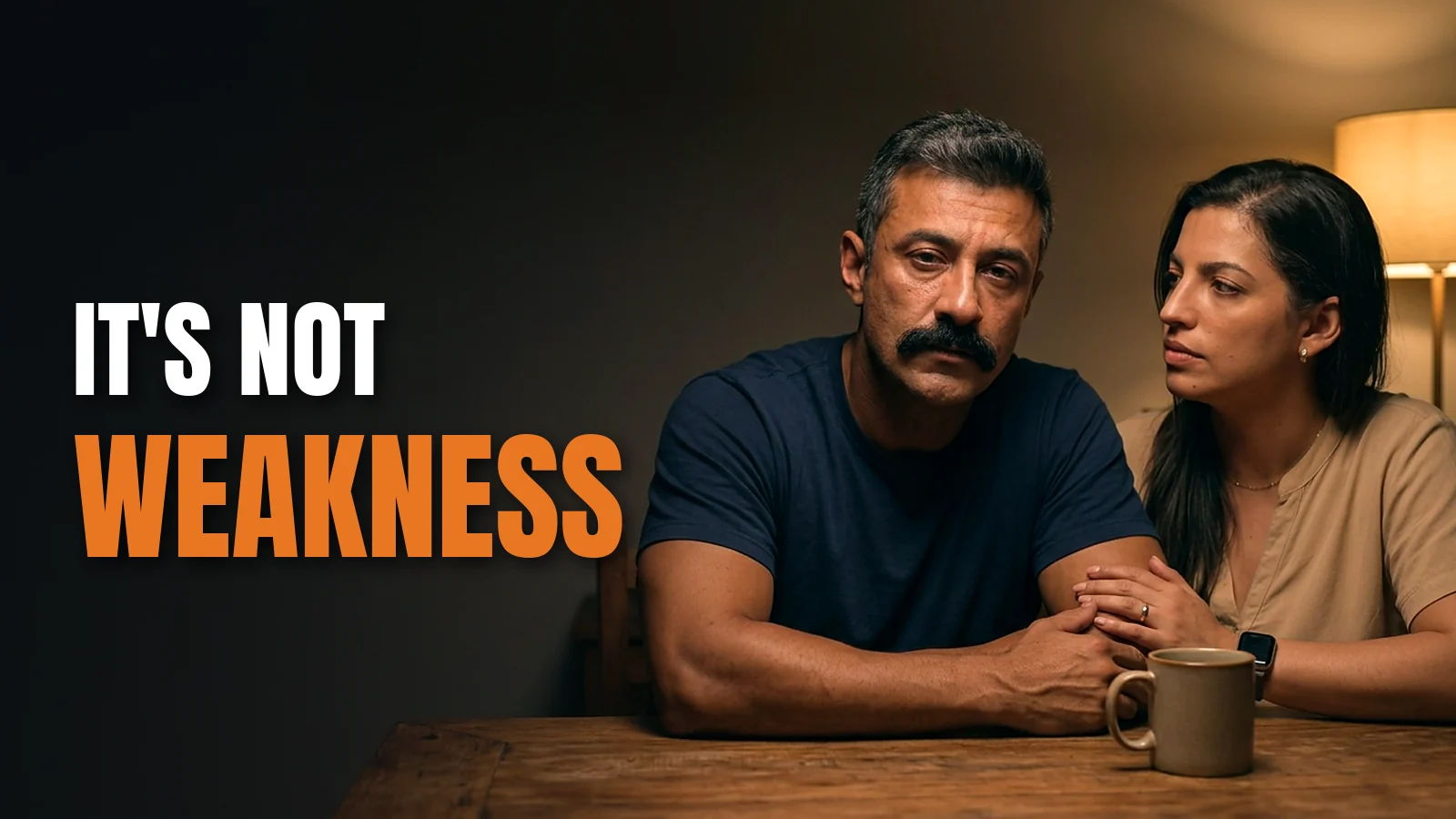
Picture a 21-point gap at the kitchen table.
She notices something is wrong: he sleeps badly, snaps over small things, is always exhausted, has gone quiet. She tries to talk. He says it’s “just a phase,” that “men don’t have time for that,” that it’s “nothing.” Or it’s the other way around: she is the one sinking, and he thinks she just needs “more faith” or to “stop overthinking.”
I walk alongside couples in crisis, and I see this mismatch all the time. Often the problem isn’t only the pain itself. It’s that one spouse sees it and the other doesn’t. Then the pain gets a second layer: on top of suffering, you feel alone inside your own marriage.
The survey adds another figure, this one averaged across all 32 countries: 17% of respondents skipped social or family gatherings in the past year because of their mental health. When that happens, the first people to feel it aren’t the boss or the pastor. It’s the wife, the husband, the kids.
I’ve been on the side that didn’t want to see
I’m not writing this from above. I was the problem in my marriage. And back then I was also living with depression. I knew what was right, but my mind was clouded, and I couldn’t make decisions that seem obvious to me today. I needed therapists. I stayed in that place for a long time. Vanessa needed therapy too.
I share that because so many men believe that admitting they’re not okay means losing authority. It doesn’t. What destroys a man’s authority at home is pretending everything is fine while everyone around him pays the price of a crisis he refuses to name.
I’ve written before about why so many men won’t ask for help with depression and about caring for a depressed spouse. Today I want to step back and talk about the couple as the first line of care.
The Bible doesn’t call a downcast soul weakness
Something that sets me free is seeing that Scripture isn’t embarrassed to talk about deep sorrow.
The psalmist talks to his own soul: “Why, my soul, are you downcast? Why so disturbed within me? Put your hope in God, for I will yet praise him, my Savior and my God” (Psalm 42:5). He doesn’t deny that he’s downcast. He names it, and then he points to God.
Elijah, right after one of the greatest victories in the Old Testament, runs into the wilderness and says, “I have had enough, LORD. Take my life” (1 Kings 19:4). God doesn’t send a lecture. He sends an angel who touches him and says, “Get up and eat” (1 Kings 19:5). Rest, food, presence. The word comes after.
I like to remember that, because sometimes in church we jump straight to the sermon, when the person next to us first needed someone to sit with them.
Four steps for couples
I’m not a doctor or a psychologist, and this article doesn’t replace professional care. What I can share is what I’ve seen work in pastoral care with couples:
1. Trade “you’re overreacting” for “tell me what’s going on.” The survey’s 21-point gap starts right here: one spouse minimizes. Listening without correcting is already care.
2. Watch for signs, not just words. Sleep, appetite, irritability, withdrawal, losing interest in things that used to bring joy. Many men will never say “I’m not okay.” They’ll show it.
3. Seek professional help together, without shame. Faith and therapy are not enemies. I prayed a lot, and I also needed therapists. God used both. If the suffering is intense, see a doctor or counselor. In a crisis in the U.S., call or text 988 (Suicide & Crisis Lifeline); in Brazil, CVV answers at 188, free, 24/7.
4. Don’t carry it alone. “Carry each other’s burdens, and in this way you will fulfill the law of Christ” (Galatians 6:2). That applies between husband and wife, and to the church around the couple. “Two are better than one… If either of them falls down, one can help the other up” (Ecclesiastes 4:9-10).
A word to the men
Brother, if you’re among those who think mental health is “a women’s thing,” I’m asking you gently: take another look at your home. Maybe your wife has been warning you for months. Maybe you’re the one who needs help, and pride is speaking louder than exhaustion.
Jesus didn’t call the strong who have it all together. He said, “Come to me, all you who are weary and burdened, and I will give you rest” (Matthew 11:28). Admitting you’re tired isn’t a lack of faith. It’s the first step toward Him.
Vanessa gave God a chance when I didn’t deserve it. Our trust was rebuilt brick by brick, and part of those bricks was me finally refusing to pretend I was fine.
If this spoke to you, Vanessa Lima and I share more about rebuilding marriage with Christ at the center on our YouTube channel and on Instagram at @ocasallegendario.
Sources
- Saúde mental é principal preocupação em relação à saúde para 58% dos brasileiros, diz pesquisa — Folha de S.Paulo, Oct 10, 2026 (Portuguese)
- Saúde mental lidera preocupações dos brasileiros, citada por 58%, mostra pesquisa da Ipsos (press release, Oct 8, 2026) — Ipsos Brazil — Health Service Report 2026 (Portuguese)
Ricardo Martins
Ricardo Martins is an author, pastor and spokesperson for the Legendários men's movement. With his wife, Vanessa Lima, he created The Legendary Couple (O Casal Legendário), reaching millions with content on Christian marriage and restoration. Author of "Quando o amor recomeça" (Citadel, 2026).
Want to talk with Ricardo & Vanessa?
Follow the daily videos on YouTube and Instagram — real testimony, practical steps, and hope for marriages that look finished.
Watch on YouTubeKeep reading
November Blue: 77,000 Prostate Cancer Cases a Year in Brazil — and the Man Who Cares for Everyone but Himself
As Brazil's "November Blue" men's health campaign began, CNN Brasil reported that the National Cancer Institute (INCA) projects 77,920 new prostate cancer cases a year through 2028, and that shame and fear keep many men from addressing it. Ricardo Martins reflects on the male pride that postpones health — and the couple's role in it.
Read article →
Lonely in Marriage: 1 in 4 Married Brazilians Felt Alone, Survey Finds
Brazil's 2026 Mental Health Panorama (Instituto Cactus and AtlasIntel), reported by Folha de S.Paulo, found loneliness to be the factor most linked to poor mental health. Married people felt lonely far less often than singles, yet 26.6% of them still did. Ricardo Martins reflects on loneliness inside marriage.
Read article →
Nearly 1.7 Million Brazilian Children Registered Without a Father's Name in Ten Years: A Message to Men Everywhere
Data from Brazil's civil registry association (Arpen-Brasil) shows 1,666,882 children were registered with only their mother's name between 2016 and 2026 — yet voluntary paternity acknowledgments are rising. Ricardo Martins comments on what this says about men, marriage and the heart of God.
Read article →This content is educational and pastoral. It does not replace therapy, medical, legal or emergency help. If you are in danger, seek help now.