When the Bills Come Due, What Protects a Couple? New Study Points to Comfort Before Solutions
A University of Florida study published in Personal Relationships found that financial stress spills over into romantic relationships — and that a partner's emotional support reduces that spillover. Ricardo Martins comments on what it teaches Christian couples.
 By Ricardo Martins
Published September 30, 2026 · 7 min read
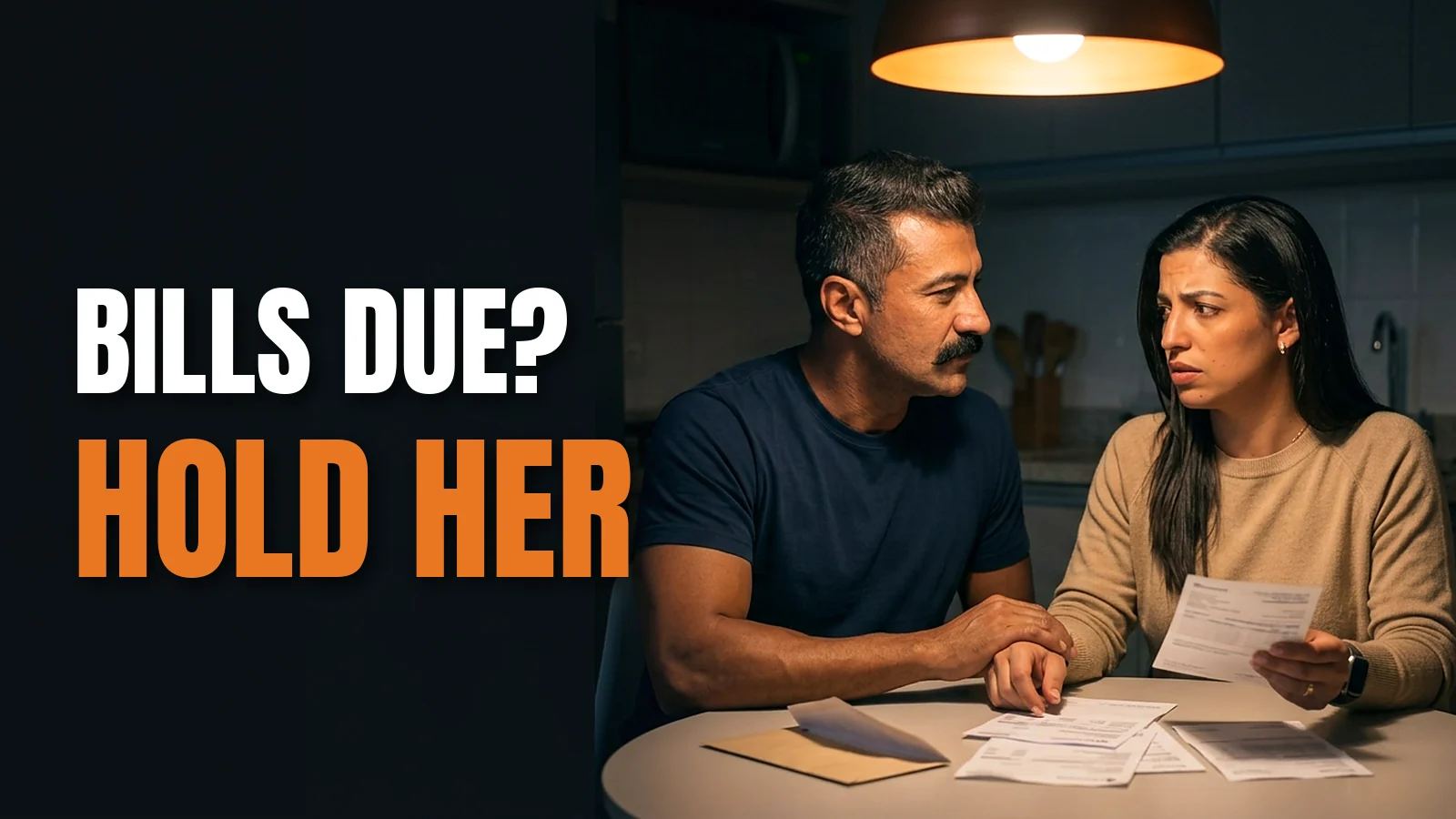
The news
On September 29, the University of Florida released the findings of a study on how financial stress affects romantic relationships. Researchers Zhongchi Li and Gregory Webster followed 84 unmarried couples: each partner completed a baseline survey and then, for seven days, reported once a day on their financial stress and their relationship stress.
The finding: the higher the money worries, the higher the relationship stress. But when a partner offered emotional support — care, understanding, reassurance — less of the financial stress spilled over into the relationship. Purely practical “let’s fix it” help did not show the same short-term benefit. The paper was published in September in the peer-reviewed journal Personal Relationships.
In fairness: this is a small sample of unmarried couples, observed for one week. The authors themselves say couples need to be followed for months to understand long-term effects. It is not a universal law — it is a signal. And it is a signal that matches what I see in the couples we walk with.
From here on, this is my opinion — as a pastor, a husband, and a man who was once the problem in his own marriage.
The bill arrives for both of you, but it weighs differently
Almost every couple in crisis who reaches out to us has a fight that, on the surface, is about money. The credit card is maxed out. Rent is late. Someone bought something they shouldn’t have. I’ve written before that money fights are almost never about money — they are about fear, control, trust, and security.
What this study adds is a precious detail: how you respond to your spouse’s stress changes the size of the damage. The bill is the same. The balance is the same. But your home can grow colder or warmer depending on what happens in the five minutes after that bill lands on the kitchen table.
Men, we have an almost automatic reflex: she comes to us worried, and we open the spreadsheet. “Relax, we’ll just cut this, refinance that, sell the car.” The intention is good. But often she isn’t asking for a consultant. She’s asking for a husband. Before anything else, she wants to know she isn’t alone in it.
Scripture got there before the research
Paul wrote to the Galatians: “Carry each other’s burdens, and in this way you will fulfill the law of Christ” (Galatians 6:2, NIV). Notice he didn’t say “fix each other’s problems.” He said carry. Carrying together is different from repairing from the outside.
And in Romans: “Rejoice with those who rejoice; mourn with those who mourn” (Romans 12:15, NIV). Mourning with someone doesn’t change a bank statement. But it heals something the statement can’t touch: loneliness.
Ecclesiastes puts it very concretely: “Two are better than one, because they have a good return for their labor: If either of them falls down, one can help the other up. But pity anyone who falls and has no one to help them up” (Ecclesiastes 4:9-10, NIV). Marriage was not designed to prevent every fall. It was designed so that no one falls alone.
Comfort doesn’t mean ignoring the problem
Let me be clear so no one walks away thinking the answer is “just hug and let the debt grow.” That’s not it. The study itself suggests practical problem-solving may be more useful over a longer time frame. Planning, budgeting, cutting expenses, serious conversations about priorities — all of that matters. Scripture also speaks of prudence, of estimating the cost before building the tower (Luke 14:28).
The issue is order. Heart first, spreadsheet second. When a person feels supported, they can think. When they feel judged or alone, they get defensive — and the money conversation turns into a war over who is to blame.
In practice, comfort can be as simple as this:
- Stop what you’re doing and look at your spouse, not your phone.
- Name what they’re feeling: “You’re scared we won’t make it, aren’t you?”
- Say the sentence that lifts the loneliness: “We’re going to get through this together.”
- Ask before you propose: “Do you want me to just listen right now, or do you want to think through a way out with me?”
- Schedule the plan for later, calmly — ideally the same day or the next — not in the heat of anxiety.
To the man who “just wants to fix it”
I know how it feels. If we don’t fix it, we feel we’ve failed as providers. And sometimes our rush to fix is really our own anxiety trying to get rid of the discomfort. I was once the problem in my own marriage, and one thing I learned on the road to restoration is that presence is worth more than performance.
Faced with Mary’s grief over Lazarus, before He ever reached the tomb, “Jesus wept” (John 11:35, NIV). He was going to solve it — and He did, in a way no one imagined. But first, He wept with His friends. If the Son of God took time to weep with those He loved before acting, you have time to comfort your wife before opening the spreadsheet.
To the wife who carries the bills alone
In some homes she’s the one holding the finances together, and he’s the one falling apart. The principle works both ways. If you’re always the “level-headed” one, remember that your husband may be ashamed and afraid he has failed. A word of confidence from you can do more for him than ten solutions.
And if money has become a weapon of control — if there are threats, humiliation, or fear in your home — that is no longer an ordinary financial crisis. Reach out to someone you trust: a pastor, a counselor, and, if you are in danger, call 911 or the National Domestic Violence Hotline at 1-800-799-7233. Safety comes before restoration.
The peace your balance can’t give
I’m not promising the numbers will work out. I’m not a financial advisor, and this article does not replace professional guidance on debt. What I can say as a pastor is that couples who learn to face a crisis side by side usually come out more united, even when the money takes a while to return.
“Do not be anxious about anything, but in every situation, by prayer and petition, with thanksgiving, present your requests to God. And the peace of God, which transcends all understanding, will guard your hearts and your minds in Christ Jesus” (Philippians 4:6-7, NIV).
That peace doesn’t depend on your balance. It depends on Christ at the center — and on two hearts that decided not to face the storm with their backs to each other.
So today, when the bill arrives, try this: before the solution, offer your presence. Look them in the eye, take their hand, and say, “We’re in this together.” Then, calmly, sit down and make the plan.
If you want more help building a marriage with Christ at the center, follow Ricardo Martins and Vanessa Lima — O Casal Legendário — on YouTube and Instagram, where we share honest conversations for couples every week.
Sources
- Financial stress bleeds into our relationships. But partners who provide emotional support can help. — University of Florida News
- Spillover and Crossover Effects of Financial Stress in Romantic Dyads: A Daily Diary Study — Personal Relationships (Wiley), vol. 33, no. 3
Ricardo Martins
Ricardo Martins is an author, pastor and spokesperson for the Legendários men's movement. With his wife, Vanessa Lima, he created The Legendary Couple (O Casal Legendário), reaching millions with content on Christian marriage and restoration. Author of "Quando o amor recomeça" (Citadel, 2026).
Want to talk with Ricardo & Vanessa?
Follow the daily videos on YouTube and Instagram — real testimony, practical steps, and hope for marriages that look finished.
Watch on YouTubeKeep reading

Nearly 1.7 Million Brazilian Children Registered Without a Father's Name in Ten Years: A Message to Men Everywhere
Data from Brazil's civil registry association (Arpen-Brasil) shows 1,666,882 children were registered with only their mother's name between 2016 and 2026 — yet voluntary paternity acknowledgments are rising. Ricardo Martins comments on what this says about men, marriage and the heart of God.
Read article →
Faithful Christian Couples Have the Happiest Marriages in America: What the New Report Proves (and What It Doesn't)
A new Institute for Family Studies report, "The Devout Difference," finds churchgoing couples are happier, divorce less and have more active intimate lives. Ricardo Martins comments on what the data means for anyone fighting for their marriage.
Read article →
Money and marriage: why the fight is never really about money
It starts with the credit card statement, but it's almost never about the credit card. Ricardo Martins unpacks what money reveals in a marriage — fear, control, respect, trust — and how to turn the fight into a conversation with Christ at the center.
Read article →This content is educational and pastoral. It does not replace therapy, medical, legal or emergency help. If you are in danger, seek help now.