Do Married People Live Longer? What the Research Says About Marriage and Health
Large studies from the U.S. and Finland plus meta-analyses covering hundreds of thousands of people show married people live longer on average — and that the quality of the marriage matters as much as the ring.
 By Ricardo Martins
Published November 5, 2026 · 8 min read
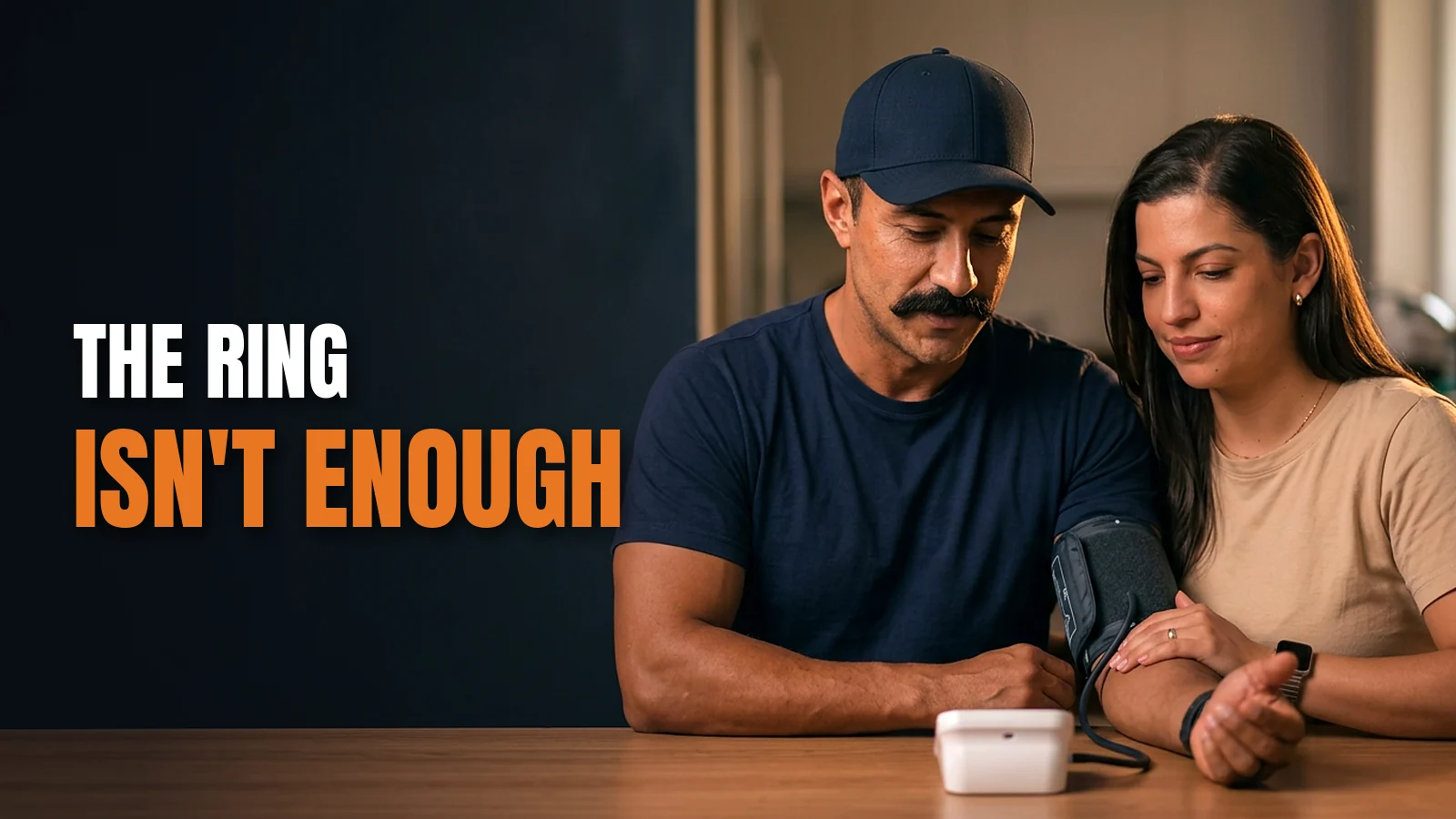
Every time someone shares a headline like “married people live longer,” two kinds of comments show up. One crowd cheers: “See? Marriage is good for you.” The other crowd jokes: “Do they live longer, or does it just feel longer?” It’s an old joke, but there’s a serious question underneath it, and a lot of people in hard marriages ask it quietly: “If my marriage is making me sick, how can anyone say marriage is healthy?”
I’m Ricardo Martins, and I’m not going to answer that with a slogan. Through The Legendary Couple, the ministry I lead with my wife, Vanessa Lima, we unapologetically believe in marriage from a Christian conviction. But defending marriage with bent statistics is dishonest, and anyone living in a war zone at home can smell it immediately.
So let’s look at what the studies actually measured. Short answer: “yes, on average,” followed by two big “buts” that change everything.
What the research found
1. Kaplan & Kronick (2006): the national U.S. picture
Robert Kaplan and Richard Kronick linked the 1989 National Health Interview Survey to the National Death Index through 1997. That’s 66,999 American adults followed over time: 5,876 died during the period and 61,123 were still alive. The study appeared in the Journal of Epidemiology and Community Health.
Even after controlling for demographic and socioeconomic factors, unmarried people had a significantly higher death rate than people who were married and living with their spouse. The effect showed up in every unmarried category, but it was strongest for people who had never married, and the never-married effect was stronger for men than for women.
Limitation: the authors themselves say it’s difficult to assess the causal effect of marital status from observational data. This shows an association, not a mechanism.
2. Manzoli and colleagues (2007): the meta-analysis on older adults
Lamberto Manzoli’s team pooled cohort studies published after 1994 in a meta-analysis for Social Science & Medicine: 53 independent comparisons, more than 250,000 older adults.
The relative risk of death for married versus unmarried people was 0.88, roughly 12% lower. Compared with married people, the widowed had a relative risk of 1.11, the divorced or separated 1.16, and the never married 1.11. The estimate didn’t change by gender, and it held in both Europe and North America.
Limitation: there was some evidence of publication bias. Under an extremely conservative re-analysis, the marriage advantage shrank to 0.94 (about 6%). Still significant, but smaller. A real, modest effect — not a fountain of youth.
3. Selection or protection? Finland (2022) and Medicare (2020)
Here’s the first “but.” Maybe marriage doesn’t make people healthier. Maybe healthier people are simply more likely to get married and stay married. Researchers call this the selection effect.
Karri Silventoinen, Kaarina Korhonen and Pekka Martikainen used registry data on Finland’s entire population aged 35 and over: 4,415,590 people, with 530,560 coronary heart disease events between 1990 and 2018 (SSM – Population Health). People married without a previous divorce had the lowest rates of heart disease; cohabitation and a history of divorce were tied to higher rates. The clever part: they also compared 377,730 same-sex sibling pairs who grew up in the same family, and the advantage of the never-divorced married sibling still showed up. Even so, the authors conclude that selection may explain part of the link.
Meanwhile, Haomiao Jia and Erica Lubetkin analyzed 164,597 Americans aged 65 and older from the Medicare Health Outcomes Survey. At 65, married men could expect to live 2.2 years longer than unmarried men; married women, 1.5 years longer. But the study states plainly that selection bias was a large contributor to that gap, and the advantage shrinks with age.
Honest translation: part of “married people live longer” is protection; part of it is that healthy people marry and stay married. Nobody knows the exact split.
4. Robles and colleagues (2014): it’s not the status, it’s the quality
The second “but” matters most if you’re already married. Theodore Robles and colleagues published a meta-analysis in Psychological Bulletin covering 126 studies and more than 72,000 people across 50 years of research.
Higher marital quality was linked to better health, with effect sizes from r = .07 to .21, including lower risk of death (r = .11) and lower cardiovascular reactivity during marital conflict (r = −.13). The authors note these effects are similar in size to the link between health habits like diet and health outcomes.
Limitation: small effects, unexplained variation between studies, and designs that mostly can’t establish cause.
5. Holt-Lunstad and colleagues (2008): unhappy marriage and blood pressure
Julianne Holt-Lunstad and her colleagues tracked around-the-clock blood pressure in 303 adults: 204 married and 99 single (Annals of Behavioral Medicine). People in high-quality marriages had lower blood pressure, less stress and less depression.
Then the uncomfortable finding: when singles were compared with people in low-quality marriages, the singles had lower ambulatory blood pressure. The authors’ conclusion: being married is not universally beneficial in itself; what matters is the satisfaction and support in the relationship. And support from friends and a wider network didn’t make up for being single or unhappily married.
Limitation: a small sample measured at one point in time. It shows association, not that conflict “causes” hypertension.
What this changes in real life
- Stop treating the ring like a health insurance policy. The data don’t say “get married and live longer.” They say a supportive marriage is linked to better health, and a hostile one may be linked to the opposite.
- Treat chronic fighting as a health issue, not just a mood issue. If every conversation becomes a courtroom, that’s not “just how we are.” Get help early — a trained pastor, a licensed counselor, a structured plan.
- Take care of each other in small ways. Remind each other about meds, push for the annual physical, walk together after dinner. Guys, this one’s for you: in two of these studies (Kaplan & Kronick and Jia & Lubetkin), the gap was bigger for men.
- Don’t weaponize these numbers against singles, widows or divorced friends. An average is not a sentence. What the research points to is that quality relationships matter, and the church can be that network for people who are alone.
- If your marriage is hard, the question isn’t just “stay or go,” it’s “what has to change.” Holt-Lunstad’s study doesn’t tell anyone to leave; it shows the cost of letting a relationship rot untreated. If there’s abuse involved, your safety comes first — in the U.S., call 911 or the National Domestic Violence Hotline at 1-800-799-7233.
I also wrote today about marriage and chronic illness — the other side of the same coin: when health fails, what holds a couple together.
Where the Bible already said this
“Better a small serving of vegetables with love than a fattened calf with hatred” (Proverbs 15:17, NIV). Solomon wasn’t doing epidemiology, but he described the same principle Robles and Holt-Lunstad measured: what nourishes you isn’t only what’s on the table, it’s the atmosphere around it.
And another proverb: “A heart at peace gives life to the body, but envy rots the bones” (Proverbs 14:30, NIV). Scripture never split soul and body the way we like to. What happens in the heart shows up in the body.
This is not a promise of healing. God-fearing couples get sick, and no verse replaces your doctor. It’s an invitation to pursue peace at home — something the Bible has always treated as a matter of life.
Bottom line
Do married people live longer? On average, yes, a little. Part of that is selection, part looks like protection, and nearly all of the protection depends on something no marriage license can guarantee: a marriage with love, support and peace. The ring is the beginning. The daily care is what makes the difference.
If this hit home, Vanessa and I talk about marriage, conflict and building a healthy home every week on our YouTube channel and Instagram — come walk with us there.
Sources
- Kaplan & Kronick (2006). Marital status and longevity in the United States population — Journal of Epidemiology and Community Health 60(9) / PubMed 16905719
- Manzoli, Villari, Pirone & Boccia (2007). Marital status and mortality in the elderly: a systematic review and meta-analysis — Social Science & Medicine 64(1) / PubMed 17011690
- Silventoinen, Korhonen & Martikainen (2022). Changing associations of coronary heart disease incidence with current partnership status and marital history over three decades — SSM – Population Health 18 / PubMed 35372659
- Jia & Lubetkin (2020). Life expectancy and active life expectancy by marital status among older U.S. adults — SSM – Population Health 12 / PubMed 32875051
- Robles, Slatcher, Trombello & McGinn (2014). Marital quality and health: a meta-analytic review — Psychological Bulletin 140(1) / PubMed 23527470
- Holt-Lunstad, Birmingham & Jones (2008). Is there something unique about marriage? — Annals of Behavioral Medicine 35(2) / PubMed 18347896
Ricardo Martins
Ricardo Martins is an author, pastor and spokesperson for the Legendários men's movement. With his wife, Vanessa Lima, he created The Legendary Couple (O Casal Legendário), reaching millions with content on Christian marriage and restoration. Author of "Quando o amor recomeça" (Citadel, 2026).
Want to talk with Ricardo & Vanessa?
Follow the daily videos on YouTube and Instagram — real testimony, practical steps, and hope for marriages that look finished.
Watch on YouTubeKeep reading

Children of Divorce: What the Research Actually Found (Without Guilt or Fatalism)
Paul Amato's meta-analyses, 12-year longitudinal data and major reviews show how divorce affects kids — and why parental conflict matters as much as the split itself.
Read article →
Does living together before marriage affect divorce risk? What studies find
Age, engagement timing, and marriage duration change how researchers interpret cohabitation and divorce. Three studies, their limits, and practical steps.
Read article →
The phone between you: what four studies say about phubbing and marriage
Research on partner phubbing and technology interruptions links divided attention with conflict and lower satisfaction. Here are the samples, limits, and practical implications.
Read article →This content is educational and pastoral. It does not replace therapy, medical, legal or emergency help. If you are in danger, seek help now.