9 in 10 Dads Say Being There Matters. So Why Do So Many Feel They Can't Be Home?
A New America and NORC at the University of Chicago survey released November 9, 2026 finds most U.S. fathers value teaching, loving and protecting their kids, yet one in three says he has no control over his own schedule. Ricardo Martins comments.
 By Ricardo Martins
Published November 11, 2026 · 6 min read

The news
On Monday, November 9, the think tank New America released a report on men and family caregiving, conducted with NORC at the University of Chicago. Adults in all 50 states were surveyed between April 6 and April 20, 2026, repeating questions from a 2019 study.
A few numbers stand out. Nine in ten fathers say teaching a child about life, showing love and affection, protecting their child and providing financial support are “very important” things for a dad to do. Yet 27% of fathers say something stands between them and the father they want to be, most often their financial situation (21%) or their job (16%). And 33% of fathers say they have “no control” over their own work schedule. One more: fathers are twice as likely as mothers to feel people sometimes or often don’t trust their parenting because of their gender (26% vs. 13%).
Before I comment, the caveats. The sample combined 2,673 interviews from NORC’s probability-based AmeriSpeak panel with 672 interviews from a non-probability panel (Dynata), statistically calibrated by NORC. The report was funded by Pivotal and the Robert Wood Johnson Foundation, and New America has its own policy proposals, which I won’t get into here. It measures what people say, not what they do. Still, it’s an honest enough picture to make us stop and think.
The dad wants to. The calendar won’t let him.
What hit me most in this report wasn’t a single number. It was the gap between two of them. On one side, almost every father agrees that presence, affection and teaching matter. On the other, one in three says he doesn’t own his own clock.
I know that gap from the inside. There was a season of my life when I was working around 16 hours a day. I started on minimum wage, I prospered, and somewhere along the way work became my golden calf. I said it was all for my family. But my family got whatever was left of me: exhaustion, a phone in my hand, a mind somewhere else. I was once the problem in my own marriage, and part of that problem had a name: my schedule.
That’s why the cover asks: schedule or altar? Jesus said, “For where your treasure is, there your heart will be also” (Matthew 6:21, NIV). Your calendar is where your treasure becomes visible. It doesn’t lie.
Providing is biblical. Disappearing isn’t.
I want to be fair to men, because the survey is. Among the four things nine in ten dads call very important is providing for the family. That’s biblical: “Anyone who does not provide for their relatives, and especially for their own household, has denied the faith and is worse than an unbeliever” (1 Timothy 5:8, NIV).
Some men work two shifts because they have no choice. Some dads just lost a job and are doing everything they can. I’m not writing this to load you with guilt. The report itself shows that the lowest-earning fathers (under $30,000 a year) are more likely than the highest earners to cut their hours to care for someone. Many pay a real price to be present.
The problem starts when providing becomes an excuse to disappear. Psalm 127 is blunt: “In vain you rise early and stay up late, toiling for food to eat — for he grants sleep to those he loves” (Psalm 127:2, NIV). The same psalm that talks about work turns right away to children as a heritage from the Lord. God didn’t put those two in the same song by accident.
Presence is made of ordinary minutes
When the Bible describes how faith gets passed down, it doesn’t describe an annual retreat. It describes an ordinary day: “Impress them on your children. Talk about them when you sit at home and when you walk along the road, when you lie down and when you get up” (Deuteronomy 6:7, NIV).
Sitting at home. Walking along the road. Lying down. Getting up. That’s a schedule. It’s the drive to school without earbuds. It’s dinner without phones on the table. It’s lying next to your kid for five minutes and asking how the day went.
Here’s what I’ve seen work with the couples I walk with:
- Put your family on the calendar before work fills it. If the meeting has a fixed time, family devotions, dinner and time with the kids can too.
- Pick one “non-negotiable” each week. A game, a walk, a Saturday breakfast. Small, but sacred.
- Talk with your wife about the calendar, not just the budget. A lot of marriage conflict that looks like it’s about money is really about absence.
- If you can’t control your hours, control what you do when you walk in. The first 15 minutes at home tell your kids whether they’re a priority or an interruption.
A word to wives and to the church
The finding that one in four dads feels people doubt his ability to care for his kids made me think. Sometimes a man wants to step in and gets treated like a clumsy helper, even at home and even at church. Wives, when your husband tries, even his own way, encourage him. Church, children’s and family ministry is a place for men too.
And to the dad reading this on a work break, tired: it was at Legendários, the international men’s movement, that I truly understood I was throwing away my family for something that would never hug me at the end of my life. You don’t have to hit burnout to change. The promise in Malachi is that God “will turn the hearts of the parents to their children, and the hearts of the children to their parents” (Malachi 4:6, NIV). That turning starts in the heart, but it shows up on the calendar.
For the two of you
Tonight, sit down with your wife and open next week’s calendar. Ask together: where is our treasure? Then pick one block of time and protect it like you’d protect the most important meeting of the month.
If you want more conversations like this, Vanessa Lima and I share them every week on our YouTube channel and on Instagram at @ocasallegendario.
Sources
- Men and Caregiving: Opportunities for and Barriers to Meaningful Involvement — New America (Better Life Lab) and NORC at the University of Chicago, Nov. 9, 2026
Ricardo Martins
Ricardo Martins is an author, pastor and spokesperson for the Legendários men's movement. With his wife, Vanessa Lima, he created The Legendary Couple (O Casal Legendário), reaching millions with content on Christian marriage and restoration. Author of "Quando o amor recomeça" (Citadel, 2026).
Want to talk with Ricardo & Vanessa?
Follow the daily videos on YouTube and Instagram — real testimony, practical steps, and hope for marriages that look finished.
Watch on YouTubeKeep reading

Nearly 1.7 Million Brazilian Children Registered Without a Father's Name in Ten Years: A Message to Men Everywhere
Data from Brazil's civil registry association (Arpen-Brasil) shows 1,666,882 children were registered with only their mother's name between 2016 and 2026 — yet voluntary paternity acknowledgments are rising. Ricardo Martins comments on what this says about men, marriage and the heart of God.
Read article →
Brazil's Adoption Line: 94% Want a Child Under 8, but 7 in 10 Waiting Kids Are Older
Data from Brazil's National Adoption and Foster Care System (SNA), run by the National Council of Justice (CNJ) and reported by O Globo on November 15, 2026, show more approved families than children available for adoption, yet the profiles don't match. Ricardo Martins comments on what this reveals about family, grace and the Christian couple's heart.
Read article →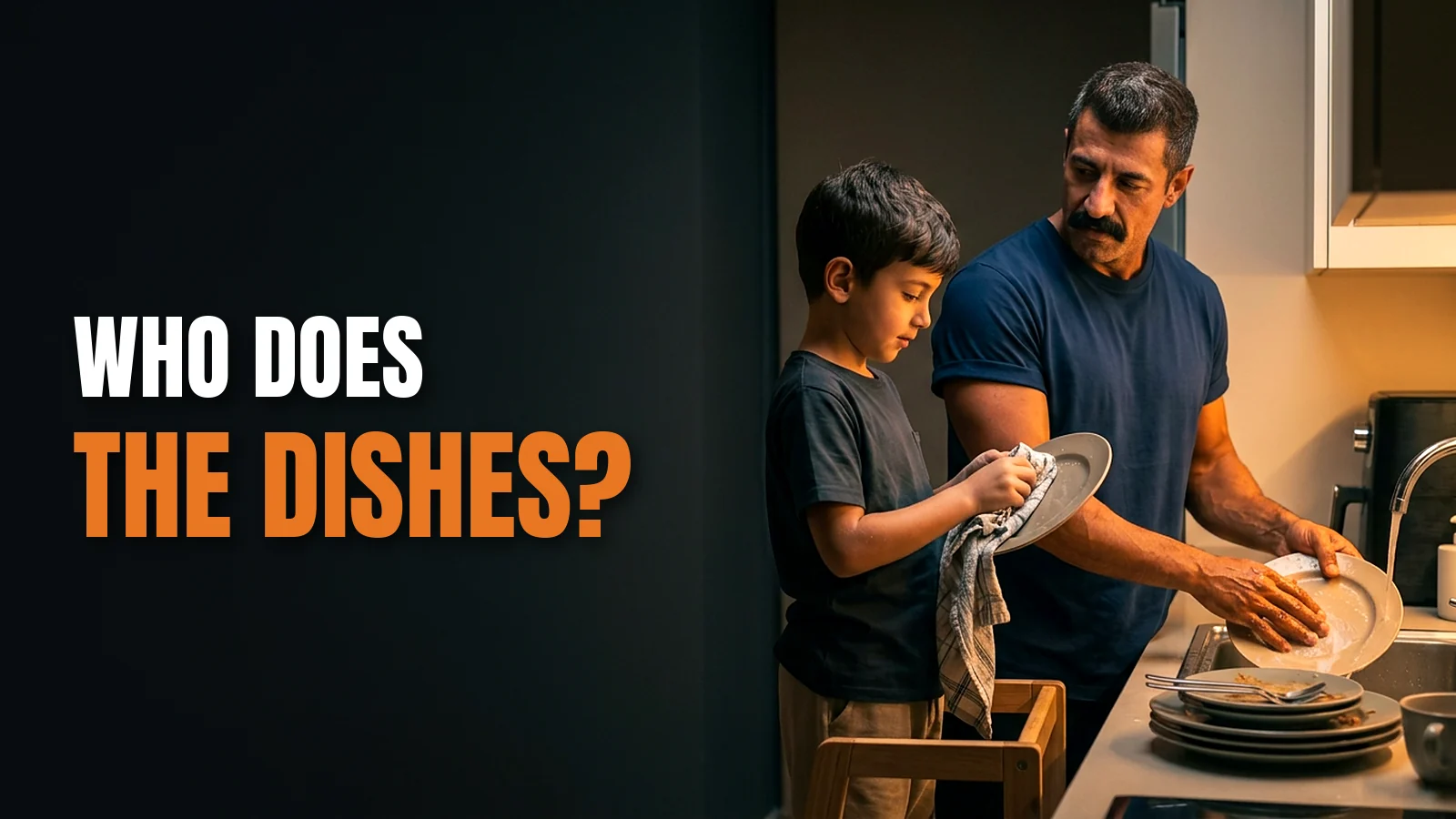
Girls Do Almost 4 More Hours of Chores a Week Than Boys: Your Son's Marriage Starts at Your Kitchen Sink
A Federal University of Uberlândia (UFU) study using Brazil's 2023 national household survey, reported by g1 on November 13, 2026, finds 17-year-old girls spend nearly four more hours a week on housework than boys, with the gap starting at age 8. Ricardo Martins comments on what this means for tomorrow's marriages.
Read article →This content is educational and pastoral. It does not replace therapy, medical, legal or emergency help. If you are in danger, seek help now.